
A history of jack-o'-lanterns

The centuries old Halloween practice of creating jack-o’-lanterns originated from an Irish myth about a deal with the devil. Stingy Jack invited the devil to a pub and then convinced the devil to turn himself into a coin to pay for their drinks. Jack kept the money. He put it into his pocket next to a silver cross, which prevented the devil from changing back.
Jack eventually freed him under the condition that the devil would never claim his soul. Jack continued to trick the devil and make deals with him over the years. When Jack died, God would not allow him into heaven. The devil kept his word not to claim his soul. Jack was sent into the night with a burning coal to light his way. He put the coal into a carved-out turnip and has been roaming the Earth with it ever since. The Irish referred to the ghostly figure as “Jack of the Lantern”.
In Ireland and Scotland, people made Jack’s lantern by carving scary faces into turnips or potatoes. They placed them in windows or near doors to frighten away Jack and other wandering evil spirits. In England, large beets were used. Immigrants from these countries brought the tradition to the United States. Indigenous North Americans had grown pumpkins for thousands of years and the versatile gourd became the American lantern for Jack.
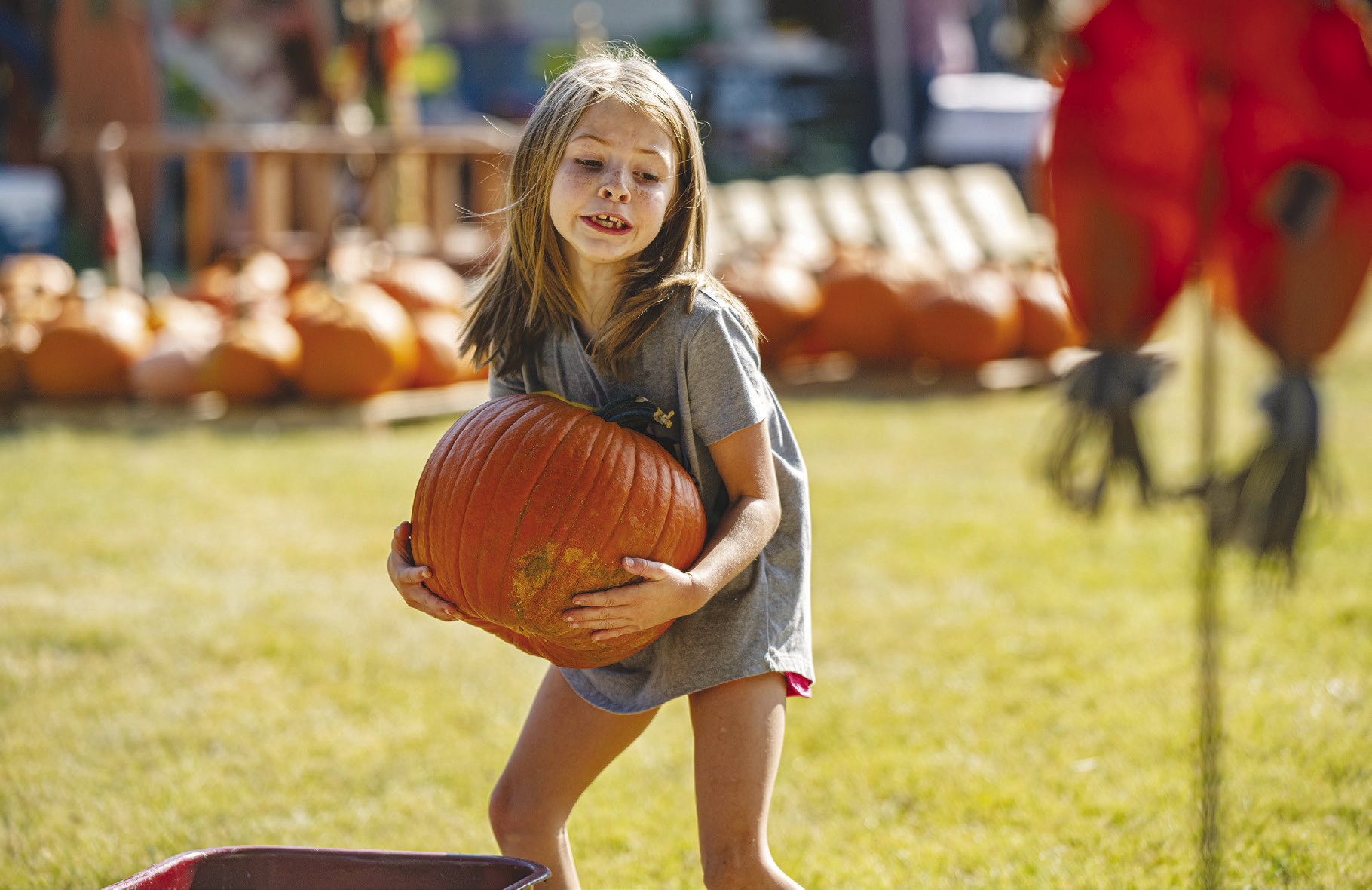
My pumpkin this year was purchased from Georgetown’s First United Methodist Church Pumpkin Patch. This is the event’s 25th anniversary. Proceeds from the annual event support the church ministries.
The variety of unusual pumpkins and gourds provide fun photo ops. The pumpkin patch is open through October 31. Trunk-or-Treating will be held in the parking lot on October 30 from 4-6 p.m.
Here are some other fun facts about jack-o’-lanterns.
The Brothers Grimm Cinderella does not feature a pumpkin carriage. Walt Disney decided to base their interpretation on an earlier French version with a pumpkin carriage.
Pumpkin was likely served at the first Thanksgiving feast. Pilgrims and early settlers made pumpkin pie by hollowing out a pumpkin, filling the shell with milk, honey and spices and baking it.
During World War II, Americans grew victory gardens to supplement their grocery rations. Pennsylvania’s The Victory Garden from 1944 recommended growing and eating pumpkins for their nutritional value.
A carved pumpkin has a short life. To make it last longer, cut a hole in the bottom or the back. Keeping the stem intact preserves the structure. Save the cut out piece to put back in like a stopper so it doesn’t cave in.
Leftover Halloween pumpkins can be useful! Cut off the top half and fill it with birdseed or cut into small pieces for foraging animals, like squirrels and deer. Pumpkins can also be added to the compost heap.
The Pumpkin Capital of the World is Morton, Illinois. It is also the home of Libby’s pumpkin industry.
Texas is the fourth leading state in commercial pumpkin production. About 90 percent of Lone Star pumpkins are grown in West Texas and over 90 percent of those pumpkins are produced for seasonal ornamental use. Texas A & M AgriLife reported that drought conditions contributed to below average yields in 2022. Lower yields are translating into higher prices and demand.
Pumpkin, Texas, is a small rural community located in San Jacinto County. I am including a poem I found about the town which is actually named after a nearby river.
PUMPKIN, TEXAS
By D. Knape
No one goes to Pumpkin too far off the beaten track, it don't even have a pumpkin can you imagine that, but take the road to Pumpkin anyway the scenery's exquisite, keep your eye peeled for the road sign if not you just might miss it.
dwyer@wilcosun.com