



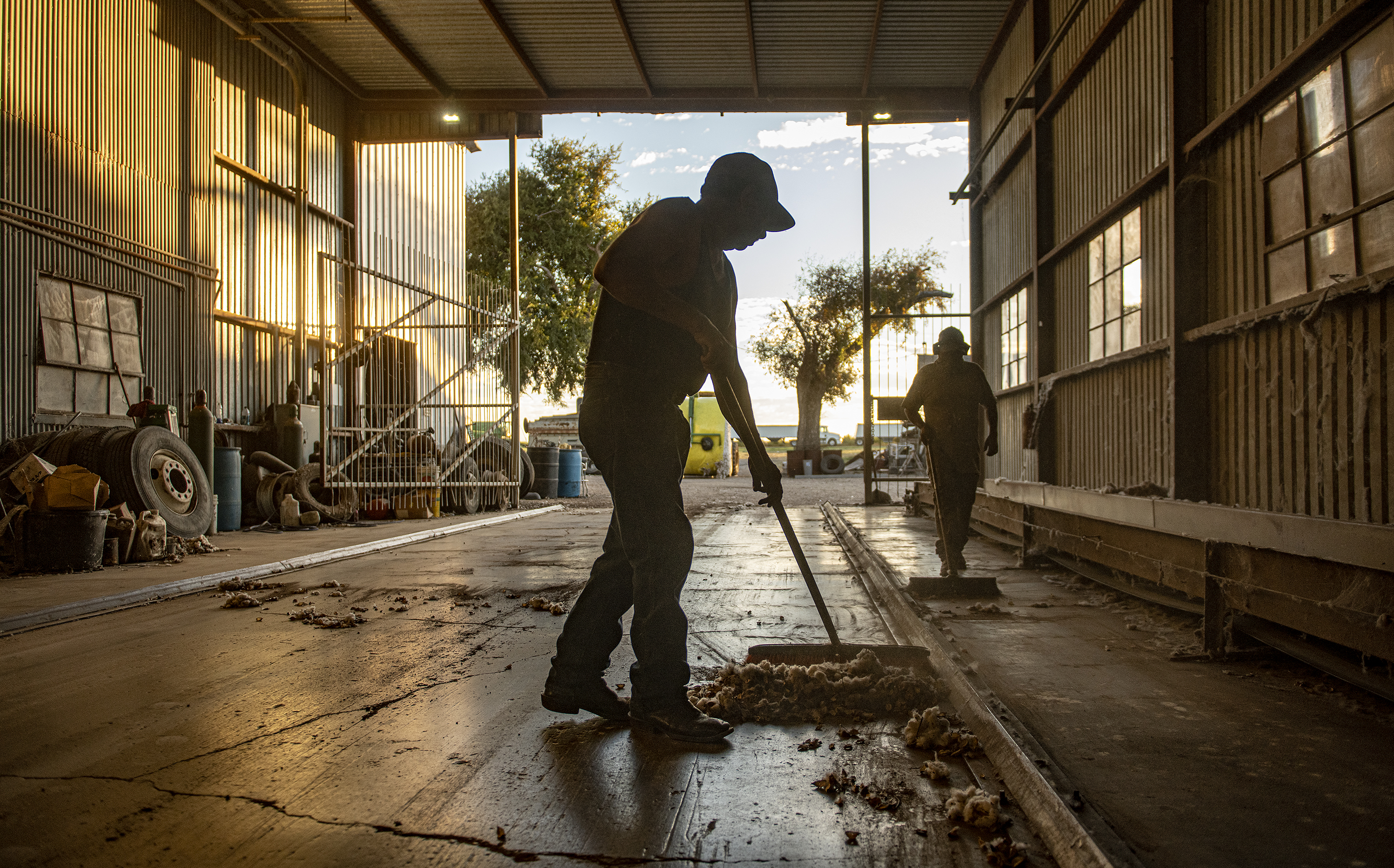


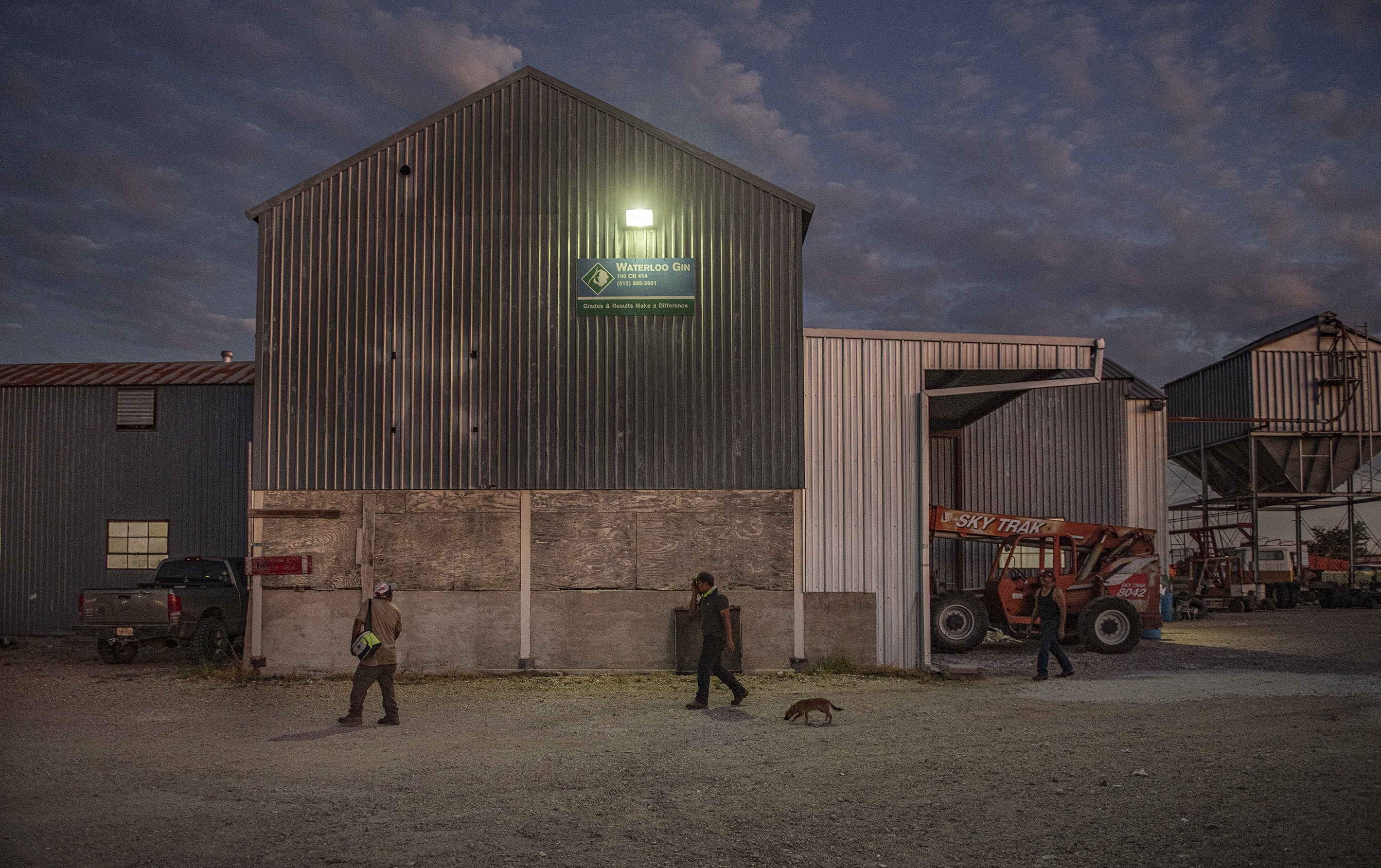
The Waterloo Cotton Gin, a few minutes east of Taylor, along County Road 414, is beginning cotton harvest season on a high note this year, after last summer’s combination of triple digit heat and drought made it hard for farmers and cotton gins in 2023.
Waterloo Gin Owners David Woollett and Clement Strmiska are forging ahead this season. With their crew of experienced workers, the gin is churning out bale after bale of the state’s premier crop.
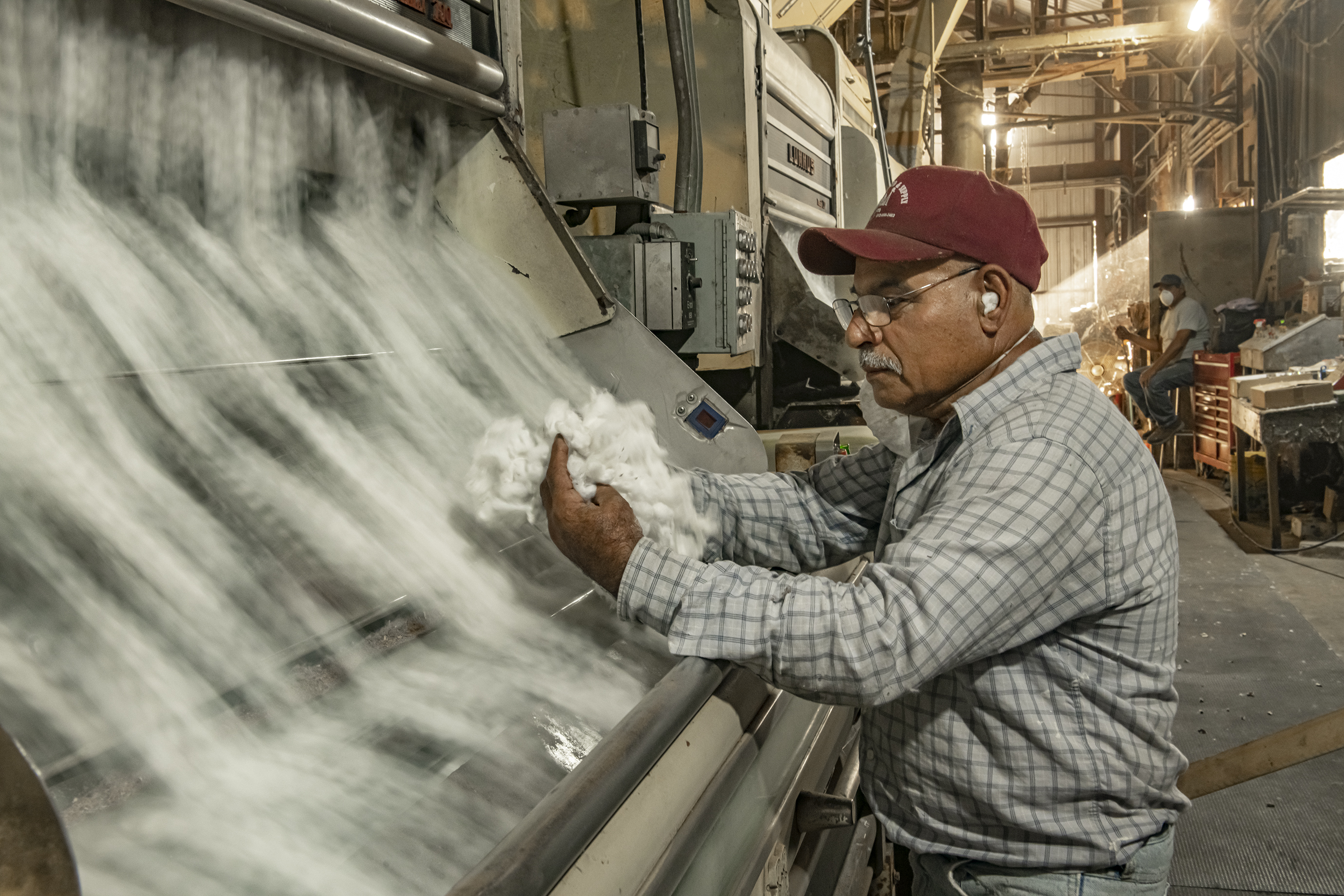
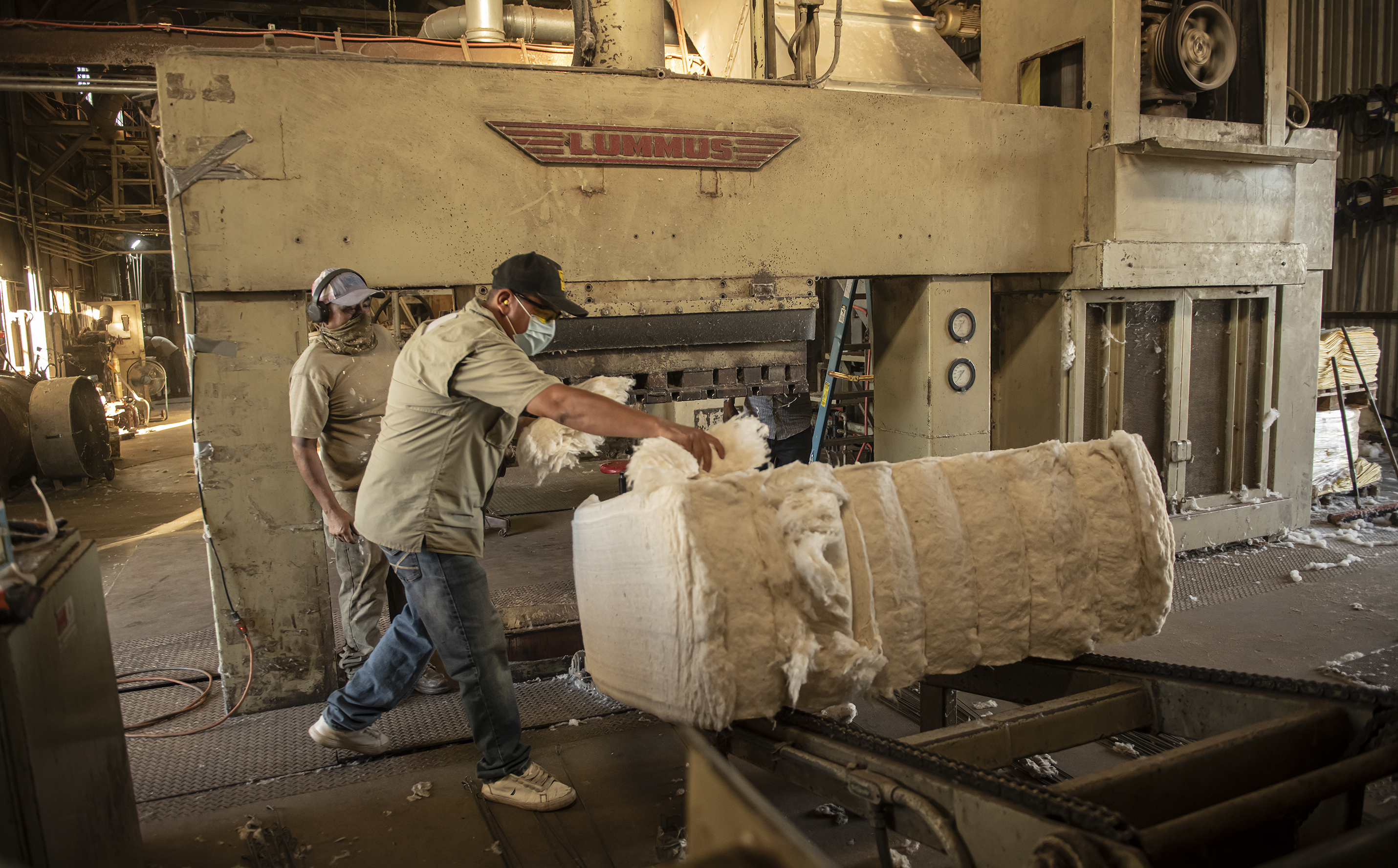
I’d forgotten why workers wear protective masks, but I was reminded after that first outing. During the ginning process, cotton fibers fill the air in the cavernous space. The light inside, however, is impeccable and warm, a photographer’s blessing. My sinus and allergy issues returned with force. Eye drops were actually more helpful for the next two visits.
As this is written, I’m still trying to find out when the gin first opened. Internet searches haven’t been helpful. I get more “hits” about a company that produces an alcoholic spirit. What I do know is that David Woollett’s mother purchased Waterloo Cotton Gin in 1969. Strmiska joined the business as Woollett’s business partner twelve years ago.
So far, Waterloo Cotton Gin is the only gin operating in Williamson County this year. The Blackland Co-Op Gin in Granger, may be operational soon. Taylor had a working gin for decades, but it closed several years ago. Another gin, along U.S. 79 just west of Thrall, no longer operates.
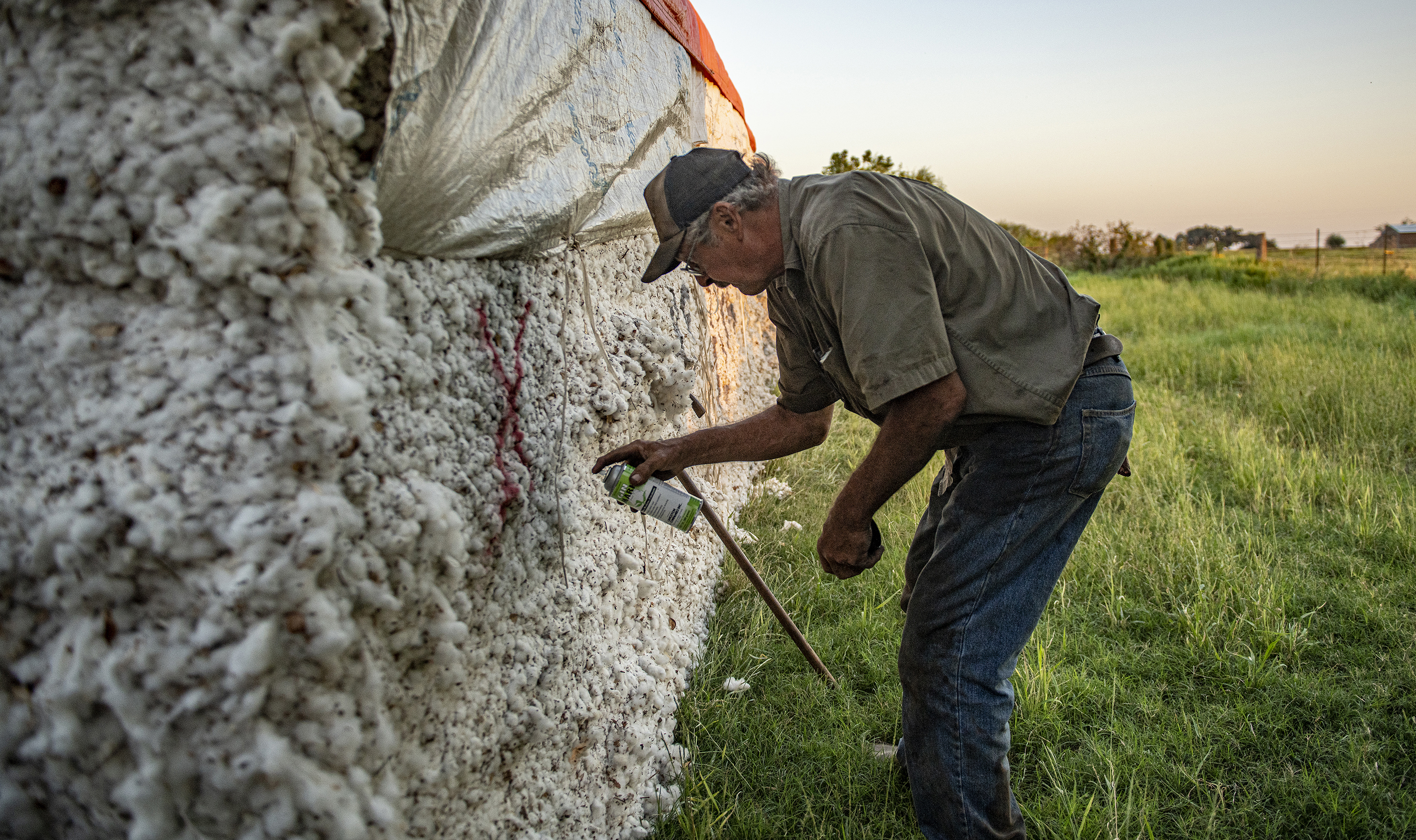
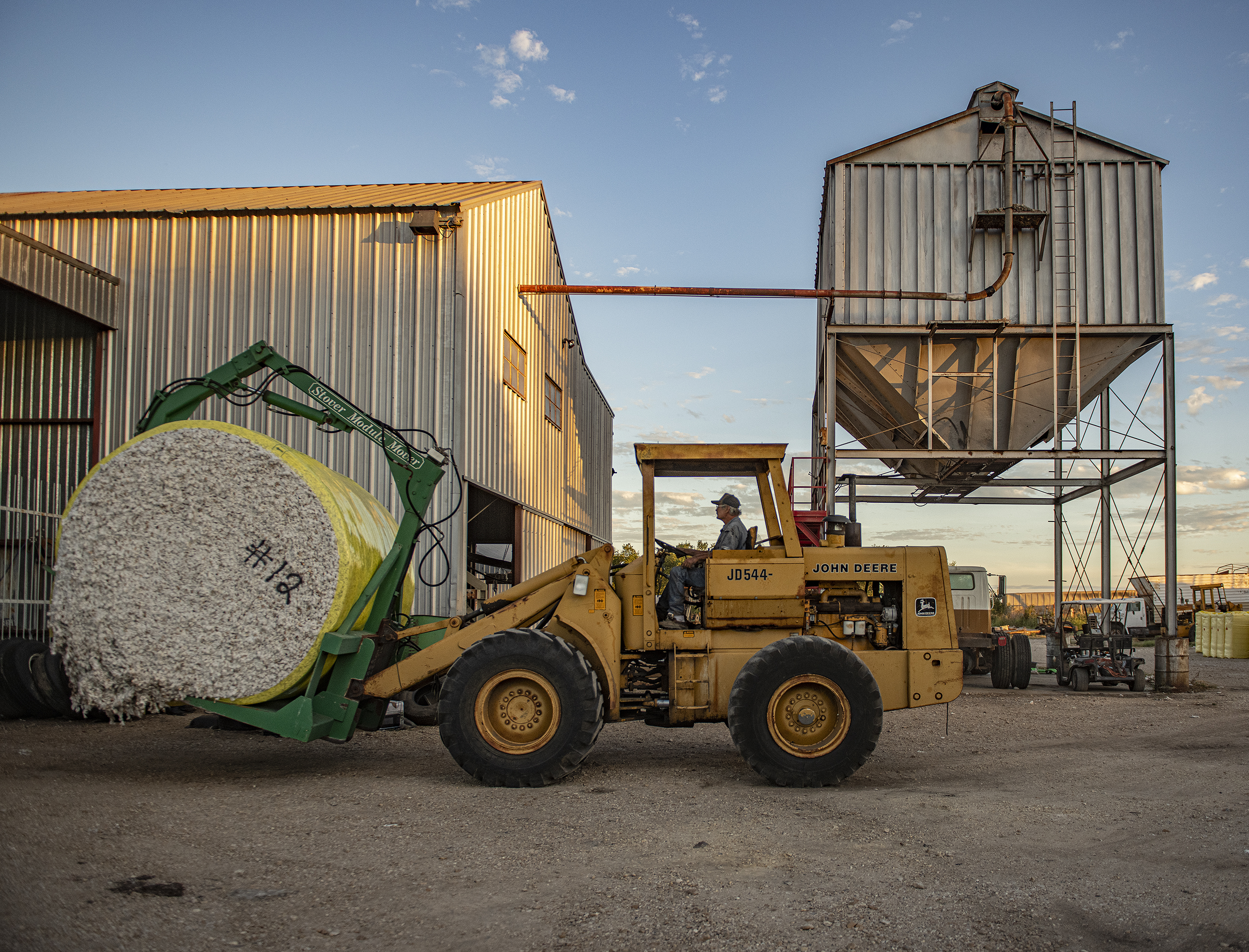
Woollett and Strmiska utilize some of their nine large trucks to pick up harvested cotton from farmers. Not all the trucks are running. The partners learn useful skills. On one recent visit, Woollett and a helper were seen working on a truck’s radiator. Now repaired, it’s on the road again. The trucks retrieve cotton modules weighing thousands of pounds. Round modules are smaller, but the large rectangular ones weigh in anywhere from 18,000 to 21,000 pounds.
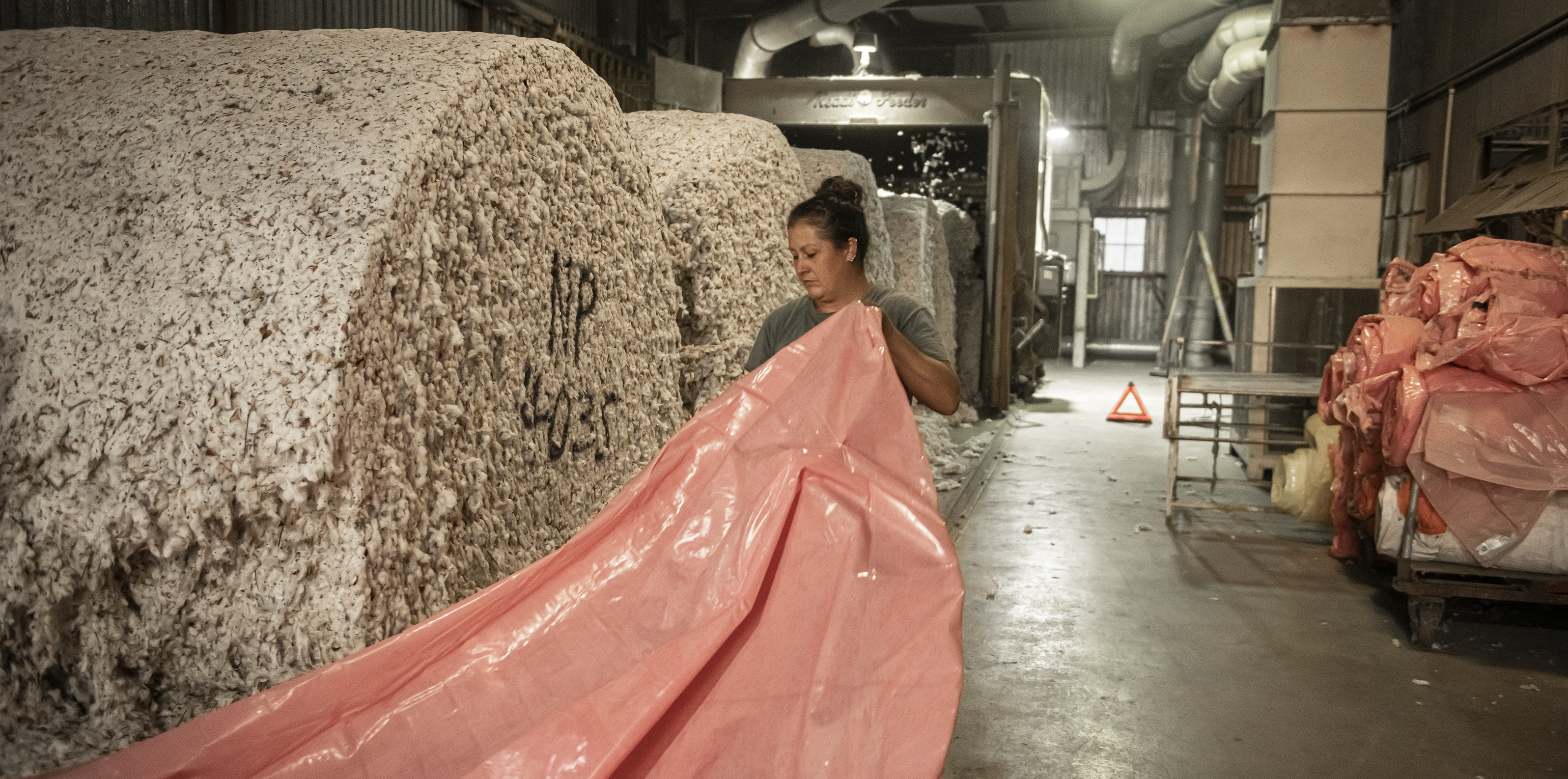
As cotton modules begin the ginning process, the air is alive with loose fibers. It soon is threaded into machinery that separates cotton seeds from the bolls. Tony Espinoza, a longtime worker, makes sure this goes as planned. At the end, the finished bales, weighing 400-500 pounds, are wrapped and ready for shipment.
Operating a cotton gin requires a lot of electrical power. On one visit, the gin had closed early to preserve the power grid.
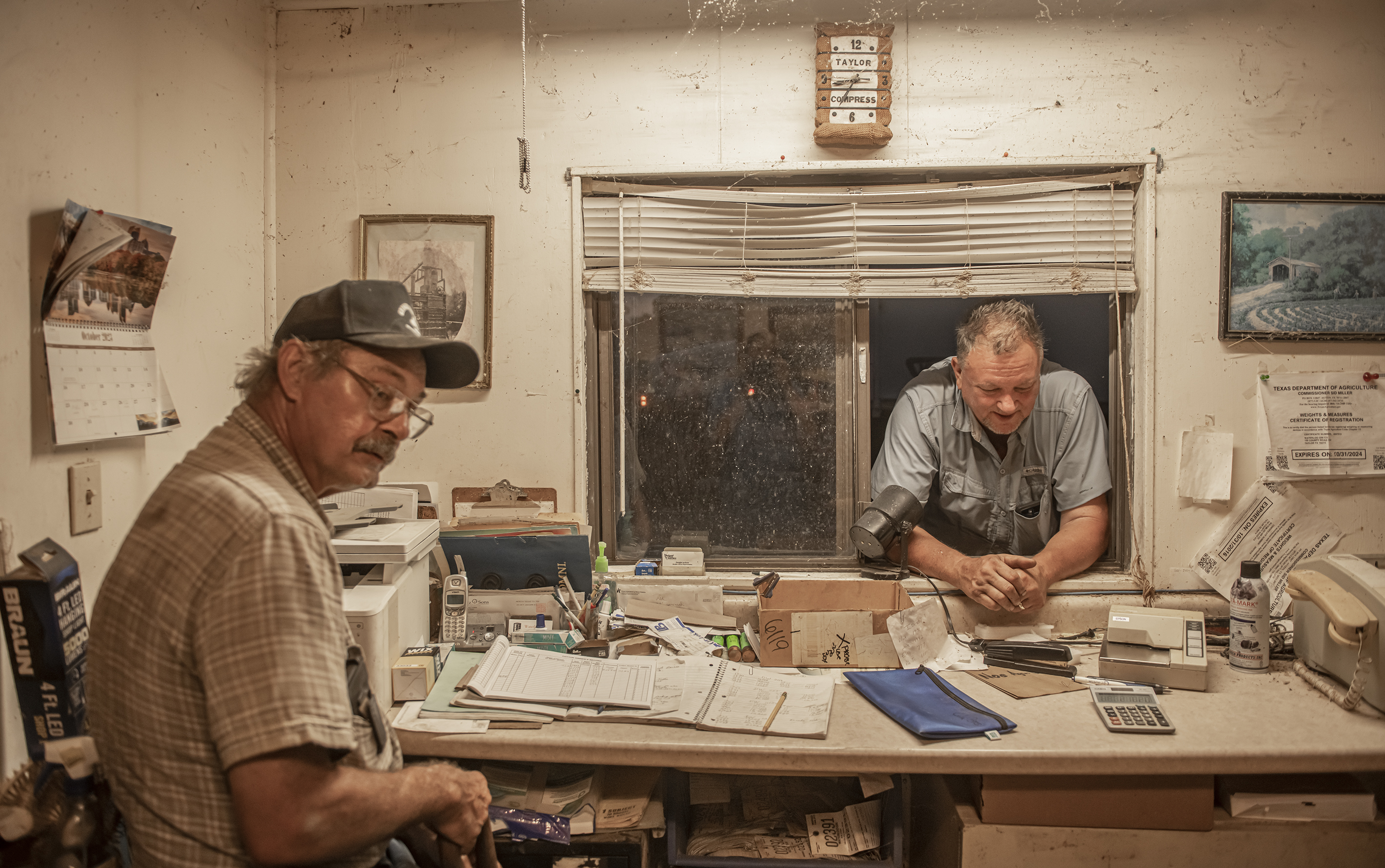
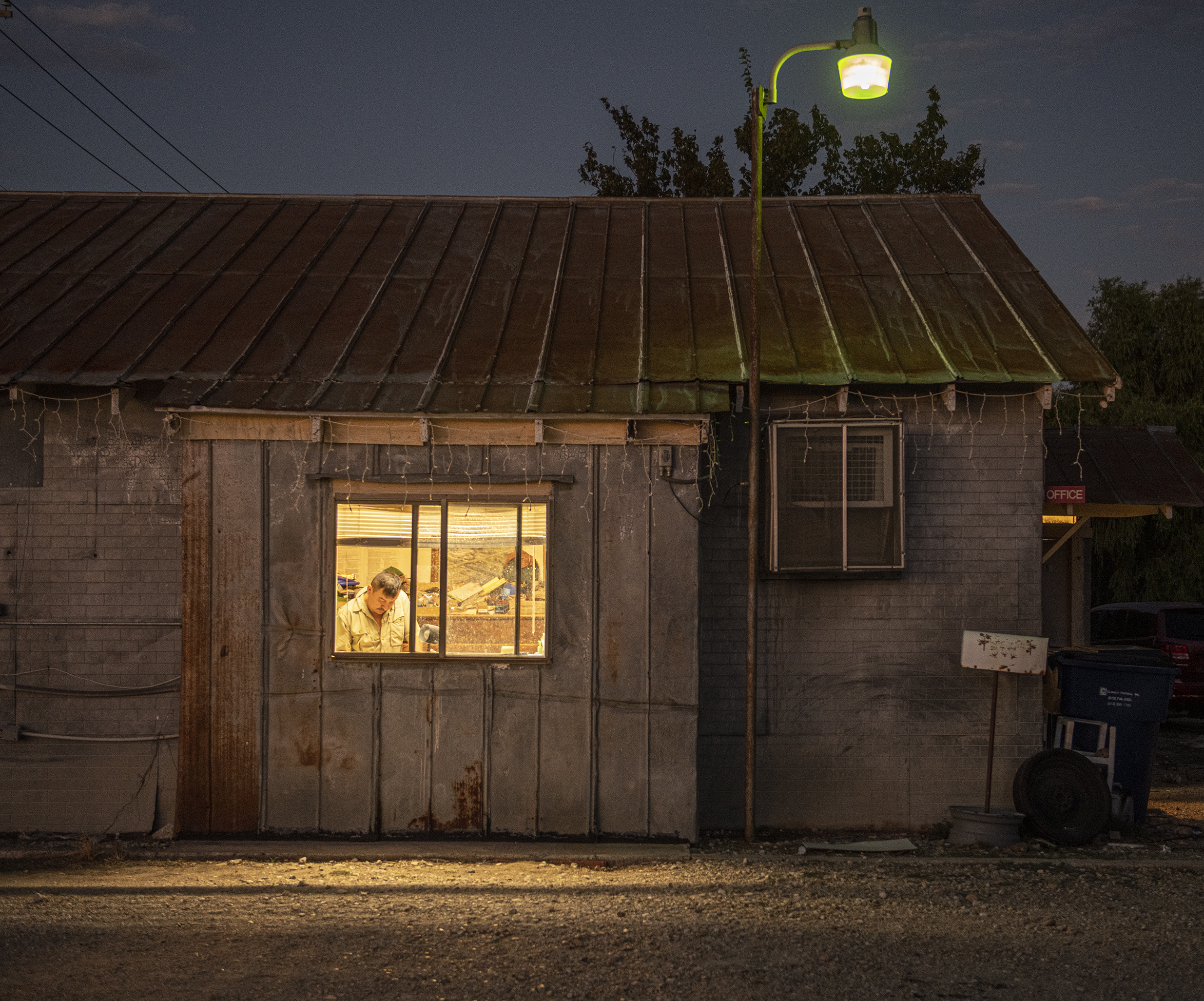
Near the end of an evening, Strmiska and Woollett slow down for a visit at the gin office. It’s been a busy day. They’ll be back the next morning to do it all over again. It’s a busy time. That’s a very good thing.