

Jim Hailey
On my return trip from working on a cabin I own on the Frio River, I stopped by South Llano State Park to do a little photography and get some rest and recreation.
If you have never visited this park, you should do so. In addition to the river access, the park has trails and, most important to me, four observation and photography bird blinds. The volunteer staff keep the feeders filled and each has a flowing water source to attract the birds. The park is excited about the new headquarters being constructed.
I will say that this is my favorite state park within 150 miles of Georgetown.
In addition to the birds I am featuring in this article, I had the opportunity to see many of the resident species found in the park — canyon wren, black-chinned hummingbird, black-crested titmouse, lesser goldfinch and others.
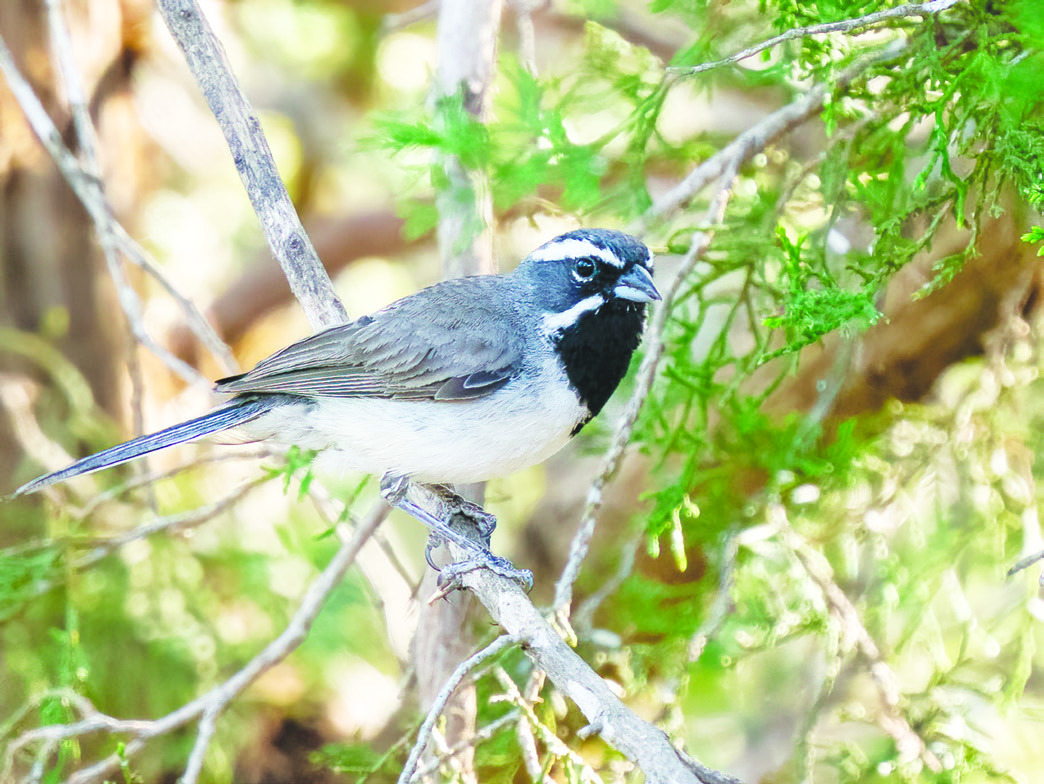
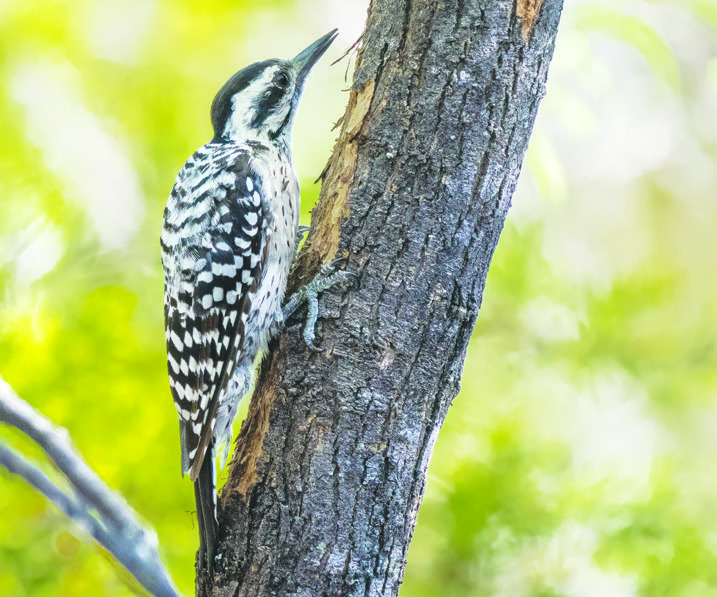
Here, I am going to focus on four species — house finch, Woodhouse’ s scrub jay, black-throated sparrow and ladder- backed woodpecker. Two of these species — house finch and woodpecker — we regularly see in Williamson County. We also have a few of the jays in the more western regions of the county, but the black-throated sparrow is a bird of the desert scrub absent here.
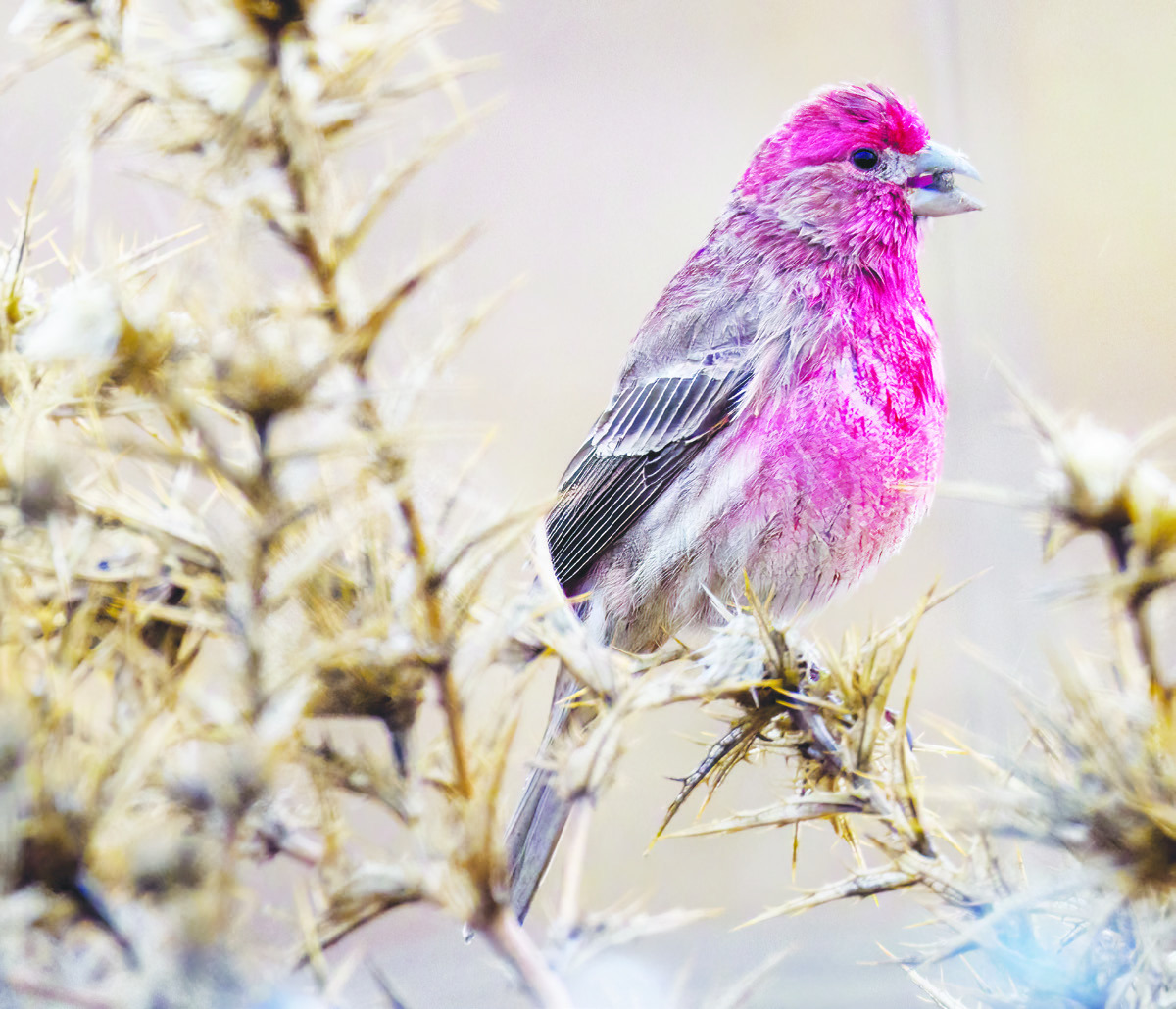
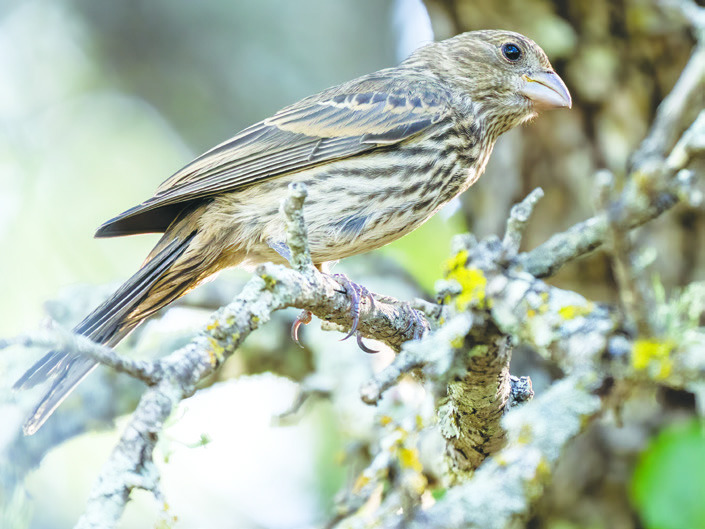
So let’s begin with the finch. The house finch is a regular visitor to our backyard feeders. The rather drab female might be mistaken for a sparrow by many. She has a brown face and head, dark eyes, brown and black back with heavy, dark streaking on the belly and flanks. She also has a short, but heavy, dark beak which suggests she is a seedeater. Her male counterpart, likewise, has a brown and black back and wings, heavy dark streaking on the belly and flanks, but this is offset by a bright red wash over the head and down the throat and across the belly. In flight his bright red rump is shown, and some red feathers extend over the nape and across the back. In full breeding plumage in early spring, the male is a very striking bird. They forage on the ground, eating seeds, flowers and buds. They are birds of the west and inhabit desert, chaparral, and suburban areas.
Our second featured bird is the black-throated sparrow. I am very familiar with this species as they were resident on my South Texas ranch on which I lived before my move to Georgetown. I think this is one of the most striking species we have in Texas. The male is distinguished from the female by the more extensive buffy flanks and undertail coverts. Both have a strikingly contrasting black bib set off by clean white belly, white malar strip and eyebrow, black cheeks and black lores. They are seedeaters in winter and insectivores in the breeding season. They are birds of the southwestern U.S. and habitats include deserts and scrublands.
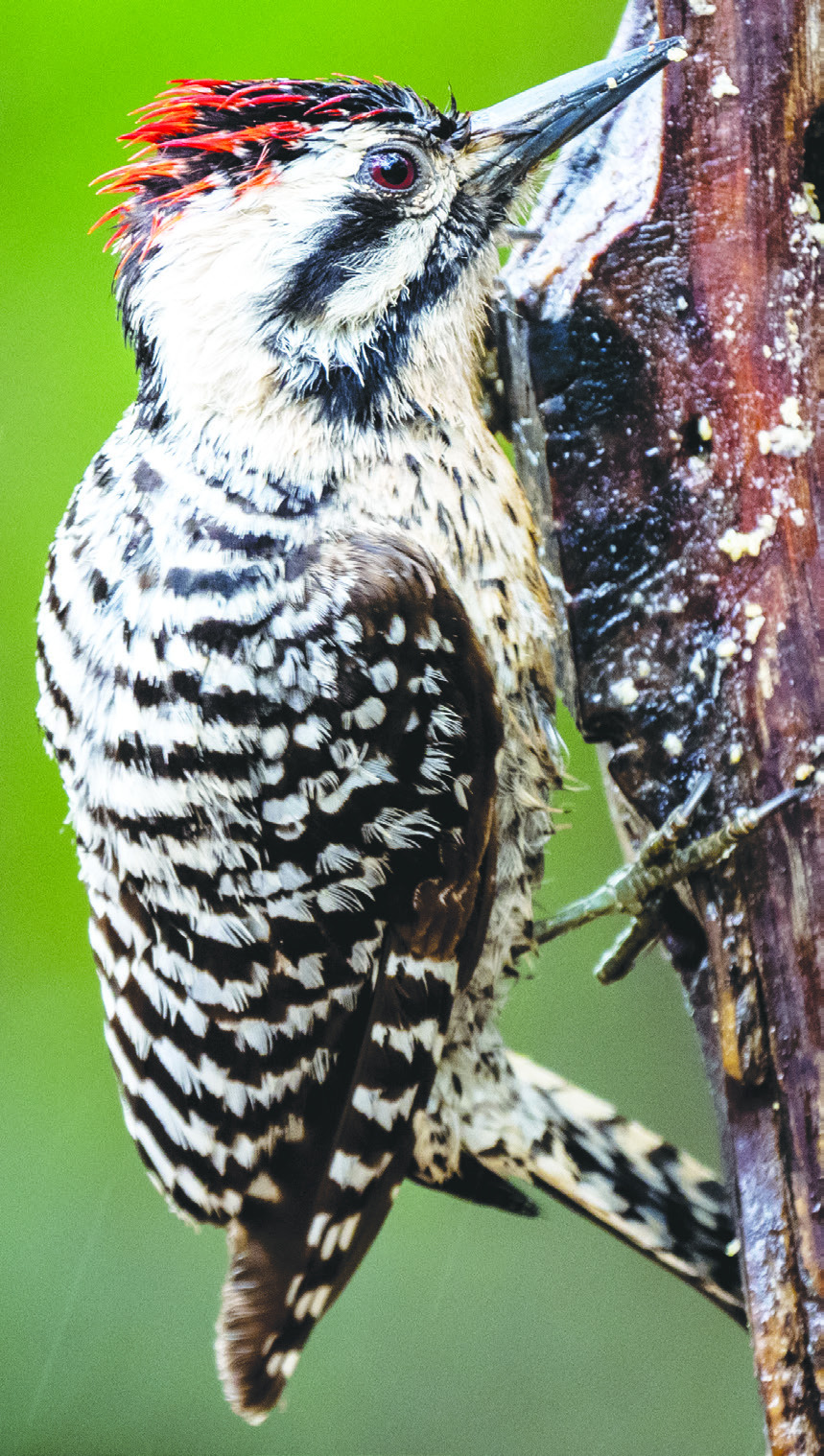
Now let’s examine another bird that you may have visit your home feeders — the ladder-backed woodpecker. Here again the male and the female do not have similar appearances. The male has a red cap, whitish belly and flanks with spots and streaking. They both have white eyebrows, a black post ocular streak. The female has a black crown and in both the black eyeline joins the black malar stripe and both have black and white barred backs, thus giving them the name. These birds are residents of the southwestern U.S. and into Mexico and Central America. They prefer wooded habitats and feed on insects found in the bark of trees and cactus fruit. They love suet, especially in winter.
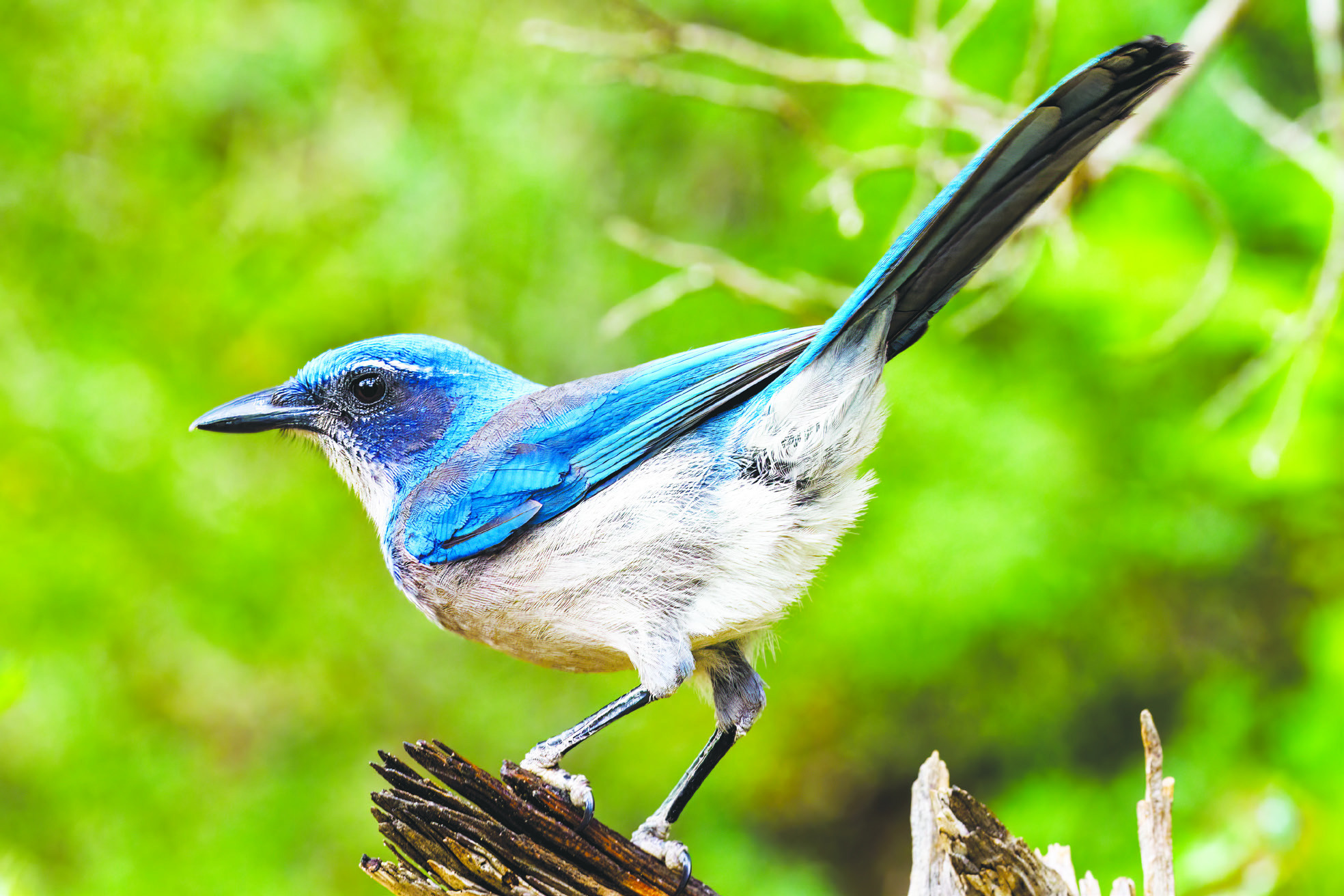
Finally let’s look at the woodlouse’s scrub jay. Like the more common blue jay, this species is blue, has some black and a gray throat, belly and undertail coverts. Both sexes have a blue head, nape and upperparts with a gray back and long blue tail. In addition, they have black faces with very fine white eyebrows. They prefer habitat of pinyon pines and juniper but can be found in oak woodlands and mixed forest. They forage on seeds, insects, small reptiles and amphibians. In Williamson County this species is only found west of Interstate 35 and even then, in very small numbers. One spot I have seen them in is Jim Hogg Park on Lake Georgetown. Like their cousins the blue jay, they can be very raucous and have a loud call.
If you are interested in learning more about birds please go to www.meetup.com/williamsonaudubongroup and sign up for this app. It is free and you will receive notifications about our quarterly meeting, our monthly free field trips, and class provided free of charge.