
“Leave it to a trip to Antarctica to discover a historic site in Central Texas. I have never heard of this. How did I miss such a big story?”
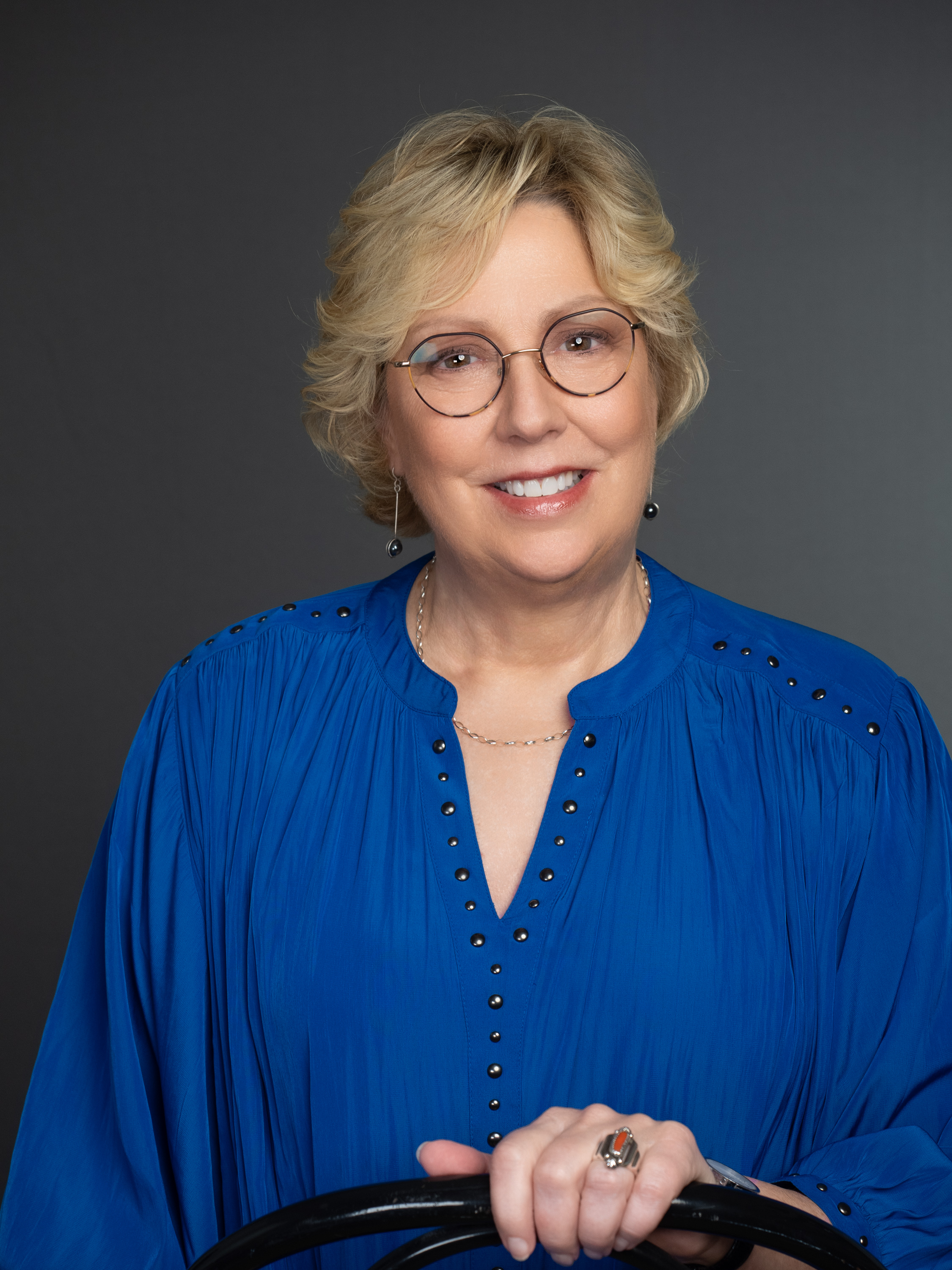
Texas journalist Olive Talley’s uncanny and sudden self-discovery of the Gault Archaeological Site in Florence initially made her want to write a piece about the site. After researching its historical significance, she decided to make a documentary instead.
“It looks like a normal pasture along Buttermilk Creek,” she said. “People have no clue how much history is underneath their feet. I just saw this as one of those stories: the more I asked, the more I became intrigued.”
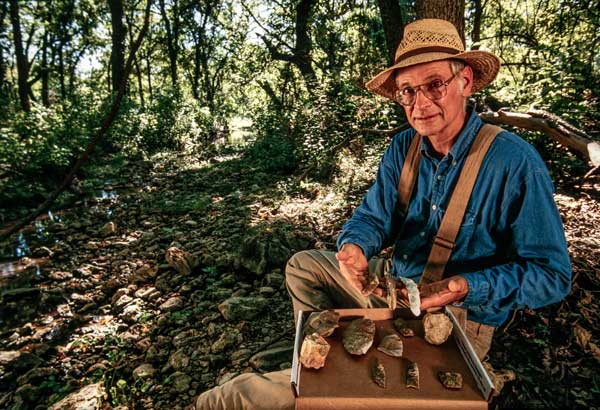
The documentary, The Stones are Speaking, tells the story of how archaeologist Mike Collins, at great risk and personal sacrifice, saved 30 acres of looted land that was once a pay-to-dig site. The Gault Archaeological Site is now regarded as one of the most significant sites in the Americas, with discovered artifacts dating back 20,000 years.
The film is part of the Texas PBS’s “Made in Texas” series. It won the audience award for best Texas Independent Feature at the Austin Film Festival last October.
It took Ms. Talley five years to make the film, from fundraising to production and planning around the Covid-19 pandemic.
“It’s a challenge, unlike anything else I have ever done,” she said. “But I didn’t want to give up. I wanted to see this through.”
At the Gault Site, Mr. Collins and multiple teams of researchers dug up 2.6 million artifacts, including many from the Clovis culture, which are early human artifacts named after similar discoveries in Clovis, New Mexico. Artifacts include arrowheads, blades, flooring, bones and carved stones. Only three percent of the 30-acre property has been excavated.
“[Mr.] Collins saw the potential and knew it was ‘off the graph,’ ” Ms. Talley said. “The property was more like the Clovis mother lode.”
During the excavation process, Mr. Collins and his team discovered artifacts that were used by early people up to 20,000 years ago. The discoveries changed how scholars theorize about human history in the Americas.
Jon Lohse is the Gault School of Archaeological Research’s board president. He was one of Mr. Collins’ students who helped at the site when it was getting started in 1991. He said that through the dig, a lot of energy went into debunking the idea that the Gault Site had artifacts from people before the Clovis era.
“Our target in 1991 was to confirm reports of pre-Clovis,” Mr. Lohse said. “The next phase was expanding the Clovis possibilities. The Gault site grew to be known as one of the largest Clovis sites in the country: verifiable with complete confidence in your work.”
The Williamson Museum was the financial agent and partially sponsored the film. Previously, the museum displayed an exhibit based on the Gault site called “The Tech in Ancient Texas.” For the exhibit, the curator at the time created a timeline to indicate how far back the artifacts were used.
“You mention the Pyramids of Giza, which kind of gives people an idea [on the timeline,] but it was so much farther back than that,” said Danelle Houck, executive director for the Williamson Museum. “The exhibit has pictures from the dig pit that is featured in the documentary.”
In October 2021, the museum officially approved the partnership with Ms. Talley. Donations for the film began in December 2020. As the financial agent, the museum helped Ms. Talley accept contributions that allowed donors to get a tax deduction and then passed the money to the project to pay for production costs.
With the documentary premiering on air, both the museum and the Gault School of Archaeological Research have seen a rise in public interest. Site tours, which used to be offered every other month, now happen twice a month, with some visitors traveling from as far as New York to see the site.
Potential guests can purchase tickets to tour the site on the Williamson Museum’s website at www.williamsonmuseum.org.
“Single-handedly, hands-down, this is the most historically [significant] event in what will become Williamson County,” Ms. Houck said. “It has changed history, and it has also changed science.”
For Mr. Lohse, the Gault Site is a place where curiosity can be fostered.
“We have the ability to enrich our lives and at least have the chance to be curious about other lives before ours,” he said. “That could be the breeding ground for empathy.”
While the film is available to view on the PBS website, Ms. Talley is submitting The Stones are Speaking to other film festivals, like the U.S.A. Film Festival in Dallas. It will screen on April 27 at 4 p.m. at the Angelika Film Center. In May, the film will be screened at The Archaeology Channel International Film Festival in Eugene, Oregon.
The film will be available to stream on Apple, Google and Amazon services in May.
“It’s been a great journey,” Ms. Talley said. “It’s a remarkable place in our own backyard that tells you the story of the first peoples. This project has stolen my brain, but also my heart.”