
From Wilco to the moon
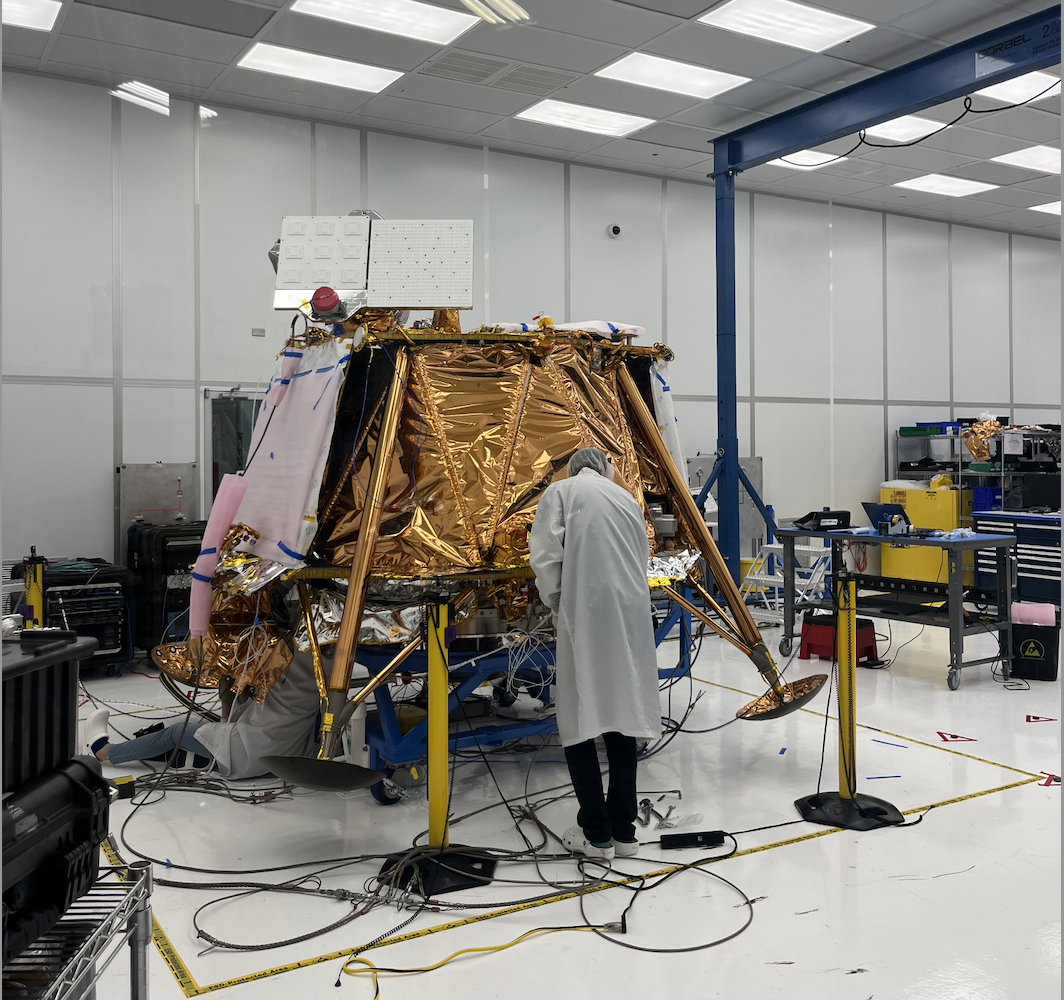
Firefly Aerospace’s Blue Ghost team is getting closer to blast-off. After spending the past four months running lunar simulations and evaluating data, the Williamson County-based team is working non-stop on the company’s new lunar lander, which is scheduled to launch by the end of the year.
Blue Ghost Mission 1 is a part of the NASA Commercial Lunar Payload Services — a federal program that works with American companies to take technology and science to the moon’s surface. Program findings could help human missions in the future.
“One of the core things that the [NASA Payload] office is trying to be is a precursor to the Artemis mission, so that’s the human missions to the moon,” said Ray Allensworth, Firefly’s Spacecraft Program Director. “[Firefly is] going ahead of Artemis to gather data, test different instruments out to learn how to go back to the moon.
“We haven’t gone to the moon since the 1960s, so this is to relearn how to go to the moon and understand the environment, both in space and on the lunar surface, to prepare us for when we send humans to the moon.”
Firefly’s lunar lander recently underwent environmental testing at NASA’s Jet Propulsion Laboratory.
Ms. Allensworth said engineers are currently making sure that the cameras and sensors are “calibrated so that we know exactly the field of view and what they’ll see both in orbit and on the lunar surface.” According to the company’s projections, this process should be complete before the new year.
The lunar lander will be launched into space via a rocket from Space X’s facility in Cape Canaveral, Florida.
It will be in orbit for 45 days. First, it will orbit around the earth, then its motors will turn on, putting it in orbit around the moon. The spacecraft should land on the moon exactly at lunar sunrise, when the temperature is ideal. It will then collect data on the moon for an entire lunar day — which is about 14 Earth days.
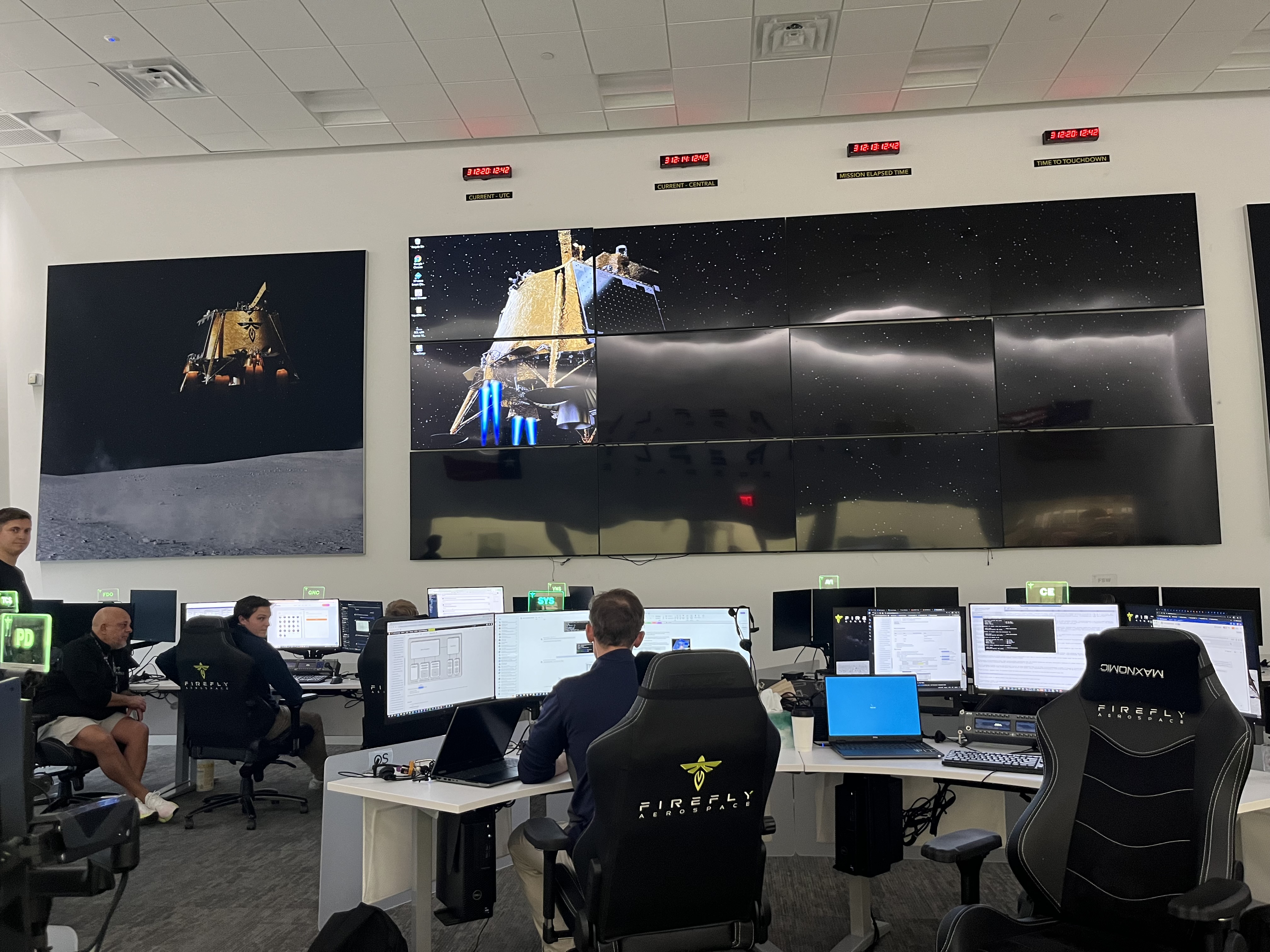
While the lunar lander is in space, the engineers will be operating it out of the office Mission Operations Center in Leander. Ms. Allensworth said to think of it as an orchestra — with each engineer monitoring “the health of a component of the spacecraft.” There will also be a couple engineers overseeing the entire operation to ensure that the spacecraft doesn’t encounter any unexpected debris or solar flares on its journey to the moon’s surface.
Engineers will be interpreting the data collected by the spacecraft’s 10 payloads, which were provided by NASA. Each payload has a specific objective, Ms. Allensworth said.
“When you land on the surface, the moon is covered in this really fine dust, so a lot of them are looking at the interactions of the lunar dust,” he said. “One of them is a drill that looks at temperatures underneath the lunar surface. And one is an antenna, kind of like a GPS for the moon.”
After being on the surface for 14 Earth days, the lander will experience a lunar sunset. For a few hours, the lander will continue to record, hopefully capturing interesting footage of the dust rising up. When lunar night sets in, it will then be too cold for the lunar lander to continue collecting data. Ms. Allensworth said it will then “die.”
Firefly Aerospace hopes to livestream the lunar sunset on their social media channels.
In addition to creating lunar landers, Firefly Aerospace creates launch vehicles and orbital vehicles. The company has offices located in Cedar Park and Leander, and a rocket testing site in Briggs just north of the county line. About 30 percent of the 700-person workforce is from the Central Texas area, including technicians who have come from automotive and other adjacent industries.
To learn more about the team at Firefly, visit https://fireflys- pace.com/missions/blue-ghost- mission-1. Firefly is also posting a “Meet the Team” reel on Facebook and Instagram @fireflyaerospace each Wednesday. This series introduces the engineers that will be in the Mission Operations Room keeping watch of the lunar lander.