
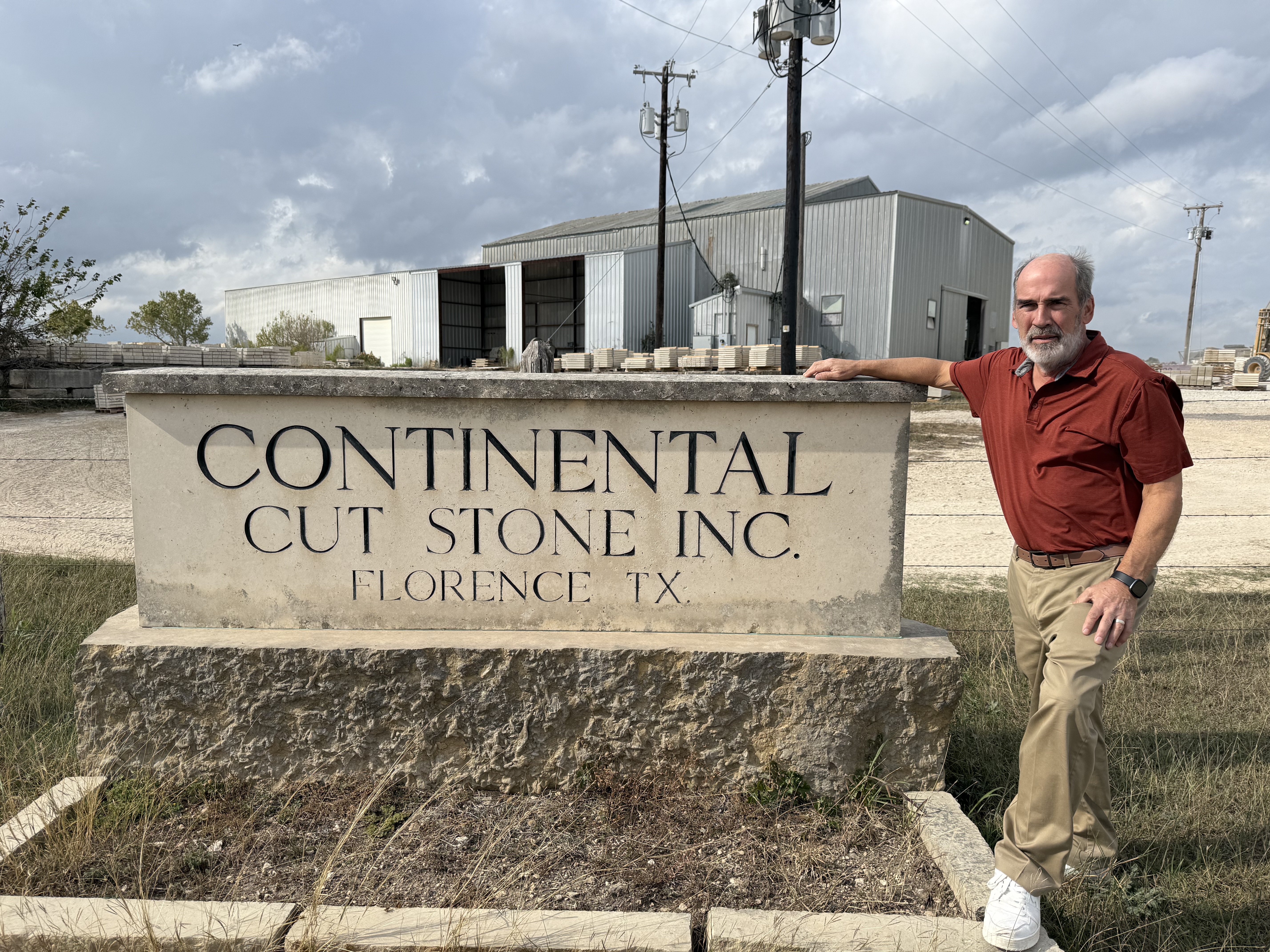
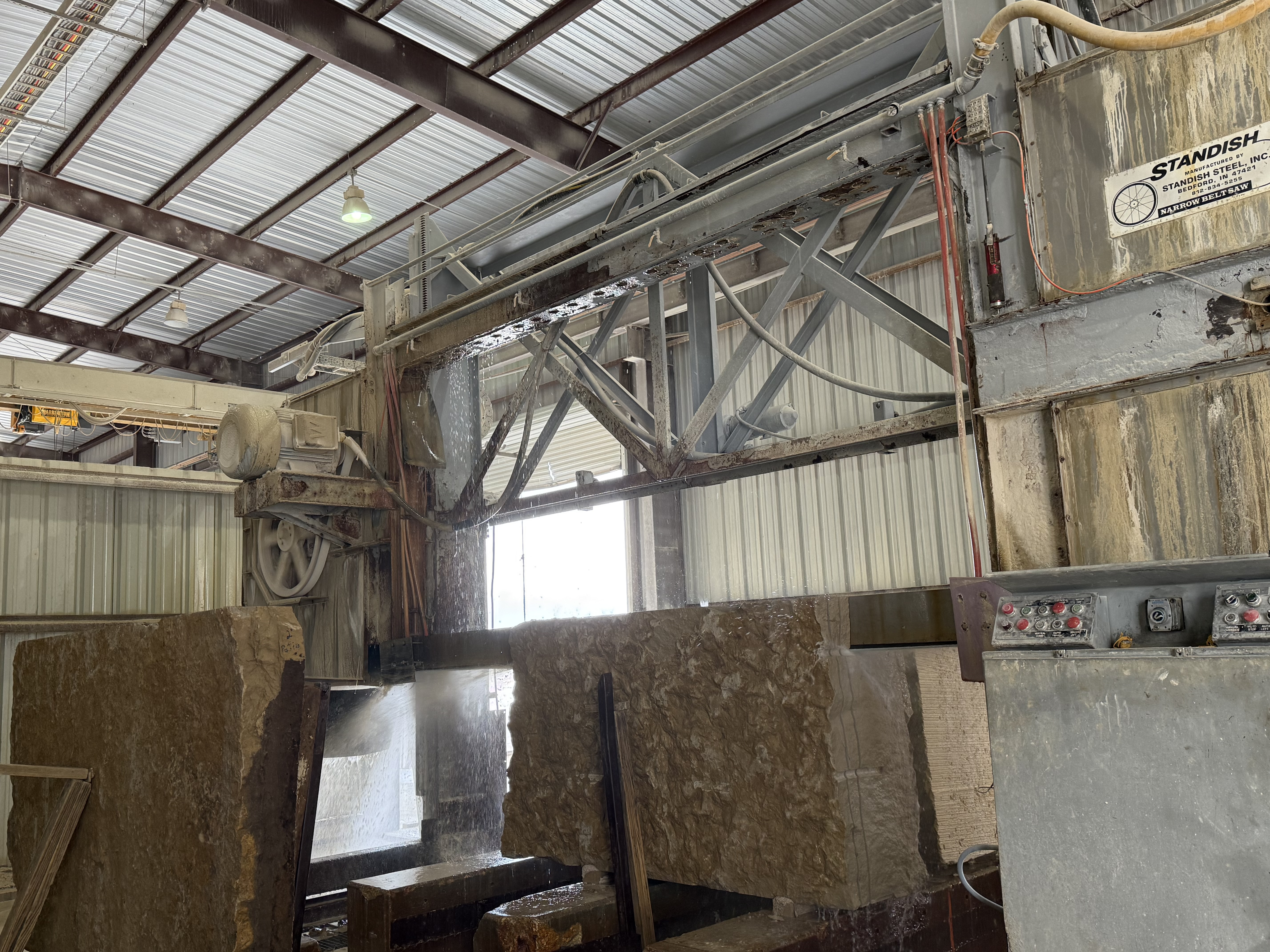
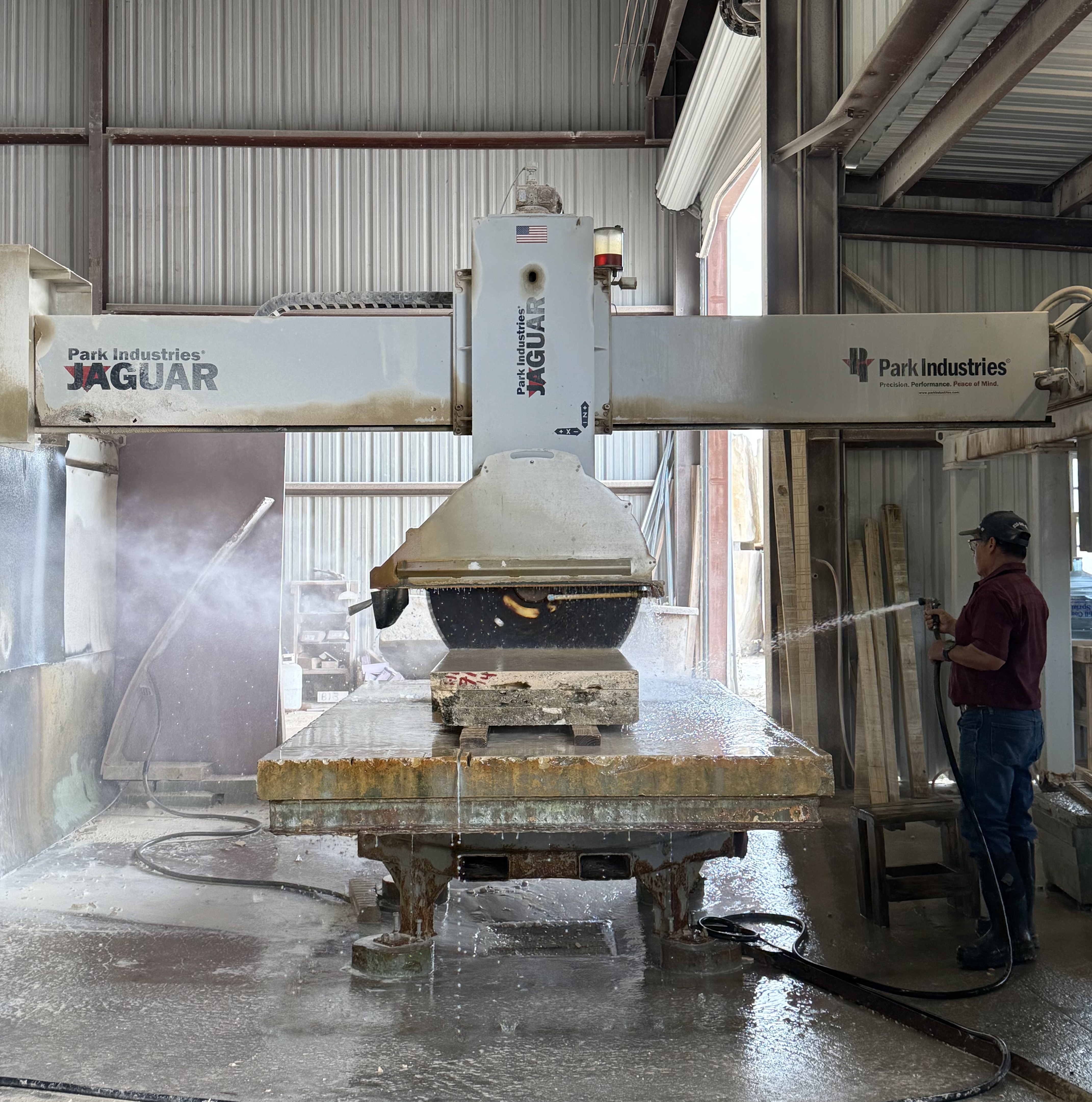
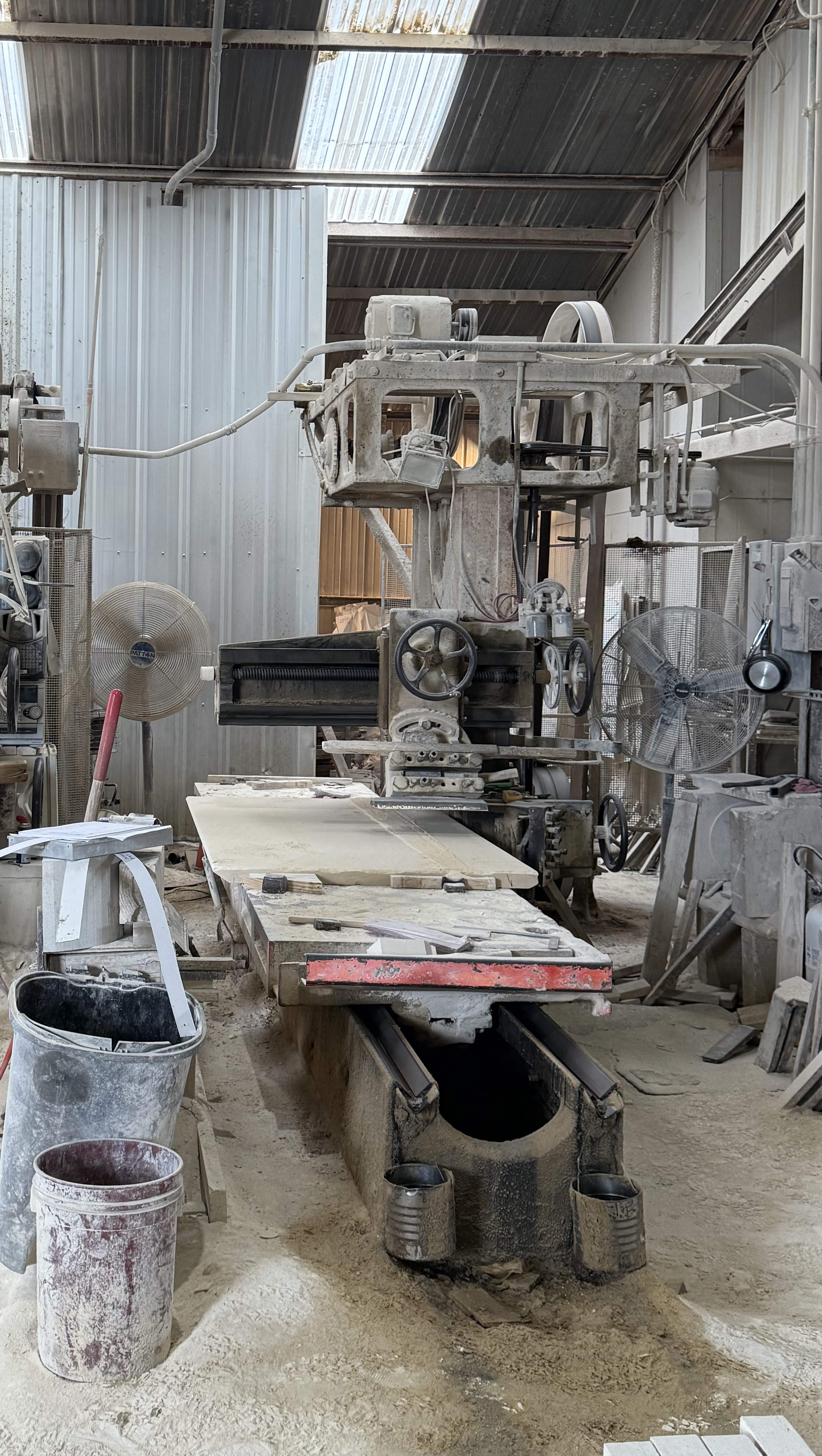
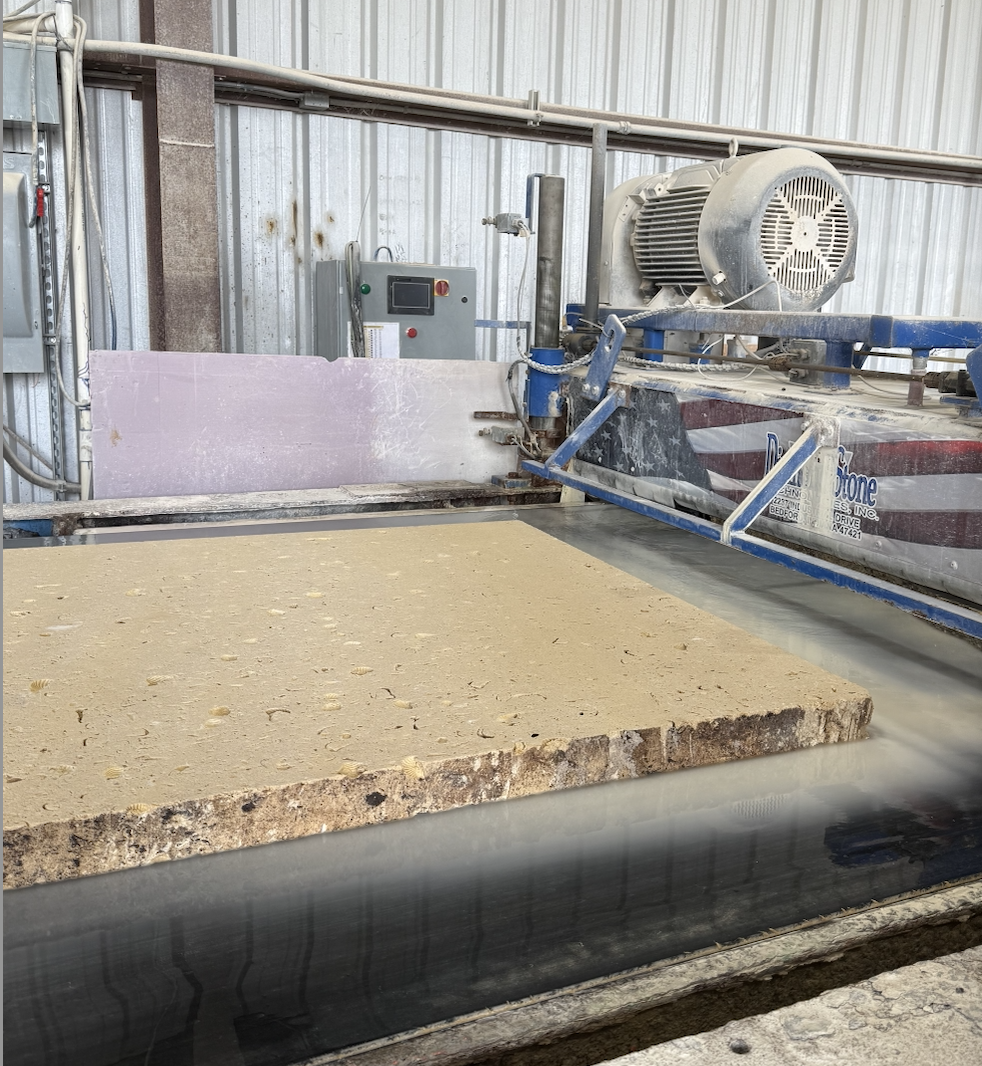
Continental Cut Stone — a residential and commercial supplier of limestone — will reach 39 years in operation next September. The company imports stone from quarry mining sites and makes custom stone elements for construction projects.
Continental Cut Stone operates on 16.5 acres in Florence off County Road 219 with a 20 person production team, who cut the stone into custom configurations. Stones from its site have supported projects at Southwestern University, University of Texas at Austin, the Austin Central Public Library and a new visitors center at the Alamo.
“We don't do the same thing twice,” said Rob Teel, the company’s owner. “It’s really neat.”
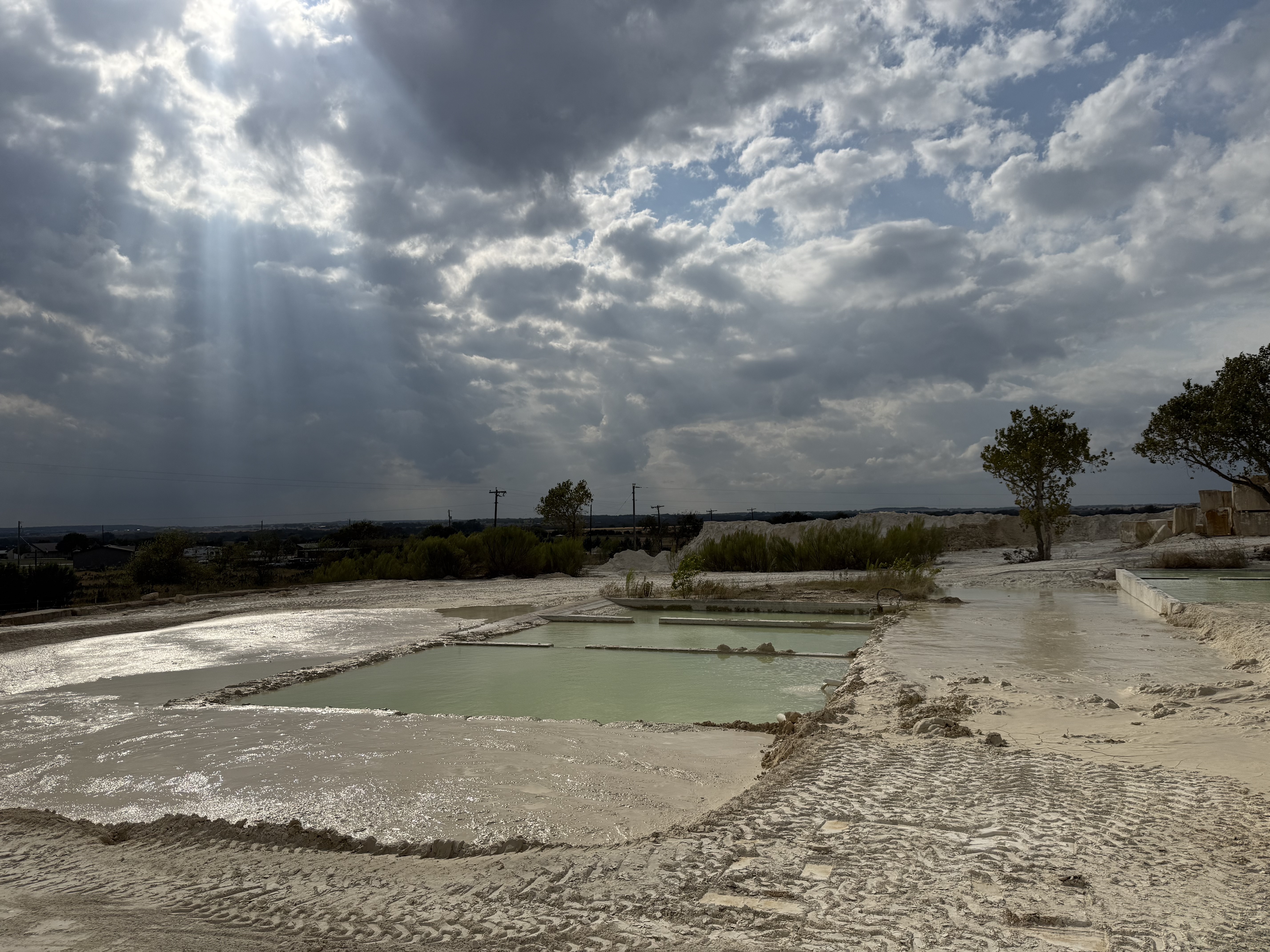
Although there are almost 40 quarry operations in Williamson County, Continental Cut Stone imports its cordova cream and cordova shellstone from a quarry outside of Liberty Hill and a couple in Lueders, Texas. Mr. Teel said nearby queries don’t produce the material needed for the projects the company works on.
“Cut stones have to be of a really high quality material to start with, without too many cracks and flaws and color variation,” he said. “The [20-ish] quarries between here and Georgetown and Salado, they have a lot of cracks and seams in those ledges. It's hard to get a four foot by eight foot piece out of there.”
Continental Cut Stone produces stone for the veneer of buildings, as well as meeting landscaping needs — which often require only a simple block.
The company follows Toxic Equivalency environmental guidelines and runs the equipment water that is recycled many times. The limestone isn’t treated with any acids and the dust produced while cutting the limestone is not harmful to inhale, he said.
The company’s most notable projects are typically commercial or government buildings, but almost half of their work is on residential projects. The homes they work on can cost between $5 million to $100 million. For one residential project, they partnered with Florence sculptor Bob Ragan on a home designed to look like a Mayan Temple.
Mr. Teel said the first few years running Continental Cut Stone were challenging. The company took on a courthouse project in San Antonio and was running 24 hours a day to finish on time.
“You learn how much and how little sleep you can work on,” Mr. Teel said. “I slept in the back of my car, on the floor of the office quite a bit those first few years.”
More recently, unexpected increases in diesel fuel costs have also been straining, he said. Because Continental Cut Stone makes a bid for a project a year ahead of time, it locks them in at a certain price point, regardless of if production costs increase.
“We were losing money on trucking for about a year and a half until we could get caught up,” Mr. Teel said. “Everything we do is touched by fuel. It all goes on a truck somewhere.”
The company has done better in 2025, and is now in a good place, he said.
“It’s a unique industry what we do,” Mr. Teel said. “The business is hard, but it’s inspiring.”