
How community members can support the foster care system
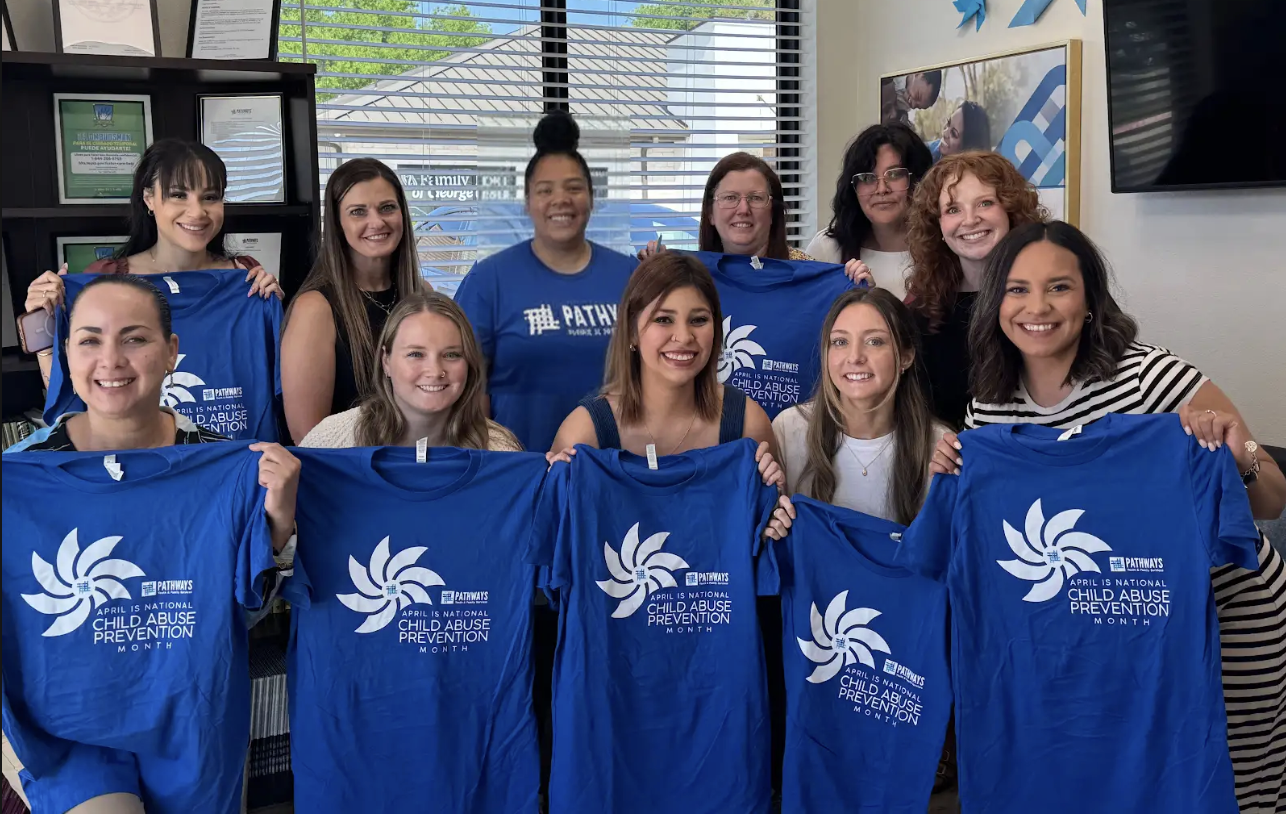
May is National Foster Care Awareness Month, a period dedicated to increasing awareness and promoting community support for the foster care system.
In Williamson County, 151 children were in foster care as of late August 2025, with 91 more children removed from their homes over the year. Across Region 7, which includes Williamson County and other central Texas counties, the state estimated in 2024 that 239 additional foster care beds were needed compared to demand. This statistic points to a shortage of placement options relative to the number of children in care.
Texas aims to place children within 50 miles of their home, but when local placements are unavailable, children are placed farther away, making it more difficult for biological parents to work toward reunification and visit family.
Supporting foster care
Pathways Youth & Family Services is one of the many nonprofits that licenses foster parents in Texas; the organization has branches in Georgetown, Austin, Dallas, Houston, Abilene and San Antonio. Since its inception in 1992, it has helped provide foster care and adoption services to more than 11,000 children across the state.
“There are lots of ways that people can get involved if they’re not interested in fully opening up their home,” said April Conway, the Georgetown regional director for the Pathway Youth & Family Services.
Ms. Conway hopes that during the month of May, community members will do small acts of appreciation for foster families. They look to partner with organizations to provide gifts or discounts for families. There is also the option of becoming a licensed respite provider, which is a babysitter for children who are currently in foster care. Pathways offers classes for this certification.
Pathways offers a behavioral health services program called Mosaic, that provides psychiatry, counseling, skills training and routine case management to foster children. The organization also has two specialized residential treatment facilities: Hab Homes in San Antonio, which serves children with intellectual and developmental disabilities Pathways 3H Youth Ranch, a specialized longterm treatment program for boys age 10 to 17 with behavioral issues.
What happens to a child in foster care
After a child is removed from their home by Child Protective Services, they are either taken to the CPS office, hotel or another emergency shelter until a foster care is found. The CPS agent sends out a broadcast, which searches through what profile a foster home is willing to take in. Foster parents can place stipulations on the age range, gender, race and what type of behavioral issues they are willing to deal with. Placement usually takes a couple of hours, Ms. Conway said.
“If a child fits that criteria and they have space in their home our intake coordinators will call them,” she explained. “There are families that come in [to be licensed] and say they do only want Caucasian children or children with no behavioral issues. Through our training and through the process, we try to really broaden their horizons and open up their preferences.”
Pathways tries to explore the underlying reason for why a family doesn’t want to take in a child, and takes it all into consideration before making a placement.
“We have had parents say it’s not a good idea to place an African American child here, because there are no other African American children in our schools,” Ms. Conway said. “They would be singled out, possibly ridiculed and only because of their skin color.”
Texas foster care system
Foster parents in Texas are licensed by private non-profit organizations. These entities are responsible for distributing state-provided funding to support the children. Pathways is one of the many nonprofit organizations contracted to do this by the Department of Family & Protective Services. Foster care licensing organizations are often faithbased and can place certain stipulations on licensing.
“[These organizations sometimes] won’t license you without recommendations from your church, or that you have to be actively involved in a church, but we don’t have that requirement,” Ms. Conway explained. The organizations may also choose to not license single women or gay couples. Pathways does not discriminate according to these standards, she said. “We always encourage [potential foster parents] to kind of do their research on agencies. Obviously, we would love for them to work with us, but, you know, they need to find their fit in what agency would serve them best.”
Becoming a foster parent
In Texas, foster parents must be at least 21 years old, demonstrate financial stability, pass a background check, hold a high school diploma and have sufficient space in their home. The licensing process is quite extensive— involving classes and multiple home visits. Pathways licensing classes includes classes on child development, trauma informed care, CPR, reporting child abuse, suicide prevention, cultural diversity and parental reunification.
The process takes 4-8 months for a family to complete. Pathways offers their classes online and there is a moderator on every call to ensure that every parent is on camera and paying attention. Pathways tries to teach prospective foster parents to give children grace. Ms. Conway said behavioral issues are often a result of a child processing trauma in their own way. Pathways teaches that this doesn’t make them a bad kid or mean that they don’t like their foster parents.
“These kids, they’ve been through things that we can never even fathom or imagine experiencing,” she said. “They’ve just had so much trauma and change and instability in their lives.”
Pathways has a Treatment Family Foster Care Program to train families who are willing to take on children who need a higher level of care and supervision. Prospective foster parents can fill out an inquiry form on their website https://pathwaystx.org/ foster-care/inquiry and a staff member will contact them.