
Pulitzer Prize winner Lawrence Wright visits Georgetown
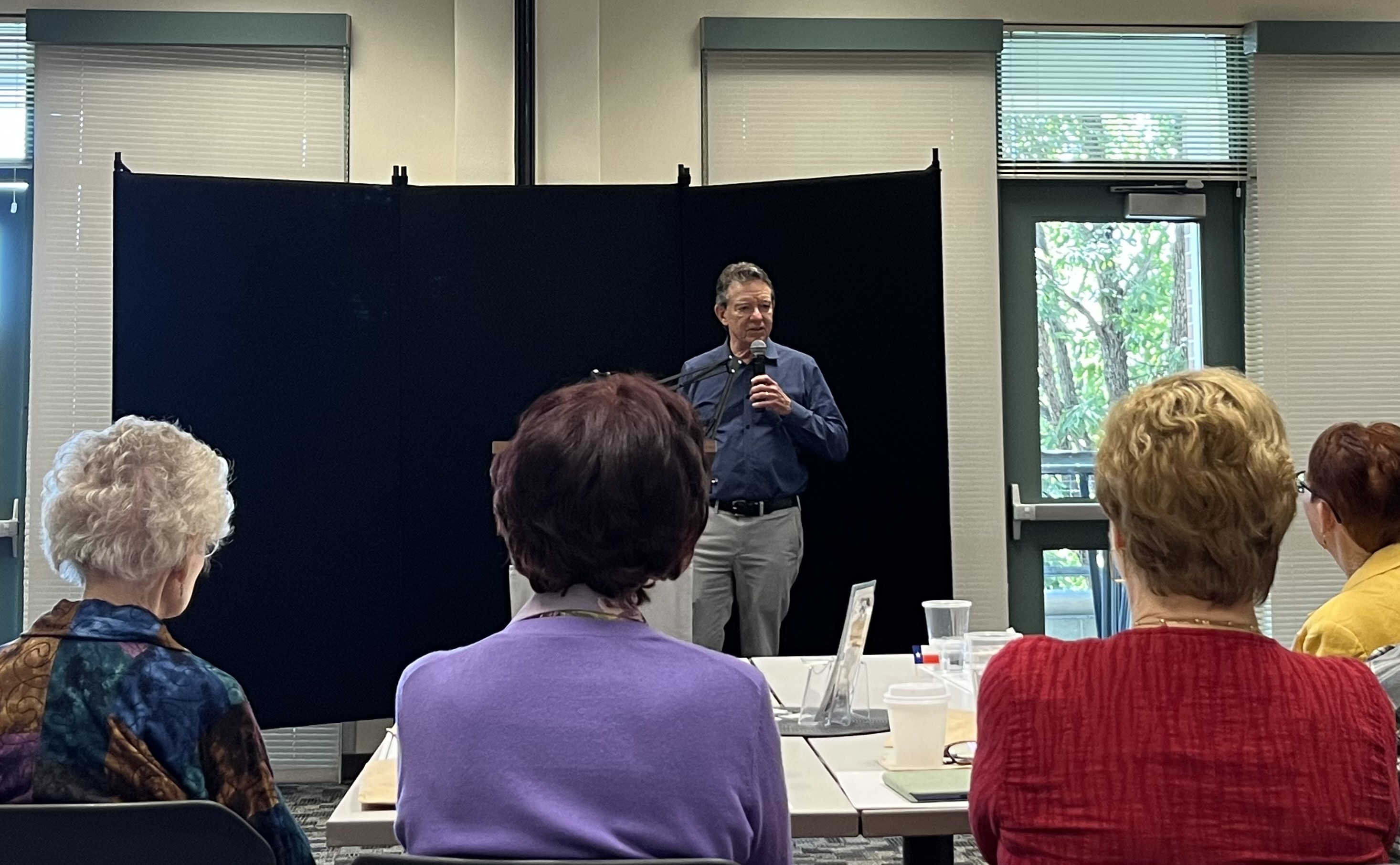
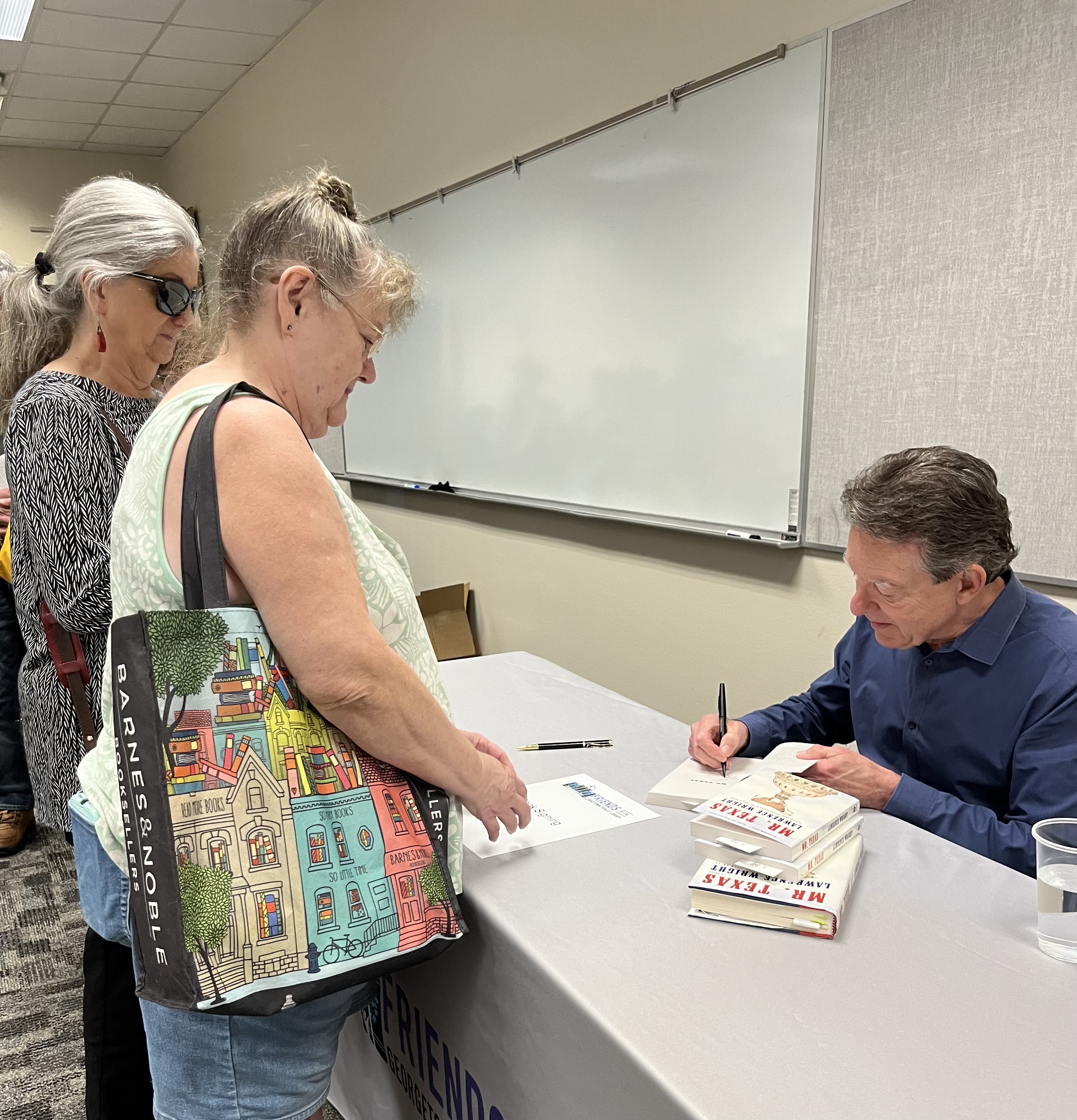
A Pulitzer Prize winning author Lawrence Wright discussed his 2023 novel Mr. Texas on November 14 as part of the Georgetown Public Library’s Hill Country Author Series. Mr. Wright currently lives in Austin and is a staff writer for the New Yorker. He has written 11 nonfiction books and three works of fiction. During the event, he spoke about his novel as well as the long journey to getting the story told.
“There’s serious purpose in the book,” said Lawrence Wright, author of Mr. Texas. “Because I love Texas and wanted it to be its best self.”
Mr. Texas follows protagonist Sonny Lamb, an unlikely political candidate, through his career in the Texas Legislature. The book provides a satirical take on Texas politics as Sonny reckons his own personal values with those of unethical political figures.
“There is an author’s message, more or less,” Mr. Wright said. “I’m hoping that the humor will appeal even to the people that may profoundly disagree with some of my stances.”
Mr. Wright said he went through many iterations of Mr. Texas before it was a book. It began as a screenplay, then a play. Following the advice of Broadway producer Margo Lion, Mr. Wright rewrote the story into a musical that was never produced. It was rewritten again as a TV show, which was sold to HBO but then “killed” after staff changes, according to Mr. Wright.
“I called my agent and I said, ‘I can't get this story out of my mind,’ ” Mr. Wright recalled. “What can I do with it? [My agent] said, ‘Podcast!’”
Mr. Wright and his son turned the musical into a podcast, and wrote 53 songs during the pandemic. However, the podcast was not feasible with production expenses, Mr. Wright said.
“It was like, we built a ship in the basement. Now we can’t get it up the stairs. Then it finally occurred to me [that] I write books for a living. A little bit of me wondered... huh, why didn’t I think of that several decades ago?” he said.
Mr. Wright said writing the novel was one of the “most enjoyable writing experiences” he has ever had. He said it made him realize the power of a novel in comparison to other storytelling mediums, which focus on scenes more than character and narrative.
“[Before writing the novel,] I already had the story and I had the characters and the dialogue,” he said. “What you do in a novel, you can’t do in any of those other forms. [In a novel,] you can go into the reader’s mind. You open up the heart and the mind of your characters in a way you can’t do in any other form.”
Mr. Wright’s skills as a nonfiction writer influenced his fiction writing. He said he spoke with members of the Texas Legislature, including former House Speaker Pete Laney, for inspiration on how to create his main character.
“I believe in characters that are full. They're not stereotyped,” Mr. Wright said. “I'm deliberately calling on these historical figures that we've all grown up with. I like for my fiction to be true-ish so there's recognizable territory for you.”
Mr. Wright continues to make strides in his nonfiction work. His next article for the New Yorker is about a group of Catholic nuns in Waco who were called by a Catholic Deacon to minister to the women on death row in Gatesville, Texas. The deacon wanted the nuns to teach the women how to live in community with one another.
“Is this a story of good and evil? Is it a story about redemption? You know, I didn’t know what it was, but I just knew there must be a story hiding under that rock. And indeed [there was],” he said. “The New Yorker was look- ing for about 8,500 words, and I turned in 40,000 words.”
Mr. Wright said he is anxiously awaiting his editor’s feedback on his work, knowing that the length is likely going to be a problem.
Mr. Wright said he has also become involved in politics himself. He has been working with a lobbyist in Austin to turn Camp Mabry into a public park.
“[Camp Mabry] is 385 acres in the heart of Austin, and it's really just a sprawling office park for the National Guard right now,” he said. “They don't use it for military purposes at all, and so it's a bit of a political problem.”
As for Mr. Texas, the author said he continues to explore future storytelling possibilities.
“Last week, I got a call from the Austin opera asking if I would turn Mr. Texas into an opera.” Mr. Wright said, evoking laughter from the crowd. “I like the idea that somebody can see the possibilities of this in another form. So I’ll keep you posted.”