
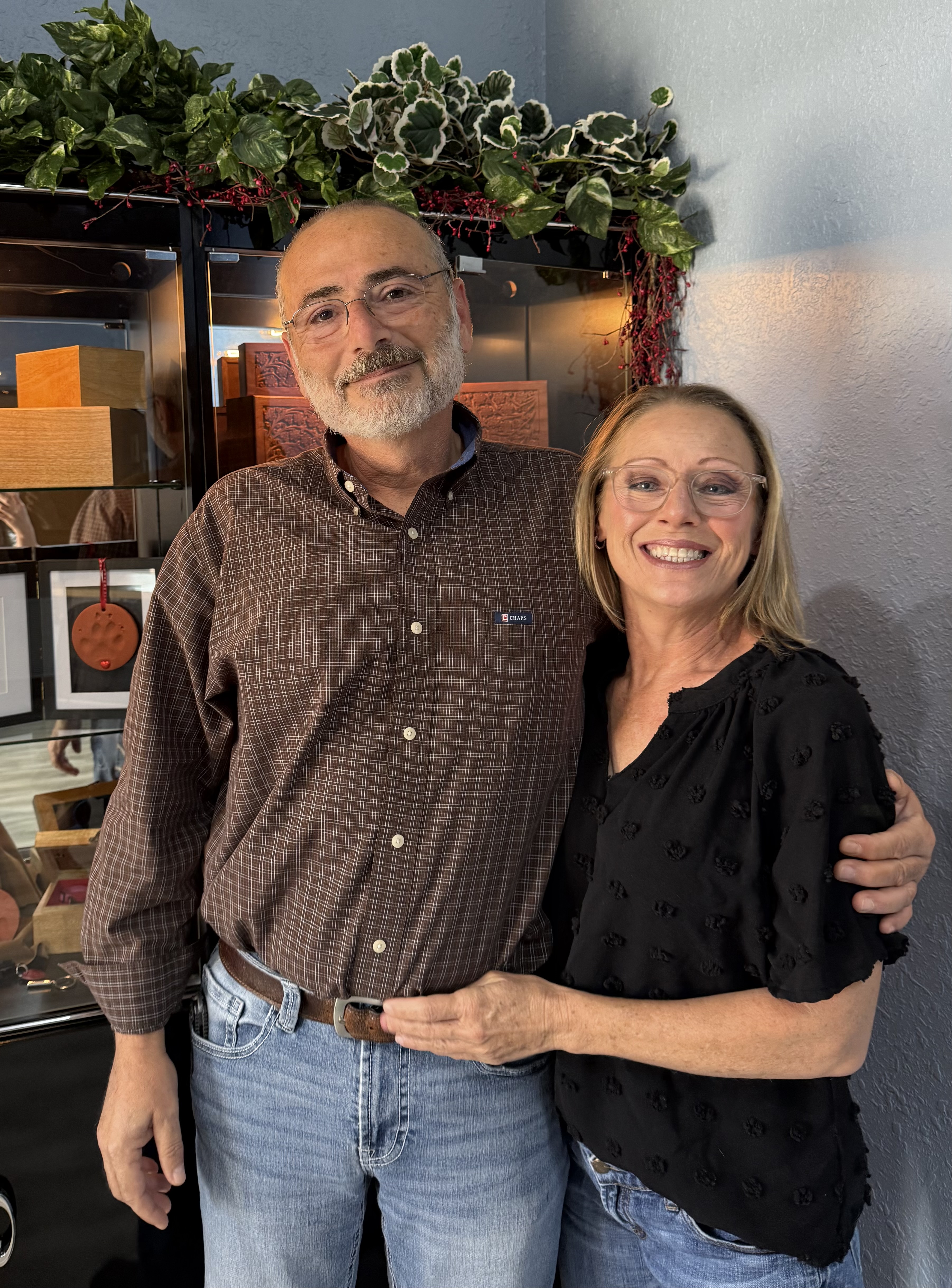
In a shopping center shared with a gym, salon, Vietnamese restaurant and liquor store, Carlson Pet Memorial quietly offers pet cremation through aquamation, a water-based process that releases no carbon into the atmosphere.
Owners Abraham and Laura Nimeh describe the water process as a gentler alternative to fire cremation. The alkaline hydrolysis machine, a large metal cylinder, uses alkali-charged water heated to 204 degrees. The remains are reduced to an ash-like substance over 20 hours, and leftover bones are grinded just as they would be in a crematory.
Aquamation is a sped up process of what happens when a body is buried.
“There's natural alkali in soil,” Mr. Nimeh explained. “Then, it rains, and that activates that alkaline over a period of three months to seven years depending upon size and mass. All you're left with is bone, everything else then decomposes and goes away. We do the exact same process, but we do it in about 20 hours. [...] The flow of the water within the machine is what really causes the magic.”
The remains are sterile and don’t have contaminants. The leftover water is a “pure liquid” similar to bone broth and is stored in three giant, metal tanks — waiting to be used by organic farmers.
“In our process, you could literally drink the liquid at the end,” Mr. Nimeh said. “It’s so pure.”
The Nimehs were inspired to open up Carlson Pet Memorial after the death of their beloved Chocolate Labrador, Penny. The couple went with traditional cremation methods, but were suspicious of how little ashes they received back.
In traditional cremation, there is some “co-mingling” even if the crematory does compartmentalize, Mr. Nimeh said. This is due to the flames, which spit up ashes into shared chambers. There are also ash transfers which lead to cross contamination and lost remains.
“You never really, truly get only your pet,” he said. He estimated that aquamation produces about 30 percent more remains due to the chemical process.
There’s a portrait of Penny beside the pass-through window in the lobby — a small room with a homey seating area. A basket of tissues is positioned on the coffee table.
“I cry every time I talk to someone else who's losing a pet,” Ms. Nimeh said. “I still need to learn how not to cry— how to bring it down and be more supportive.”
Although Mr. and Ms. Nimeh opened Carlson Pet Memorial Center four months ago, the couple’s background is actually in childcare. They founded a chain of 24 hour childcare centers in Killeen, but years ago sold the businesses to spend more time on their ranch and to raise their own kids.
Now, aquamation is their focus, and have aquamated 50 pets and partnered with three different veterinarians. They take pride in dealing first-hand with their clients. Once, the couple drove to Manor to play with a dog in a veterinary parking lot before it was euthanized, supporting the family while there. They also aquamated a crawfish for a teenage girl who saved it from a crawfish boil and kept it as a pet. Mr. Nimeh said the crawfish was ‘her baby’ for two years.
“We can do things as small as a gerbil, hampster— even a fish,” he said. “I could do a donkey, a pot belly pig…”
The regular aquamation package has three box urns to choose from, including mango wood, bamboo, acacia or a bamboo shaker. However, Mr. Nimeh said he’s prepared to meet any customer requests.
“If you want a mahogany [urn] that was hand burned and carved into the shape of a dolphin — by a one legged Peruvian artist—and you have the money, I'm flying to Peru,” he said.
Aquamation of human bodies is illegal in 24 U.S. states, including Texas. However, pet aquamation is legal in all 50 states. Mr. Nimeh estimates that Carlson Pet Memorial is one of three places for pet aquamation in Texas. In the future, they envision opening more locations as demand climbs.
Information:
Aquamation Center Carlson Pet Memorial
321 Limestone Terrace, Jarrell
877- 738-2782