
Justices of the Peace advocated for creation of county Medical Examiner office
Photos by Nalani Nuylan
"It’s not about the JPs not wanting to do their job. It’s about the future and sustainability in Williamson County.”
~ Angela Williams, Justice of the Peace Judge Precinct Two
Williamson County is the largest county in Texas without its own Medical Examiner’s office.
A Medical Examiner – or ME – is an appointed public officer and licensed physician who conducts medical examinations and autopsies to determine the cause of death in investigations.
Because Williamson County doesn’t have an ME’s Office, the task of finding a cause of death falls on the county’s Justices of the Peace, who typically deal with criminal and civil law cases like debt claims, residential eviction notices, truancy and traffic cases.
With a population that’s doubled to 700,000 over the past decade, the four current justices say the time is now to work towards a proper ME’s office, which would allow them to properly address their primary duties.
“We respectfully are asking for four death investigators under the JP as a short-term goal,” Justice of the Peace Precinct Two Judge Angela Williams told county commissioners back in April. “An intermediate goal is a Medical Examiner. It’s not about the JPs not wanting to do their job. It’s about the future and sustainability in Williamson County.”
The prospect of a Medical Examiner’s Office was previously brought before the Commissioners Court on April 30, 2013. There was no action taken at that time. According to data obtained by the Sun, deaths in the county have increased by 122 percent.
In the wake of the budget cycle for the 2025 Fiscal Year, the four Justice of the Peace Judges are raising awareness in the hopes of change.
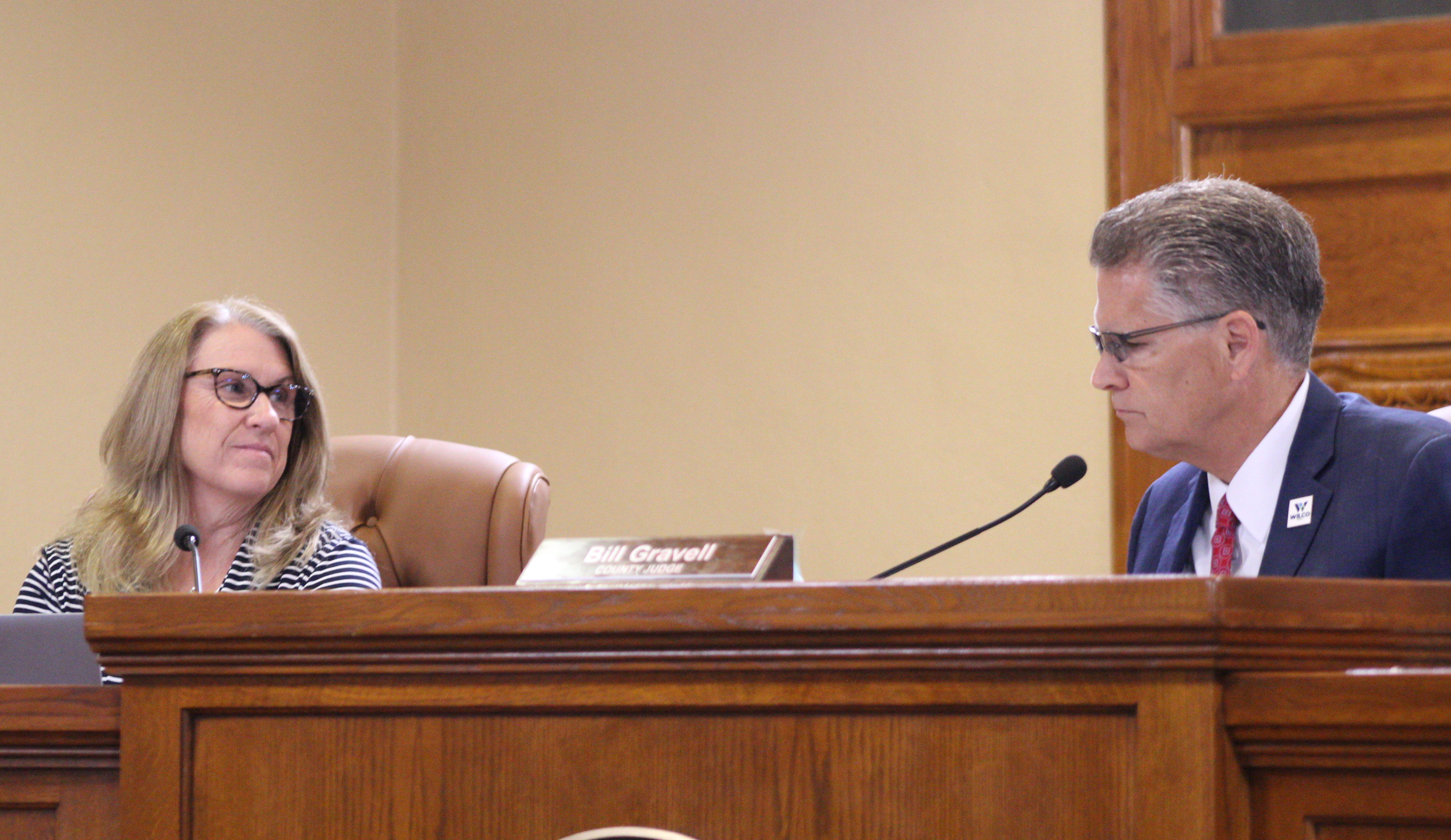
In a follow-up discussion, County Judge Bill Gravell said that he is talking to the JPs on developing a strategic plan to incorporate a medical examiner’s office into the county's overall strategic plan.
The situation at hand
Texas law requires that any county with a population of more than 2.5 million shall establish and maintain the office of medical examiner. Only two counties – Dallas County and Harris County – meet those population requirements for an ME’s Office. Data obtained by the Sun show that both counties have at least twice as many JPs, as well as their own ME’s office.
Data also shows that out of the top 25 most populated counties in Texas, nine do not have an ME’s Office. Williamson County has the highest population out of the nine.
In Williamson County, JPs rotate each week to go on-call for a death inquest. Precinct 1 Justice of the Peace KT Musselman explained the on-call rotation is 24/7, meaning a death investigation can occur at any time of day on top of holding court with a full docket.
“I have so many [residential] evictions in my court that I cannot help, but I have to have eviction dockets, even on the weeks that are on call,” he said. “So I literally chance it every week and I have [court] because I wouldn't have enough time to get all the evictions [done]. So it's gonna come at the cost of the public and it already has.”
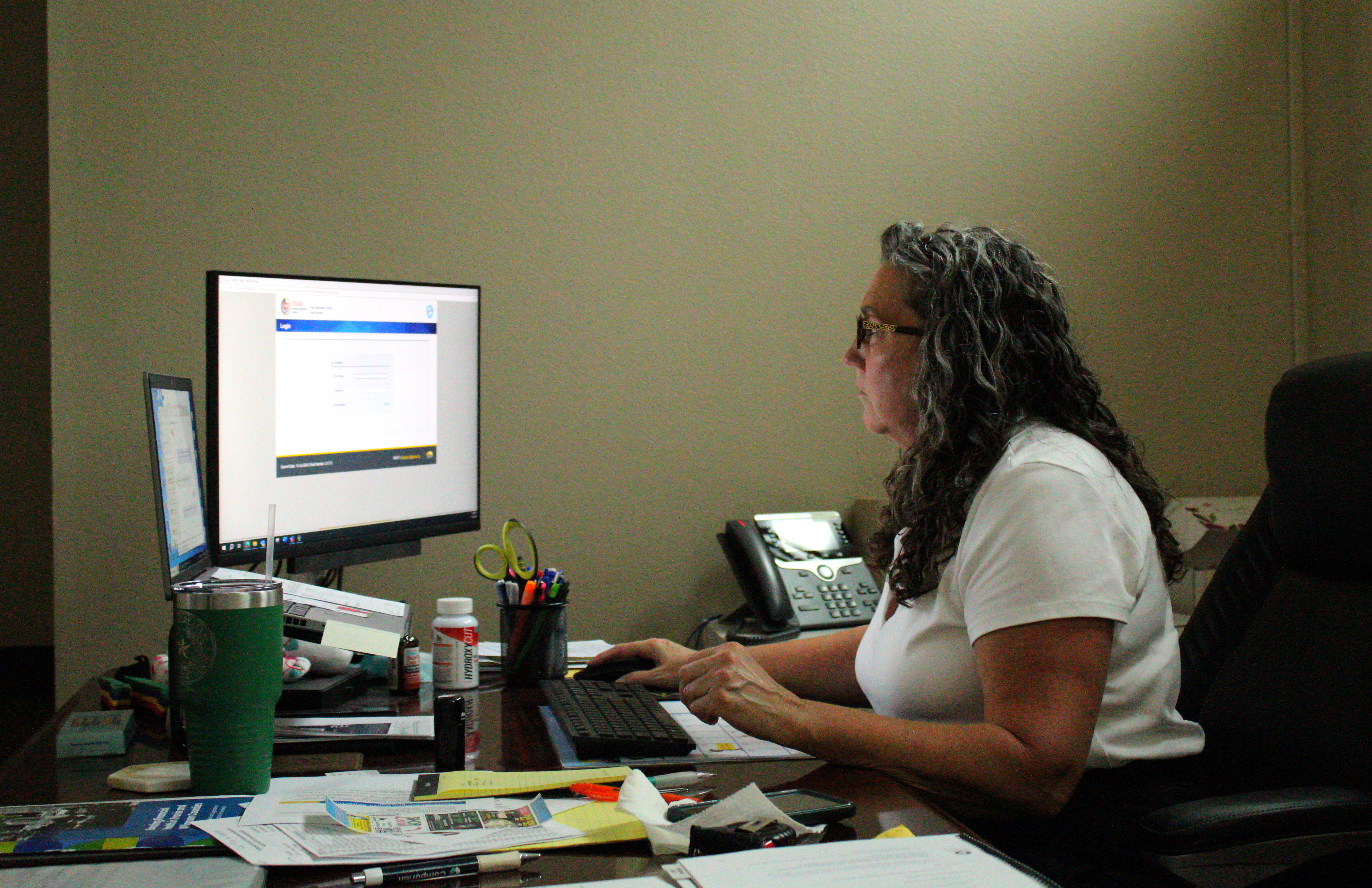
Precinct 4 JP Rhonda Redden – who is a certified death investigator – explained that she started keeping track of the time she spent working death cases the past year. She found that she spent 2,600 hours last year working on death cases. She said the workload is equivalent to a full-time job.
“I literally work all the time,” she said. “That’s a lot of time, but a lot of it is dedicated to dealing with death and then I still have to be the full-time judge.”
The death inquests take away other opportunities to help the community, she said.
“I feel almost like I’m a little cheated,” Judge Redden said. “Sometimes I don't get the full judge experience. I would love to have more things that would impact the kids in our communities. But we don't have the time and, clearly, I don't have the room for it.”
In Williamson County, JPs send cases to other agencies, frequently Travis and Tarrant counties, to conduct autopsies.
During a Wilco Commissioners Court meeting on July 16, Judge Musselman and Judge Williams submitted a line item money transfer to refill their autopsy accounts. Judge McLean requested another line item transfer for the July 23 meeting.
Totaling $245,000 in fund transfers, all three JPs have run out of money — from taxpayer dollars — for conducting death inquests for the 2023 Fiscal Year.
“I have about $1.2 million in the coming budget year, about half of that budget is going to be budgeted for autopsies,” Judge Musselman explains. “I have run out of money for autopsies in my budget year already . . . I've had to transfer money from my transport line items and back and forth to make sure there's enough money to pay the [autopsy] bills.”
According to the county’s budget order, autopsies for FY 24 consumed over 20 percent of all four JPs budgets, averaging at $428,250. JP 1 total adopted autopsy budget was $433,000. Both Judge Musselman and Redden said funds will likely run out before the next budget cycle.
“That's going to happen, and it's probably going to happen for most of the offices this year at some point if they haven't already,” Judge Musselman said. “Because what we predicted for, growth last year is already underwhelming and we're running out of money. That's how we know what the real-time sense [of the situation].”
Looking at ME offices
The four JPs began having joint conversations about how an ME’s office could help the county in January.
The group took a field trip to Fort Bend County to see how an ME’s office could work. The Fort Bend ME’s Office – located near Houston – opened in 2019 and provided “a really good overview of how it works,” Judge Redden said.
The Fort Bend Chief Medical Examiner Dr. Stephen Pustilnik told the Judges that counties should have an ME’s Office when they reach a population of about 500,000.
“I think the workload [in Williamson County] agrees with that.” Judge Musselman, said.
During the Fort Bend trip, the JPs said they discovered that a proper ME’s office could be constructed locally for about $15 million.
“We don't have to spend $45 million to have these really giant high rise buildings that have multiple floors,” Judge Redden said. “We can get a medical examiner that would take us into the future, and it wouldn't cost us an arm and a leg.”
Mr. Musselman said the amount of land already owned by Williamson County for future needs is an advantage.
“The conversation to be had as to whether or not there's already an opportunity to use something that we have [in] county possession to develop in a place that's fitting for such an office,” he said.
Short- and long-term solutions
To alleviate the workload and lower the price tag, the JPs have looked for other possibilities.
This year, death cases have been sent to a third-party forensics firm Hill County Forensics. Owned by former Travis County Chief Medical Examiner Dr. Satish Chundru, Hill County Forensics conducts most of Wilco’s autopsies.
“We have the Hill Country Forensics, and they have been nothing but stellar,” Judge Redden said. “They get all of our stuff for us, they're very timely and they have a really good system. Dr. Chundru and his team have been absolutely amazing.”
Williamson County still sends bodies to Travis County for special cases like homicides, suicides, child deaths, fentanyl and other overdose deaths.
For the short term, the Judges are pushing to add a death investigator to each of the JPs’ staff.
Judge Redden explained that a death investigator would work the on-call week for their respective judge and handle the 20-30 death cases for that given week.
“I never, never asked for anything I don't need,” she said. “So what I need though, is a death investigator because I am beyond overworked.”
In the meantime, the Judges are hosting community meetings to spread awareness and advocate for an ME’s Office in the long term. Upcoming meeting dates are July 25 at Northway Bible Church in Leander and August 19 at the Georgetown Annex. Both meetings are from 6-8 p.m.
“It says a lot about an issue that you can have four justices of the peace from two different political parties articulating and asking for the same thing because it's not a party issue,” Judge Musselman said. “It’s so rare, it’s almost refreshing.”