
Georgetown’s Parking Ambassador
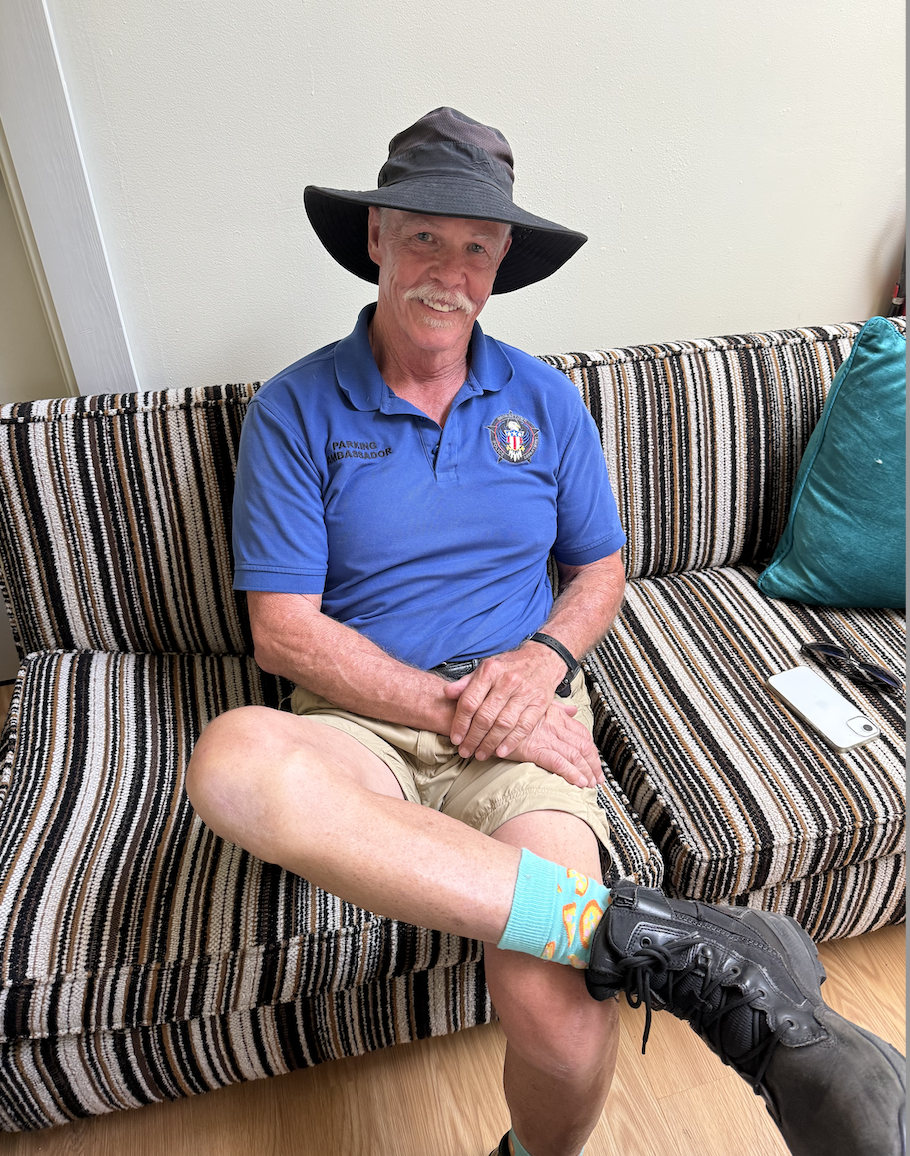
Being a “parking ambassador” might sound like a cutesy title for someone who gives tickets to illegally-parked vehicles.
But Dan Pulatti — who has been the Georgetown Police Department’s parking ambassador on the Square for the past two years — said, by definition, the title fits the job. An ambassador is someone who promotes an activity or is a representative of a specified cause.
“I’m not a car ticketer,” Mr. Pulattie said. “In the broad scheme of things, it’s a job that represents Georgetown to the world.”
He said tourists often ask him for directions or restaurant recommendations.
“I’ve met people from different countries, and lots of cities in Texas and other areas,” he said.
His work, generally, involves monitoring vehicles in the 3-hour parking zones around downtown Georgetown and issuing warnings or tickets to those that exceed the posted time limit. His prerogative isn’t to write tickets, he explained— it’s to keep “the spaces moving.”
“It’s not like we’re trying to hide behind a tree and get somebody,” he joked. “I’m not going to handcuff [people]. The whole idea is to keep the parking free for the people.”
Mr. Pulattie walks around the Square most days, armed with a police radio and a tablet. With his head tilted down, he types into a tablet to record the license plate numbers of parked cars. At each car, he’ll squat down and look at one tire. He keeps track of where the tire’s air valve cord is by noting the time it would be on a clock face. A shifted valve means the car’s left since the last time he checked.
If someone just reparks their car in the same spot, it’s technically not breaking the rules. However, he urges people to be more considerate because inconvenient parking causes businesses to lose customers.
He also notes if a license plate number includes DV “Disabled Veteran” lettering, which means the car gets handicapped parking. Interestingly, Mr. Pulattie said he almost never sees “DV” license plates in handicap spots, possibly because of their selfless nature, he said.
The first time someone parks illegally in a calendar year, they get a warning. Mr. Pulattie mostly gives out warnings, since most people only need a nudge to be more considerate. Mr. Pulattie said he can’t remember the last time someone gave him a hard time for a parking ticket.
People rarely walk up when he is in the midst of catching them for a parking violation. Most interactions with people on the job involve visitors milling about the Square, looking for a friendly face. He’ll ask people about the stickers or other “clues” about their personalities that show up on their cars. He notices when he sees the Texas Tech University logo — where he went to school.
The most memorable run-in he had on the job was with a goat. There was a blacked-out suburban parked in a handicap spot. Mr. Pulattie peered into the tinted windows, searching for a handicap tag.
That was when he saw the goat’s strange, slanted pupils. He had to do a double-take, he said. Then the window rolled down: there was a woman holding the goat in her lap.
“I started talking to her and petting the goat,” he recalled. “She’d raised it from a bottle. It had been orphaned or something.”
Mr. Pulattie didn’t end up giving the woman or goat a ticket. They were parked legally, afterall.