
Detectives who won’t give up
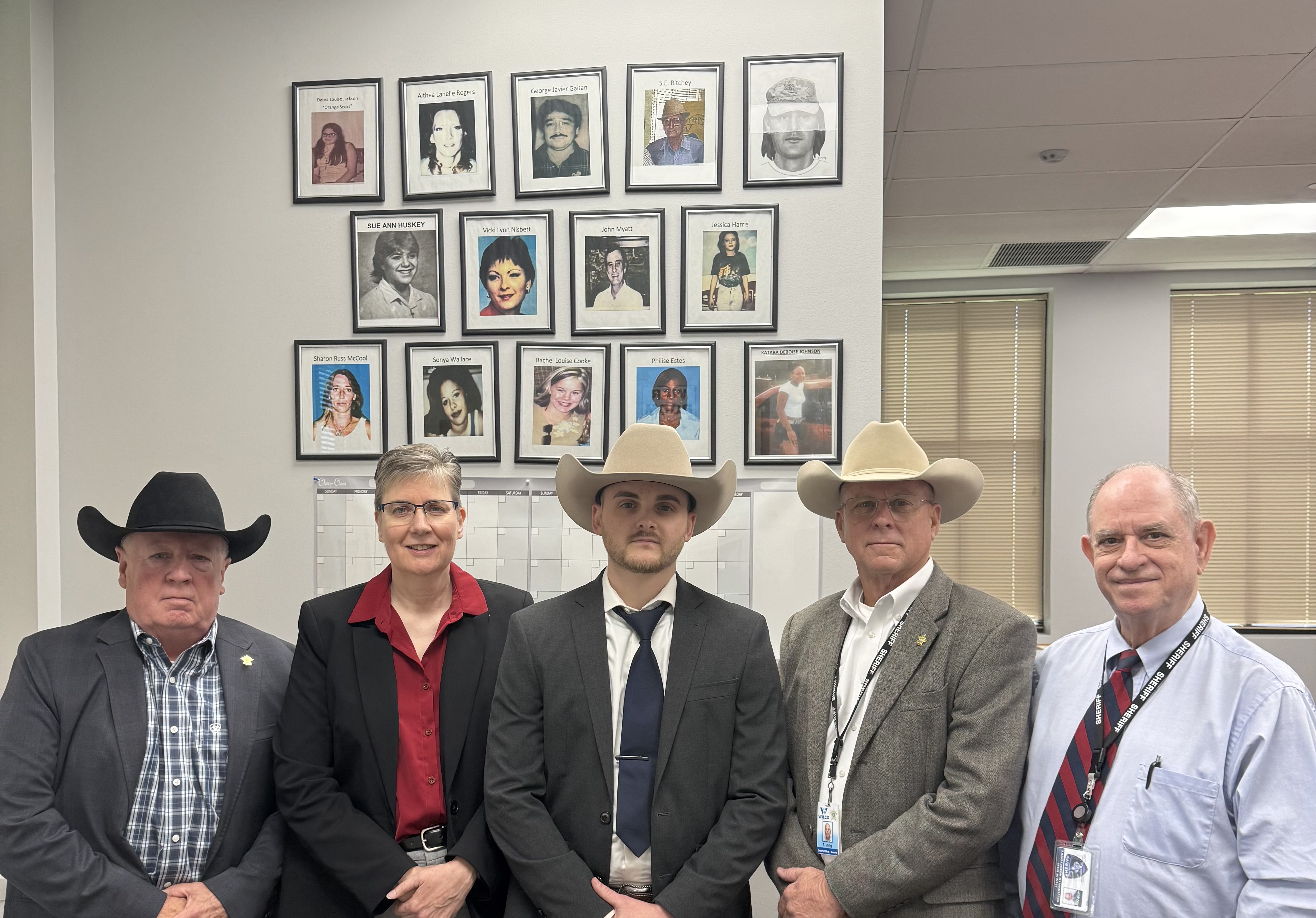
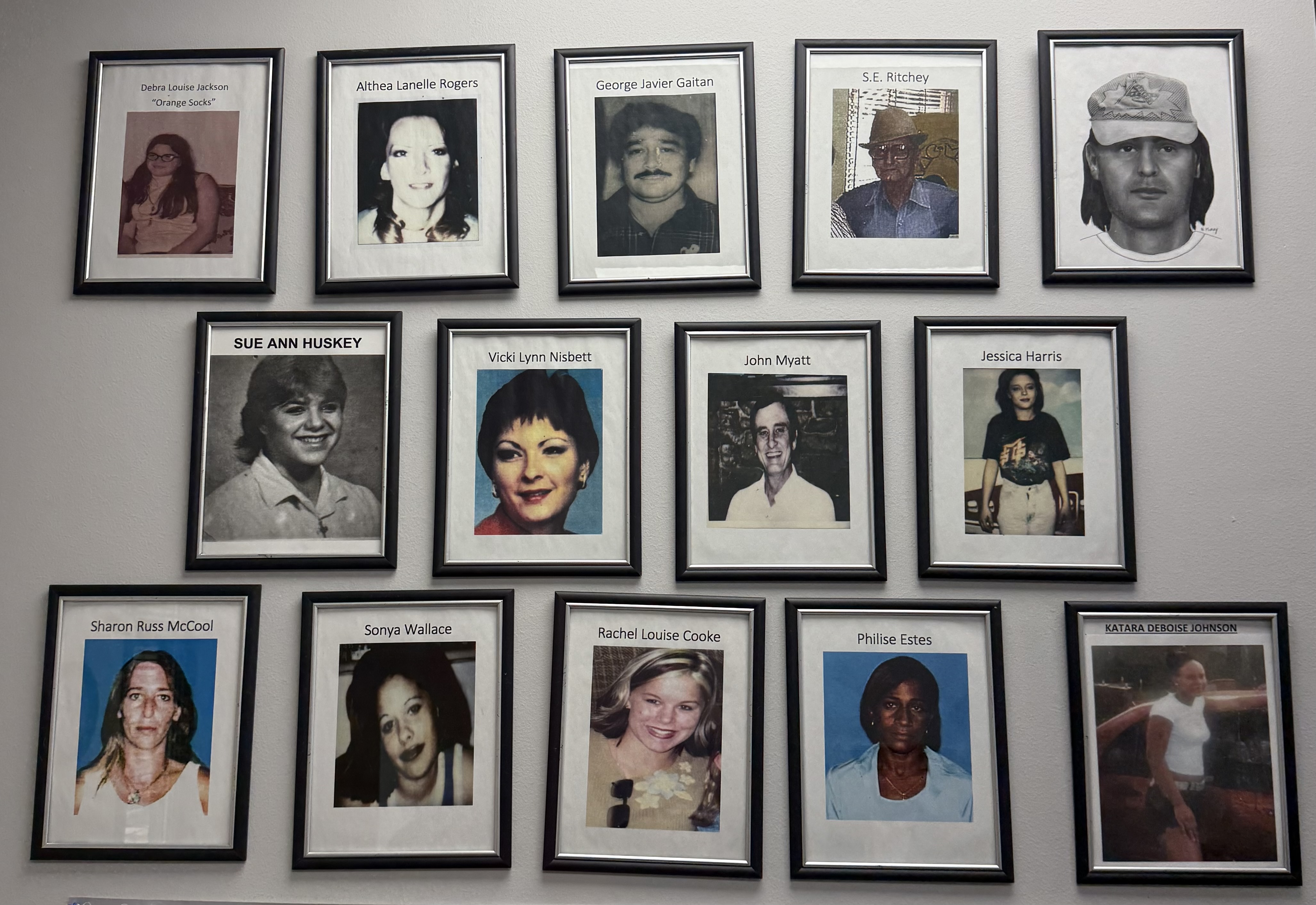
Debra Jackson was found strangled in Williamson County, only wearing orange socks, on Halloween in 1979. Rachel Louise Cooke went on a run in 2002 and never came home. When these cases, and many others, came across the desk of the Williamson County Cold case detectives — they had no suspects and no leads. With each cold case, the detectives started the investigation from scratch.
“Our job [as cold case detectives] is to bring a case from 1979 or 2002 up to the level of professional standards of homicide investigation that happens today,” Williamson County Detective Craig Hunter said. “We make sure those cases get that same level of attention, forensic testing, interrogation and investigation.”
The Williamson County cold case unit is currently working on 12 cases, and Detective Mark McKinney said it’s a tremendous amount of work. Debra Jackson — referred to for years as “Orange Socks” before being identified — is the oldest case the team is working on. Ms. Jackson’s body was near the Walburg exit on Interstate 35 more than 45 years ago.
Henry Lee Lucus, an infamous serial killer, confessed to the crime while in prison for other murders, but his involvement in Ms. Jackson’s death has been ruled out after he failed to recall details of the crime. “Orange Socks” is one of the unit’s hottest cases with some of the latest information, Mr. Hunter said.
“You would think, well, that’s the oldest case, if they [haven’t] solved it by now… That’s exactly [how] you can get even further from the truth,” Mr. Hunter said. “All the cases get attention from us. There’s not a case that we just put on the shelf and forget about.”
There are five cases that Mr. Hunter said are “really hot” right now, with evidence coming in “left and right.” The unit is trying to keep its heads above water by scheduling interviews and conducting interrogations. The detective’s texting group chat is very active.
“Hardly a day goes by — counting Christmas, Easter — that we’re not texting each other at night: ‘Hey, I just got some information from an informant’ or ‘I know it’s 1 a.m., but this came to me!’ ”
Rachel Louise Cooke, who went missing in 2002, is the most recent case they are working on. Michael Keith Moore confessed to the crime in 2006, but was found not guilty in court after pleading innocence.
Detective McKinney said there can be positives and negatives to a case receiving publicity — a negative being an attention seeker falsely confessing to the crime. Ms. Cooke’s case has been covered on true crime podcasts, shows and online videos. Many hosts criticize detectives for a lack of information gathered in the case. However, the cold case unit receives tips about the case each week, Mr. McKinney explained. True crime shows typically only have about a 10th of the information about the case, and that this isn’t an accident.
“We want the suspect to be the only one to know certain things,” he said. “Unfortunately, we just can’t release a lot of [information] because we have to maintain the integrity of the investigation.”
True crime podcasts can help the investigation though, because any type of publicity can lead to new tips, Mr. McKinney said. Even if a tip doesn’t help to solve a crime, it can help eliminate suspects. The detectives keep track of all living suspects and they can almost always find them — whether they are in jail or are living in the outside world. Interview techniques with each suspect vary from person to person.
“If the guy has an extremely violent criminal history, we may not just go knock on his door, because we want to avoid confrontation,” Mr. McKinney explained. In that instance, detectives would try to catch the suspect in a place where they may be more cooperative. Mr. McKinney has shown up to every type of workplace imaginable, as well as hospitals, universities and prisons.
Detective Sam Strauss had a case where he interviewed a victim’s brother in prison. Even though the brother wasn’t a suspect, he was able to share various rumors he had heard from other inmates — which helped the case. Advancements in technology are also helping detectives further analyze evidence to gather information.
“We may have evidence that was tested and there’s [now] new technology, so we want to test it again,” Mr. Strauss said. The unit is waiting on new forensic analysis on four of the cases. “Our sheriff [Matthew Lindemann] has been very generous with making sure we have funding for doing these tests. Testing is very expensive,” Mr. Strauss said.
The cold case unit intermittently uses canines to search for bodies in different areas. Mr. Hunter said they have found three skeletons of Native Americans in the last couple years.
Through DNA testing and consulting anthropologists, Mr. McKinney explained they can figure out what Native American tribe the skeletons were from. The unit then contacts the tribe and coordinates giving them the remains.
“We obviously want to respect their traditions and their customs,” Mr. McKinney said.
The most recent Native American remains were found in a housing development in December. Detectives are still waiting on the DNA test to confirm the specific tribe the deceased was part.
In 2019, two bodies were discovered buried in the Williamson County Cemetery without a headstone. One body was from 1979 and the other was from 1989. In both instances, the families never knew what happened to their loved one.
“The agency helped to get them funding so they can get [grave] markers,” Mr. Strauss said. “All along, the families didn’t know what happened to them. Even though we didn’t have who may have murdered them, we certainly were able to give closure to the families and honor to the victims.”
Despite their best efforts, the cold case unit has not been able to close many cases. Mr. McKinney said this can be “pretty discouraging” at times.
“It takes a special type of [detective] to do cold case,” Mr. McKinney said. “If you’re doing normal investigations, you may write an arrest warrant once or twice a week to solve your case. It’s just not like that whatsoever down here.”
The cold case unit consists of five reserve detectives and one full time detective. The reserve detectives, who typically work 15-20 hours per week, are retired law enforcement employees who donate their time. They have the same authority as Mr. McKinney, who is a full-time employee. He had several years of law enforcement experience before joining the Wilco Criminal Investigations Division. Mr. McKinney transferred to the cold case unit in 2023 and said he benefits from working with the reserve detectives.
Detective Strauss’ medical background helps him interpret the DNA and autopsy reports. Strauss started out as a medical doctor, joined the military and retired from the Air Force as a flight surgeon. For 10 years, he trained astronauts for NASA then decided to get a degree in criminal justice and completed a Basic Peace Officer Course in 2017. He has been working as a cold case detective since 2019.
Detective Hunter began as a patrol officer and spent nine years as a detective, investigating homicide, narcotics and organized crime. He then joined the Texas Parks and Wildlife Department as a Texas Game Warden. During that time, he served on patrol and internal affairs and special operations. He was deployed to major emergencies and investigations across Texas including the Waco siege involving polygamists. After 34 years, Mr. Hunter retired as the Colonel Game Warden, Director of Law Enforcement. He has a masters degree from Texas A&M and is a graduate of the FBI National Academy in Quantico, Virginia. He is currently a professor of criminal justice at Central Texas College and has worked as a cold case detective since 2018.
Detective Tim Long began his law enforcement career in Central Texas before serving as an officer for the Irving Police Department. He gained experience on patrol, SWAT and as a Detective in the Criminal Investigations Division. In 1985, Mr. Long moved to Georgetown and started a homebuilding company. He continued in law enforcement by serving as a Reserve Deputy Sheriff for Williamson County and as a commissioned Deputy Game Warden for Texas Parks and Wildlife. Long has been a Detective assigned to the Cold Case Unit since 2019. He is gradually retiring from managing his company and intends to continue his service to the community as a Cold Case Detective.
“I think for all of us, we’re here more than anything else for the families of the victims — and the victims, of course,” Mr. Long said. “For me, and having a business locally since 1985 — this community has been great to me. It has been a way of giving a little bit of my time to a community that has supported our business.”
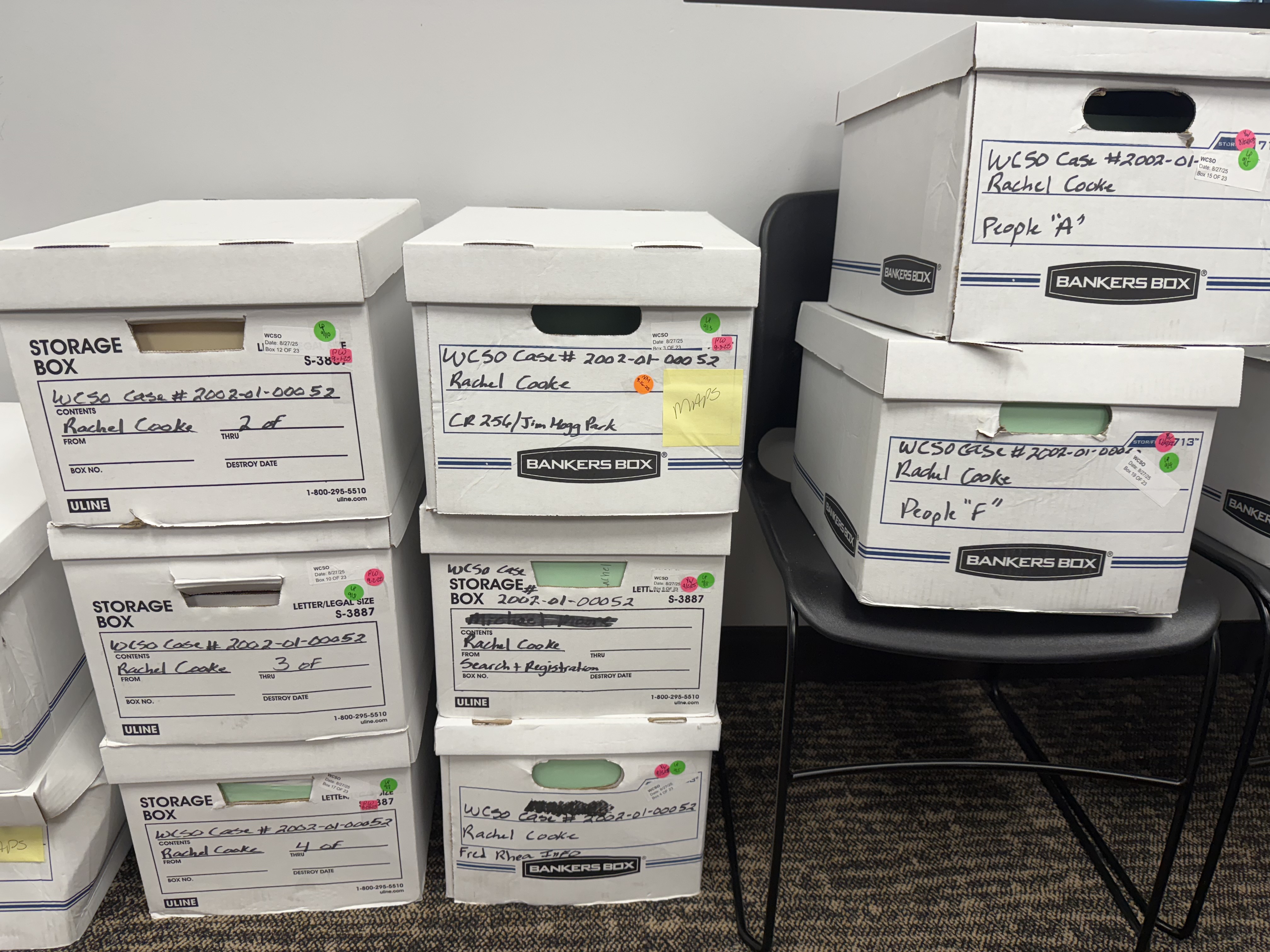
Detective Mary Lewis was a special agent for the US Department of Agriculture’s Office of Inspector General for 27 years. She helped investigate loan fraud, animal fighting and white collar crime cases. She retired in 2014 and became a reserve detective for the cold case unit. Her prior work experience has given her expertise interpreting and organizing legal documents. There are thousands of cardboard boxes of documents stored in the cold case unit. Ms. Lewis spent months organizing the archive for digitization.
“One thing we’re really proud of is within the last year we’ve been able to digitize all the cases.” Ms. Lewis said. Now, the records can be easily searched for on the computer instead of having to search through boxes.
The cold case detectives have personal relationships with most of the victims’ families and provide them with periodic updates.
“We’re in continuous contact with [the victim’s] family members,” Mr. Hunter said. “They know, with our current sheriff’s backing and support, that we’re out there trying to bring justice for the victim. [...] We just want the families to know that we come in here every single day. They’re not forgotten, and we’re not going to forget about them. We’re going to give our best professional effort.”
March 14 marked 27 years since 15-year-old Sonya Wallace was found murdered in Taylor, one month after disappearing from her home in Rockdale. Ms. Wallace left to mail a letter at the post office, four blocks from her residence, and never returned. The Williamson County Sheriff’s Office continues to search for answers. To report information regarding this case or others, contact the Sheriff’s Office at 512-943-5204 or email coldcasetips@wilcotx.gov. To leave an anonymous tip for any case, call 1-800- 414-8477.
Cold cases in Williamson County
• Debra Jackson was found murdered, wearing nothing besides orange socks, on Halloween in 1979.
• Althea Lanelle Rogers emptied her bank account, set out down the freeway on foot, and was never seen after October 1985.
• George Javier Gaitan never returned home from his business trip; he was found lying face down in a field, a suspected victim of homicide in 1987.
• S. Ritchy was assaulted and robbed in his home, the perpetrator fled the scene, leaving him to die in the hospital due to injury complications in 1988.
• Sue Ann Husky, a homicide victim, was found on the side of the freeway wearing a “Corona” tee shirt after being dead for two weeks in 1989.
• Vicki Nisbett never arrived to meet a friend at a Christmas party in 1991. Her body has never been found.
• John Myatt was found on the side of a county road in 1994; his manner of death was homicide— cause of death unknown.
• Jessica Lee Harris, a homicide victim, was found on the side of a county road in 1994.
• Sharon Russ McCool suffered blunt force trauma to the head and was found near a roadway in 1998.
• Sonya Wallace left home to mail a letter in 1999 and never returned. Her body was found in Taylor and her death was ruled a homicide.
• Rachel Louise Cooke visited her parents from college in 2002 and disappeared while on a run. Her body has not been found.
For more information, visit https://www.wilcotx.gov/638/Cold-Cases