
Inside Wilco's Teen Court
A teenager shifted nervously in his seat on March 24. He had already paid his traffic ticket for failing to stop for a school bus, but now he had to go before the Teen Court to remove it from his record.
Teen Court is a diversion program within Williamson County’s juvenile justice system that allows some teens who have committed a crime to participate in a peer-led court process with volunteer teen judges, attorneys and jury members.
Teen court volunteers, ages 13-18, learn all aspects of courtroom procedures, and even deliver a sentencing on juvenile cases. Sentences may include community service time, Life for Teens educational courses or serving on the teen court jury. Once the defendant completes sentencing, their real infraction is removed from their permanent record.
Program eligibility for defendants includes teens who plead ‘guilty’ or ‘no contest’ to a class C misdemeanor — such as alcohol consumption, disorderly conduct and traffic violations. Judge Evelyn McLean, who presides on juvenile court cases, sentences some of her defendants to participate in teen court.
“I am so thoroughly impressed with our teen court kids,” she said. “They’re truly better than many of our actual attorneys.”
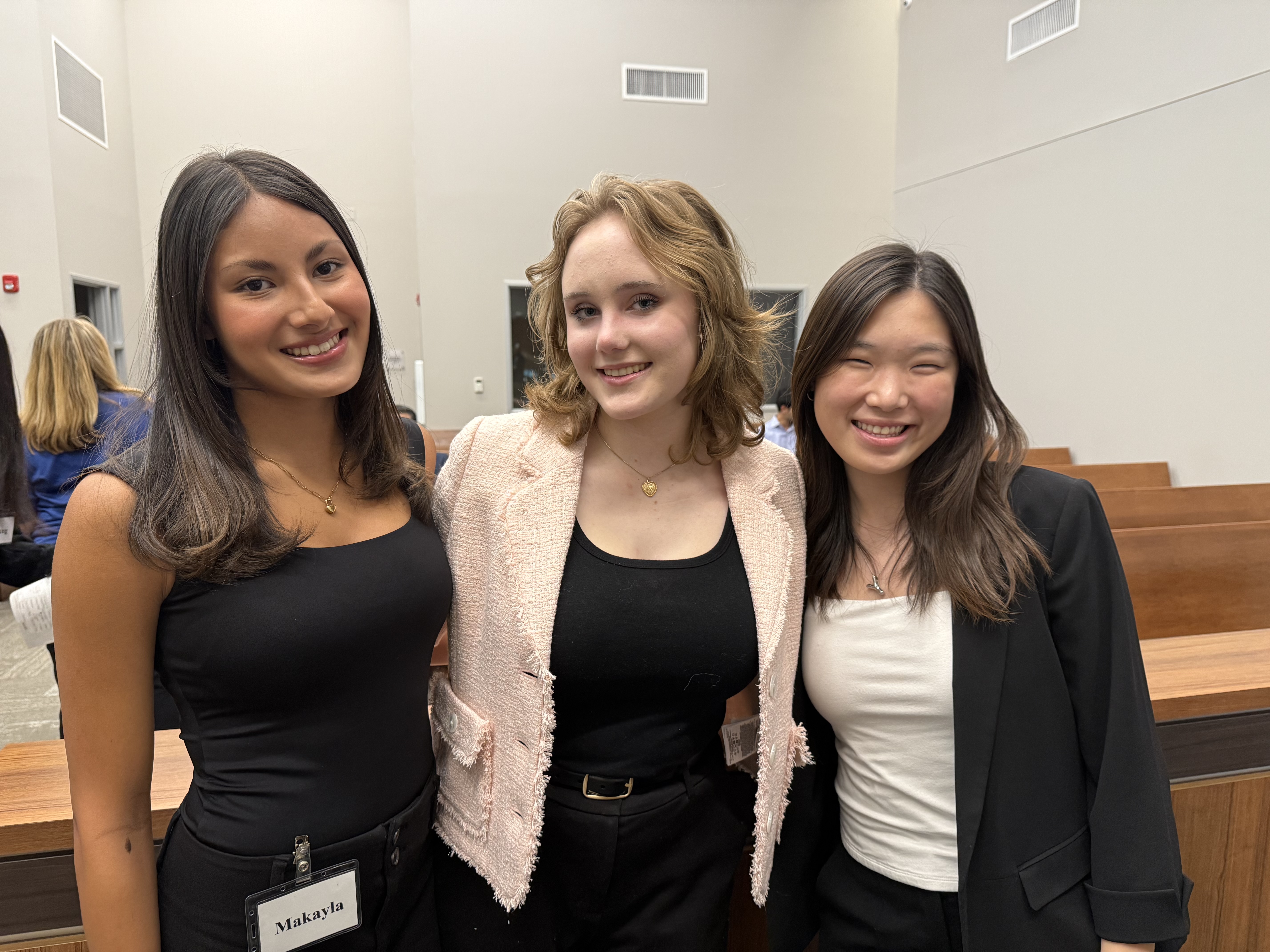
Makayla Saucedo, a high school senior and teen court volunteer, was the lead defense attorney during the March 24 traffic ticket case. She said she’s wanted to be a family law attorney since she was 7.
“It’s all I’ve ever wanted to do,” she said.
Over spring break, she was preparing the defendant for questioning and communicating with her assistant attorneys: Anabelle Harris and Yewon Jo. The prosecution — role playing as the state — was Apollo Van Ohlen, Ananya Ramamoortham and Grace Cheong.
During the prosecution’s opening statements, Grace reminded the jury that the traffic offense was a Class 4, Class C Misdemeanor, with a standard punishment of 30-24 hours of community service.
“Regardless of intentions, this is a violation of the law, and all violations of the law must be punished to protect the safety of all,” Grace said, stumbling over a few words but maintaining a sense of conviction.
Anabelle opened her client’s case by setting the scene for the jury: the defendant was pulled over on October 1, at 7 a.m.
“We ask you to consider three main things,” said Anabelle, who was wearing a pink tweed jacket. “First, that the defendant was not the only one that did not stop for the school bus. This does not mitigate his offense, but shows he had no ill will, and that it was an easy mistake to make. Second, that this was the defendant’s first offense in a whole year of having his license. He obeyed the officer and acted respectfully for him. Third, that he understands that he has done wrong and has learned from his mistake."
“We, the defense, ask you, the jury, to listen to the facts carefully to ensure the defendant receives the just penalty for his offense. No more, no less,” Anabelle said before taking a seat.
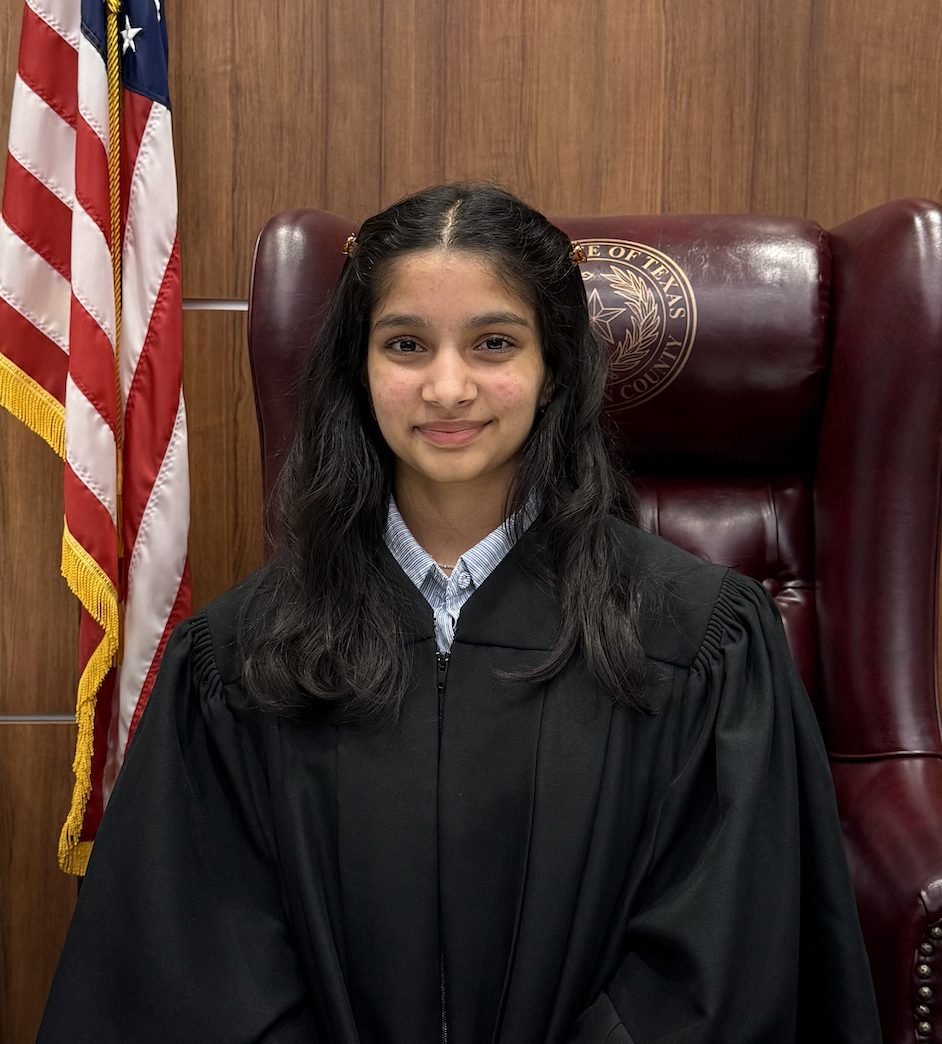
The defendant took to the stand. The judge, Aarushi Patal, granted Makayla permission to question him. Makayla sounded official when she asked him to state his full name, age and school.
“Awesome,” she replied, conversationally. “How’s your day going today?”
The two engaged in brief small talk about spring break and school schedules before launching into the big questions.
“Do you mind stating what sports you play?” Makayla asked. The defendant stated his sport and shared that he is on junior varsity.
Through her questioning, Makayla highlighted the defendant is taking two AP classes and that he plans to go to college. He has also helped out with local sports camps for kids. The morning he was pulled over, he was on his way to strength and conditioning practice.
“Do you mind if I ask how your coaches would describe you as a student and an athlete?”
The defendant froze up trying to answer the question.
“Yes… um… probably like, listening and— or, like listening and stuff.”
Makayla swooped in.
“Yeah, a driven student. Amazing. OK, I’m going to start getting into the events and what happened that day.”
Makayla asked the defendant about his infraction. He revealed that there were three other cars in front of him who also did not stop. There was a lifted truck that prevented him from seeing the bus, which was stopped on the opposite side of the road. A white board on wheels was rolled to the front of the room, and Makayla asked him to sketch out the scene.
“After the truck in front of me passed, I slowed down as fast as I could,” he told the courtroom.
“So you did slow down,” Makayla emphasized. “What was your reaction during that time?”
“I was kind of, like, just nervous,” he said. The cop pulled over him and the two cars in front of him who also didn’t stop for the bus.
“Whose vehicle were you driving? Your own? Your parents?”
“I was driving my own car.”
“How long have you had this vehicle?”
“Since Christmas last year.”
“Pretty good Christmas gift. Did you notice the cop was there?”
“No.”
Makayla had him go over how he respectfully interacted with the police officer.
“Do you mind if I ask how home life was after? Did you end up having a conversation with your parents about the incident?” she asked.
The defendant shared that his parents were disappointed but also understanding. He paid the ticket but was not punished beyond that. This fact was later brought up by the prosecution team.
Apollo Von Ohlen, the lead prosecutor, was the first prosecution attorney to question him.
“Hi. How are you?” Apollo asked. The defendant replied that he was “good.” After a kind introduction, Apollo asked the defendant questions, having him rebuild the event once again. The defendant admitted that traffic was stopped behind the bus.
“You didn’t notice that the [oncoming] lane next to you had stopped?” Apollo asked. The defendant was stumped. Yewon Jo arose from her chair.
“Objection your honor,” Yewon said. “This is badgering because it is very clear that the, uh, defendant would not have known… if the cars were not coming because of the bus or because of another factor. I’ll change it to speculation.”
“A driver should be aware of where they are going,” Apollo cut in. “And that includes people on the other side of the road, which is why I am asking if [the defendant] noticed that the traffic was continuing.”
“Your honor, it has been clearly stated that the witness had seen that the car stopped,” Yewon said. “However, it is clear that the defendant would not have known if this was because of the bus [which] was clearly covered— as the agenda stated.”
“That was not our question,” Apollo said.
“Sustained,” ruled Aarushi Patel, the judge.
During her next set of questions, Makayla asked the defendant how well he could see the traffic. He explained the raised truck was obstructing his vision. He could not see the school bus nor could he see the oncoming traffic. Ananya Ramamoortham, who was serving as an assistant defense attorney, rose to question him.
“So you said that, when you talked to your parents they were a little disappointed. But were you punished at all?” Ananya asked.
“No.”
“Were you [still] allowed to drive by yourself?”
“Yes,” the defendant said.
“Besides paying for the ticket, there was no punishment?” Ananya asked. The defendant nodded. When asked, he said he felt remorseful for what he did.
During closing arguments, Chloe explained the reason cars stop for school buses is to protect children.
“Today is an opportunity for the defendant to learn from the situation when he didn’t at home,” Chloe said. She proposed the jury give the defendant 37 community service hours and four jury terms.
Yewon Jo gave the defendant’s closing statement. “Your Honor, ladies and gentlemen of the jury, it is very clear today that [the defendant] understood to its fullest what it meant to be responsible as a driver,” Yewon said.
The jury, composed of teen volunteers and past defendants, retreated into the conference room. Recess was called, and teen court members chatted about “senior skip day,” dual enrollment courses and a boy who had recently “ghosted” someone.
When the jury marched back in, Aarushi tapped her gavel and silence returned to the court room. This was Aarushi’s first time wearing the black judge robe, and she didn’t know she would be judge until two minutes before the hearing began. She was apprehensive, but knew all she had to do was read the jury’s verdict, which sentenced the defendant to two jury terms and 30 hours of community service.
“The teen court wants to congratulate you for making the decision to clear your record,” Aarushi said to the defendant. “We hope this program blesses you and we thank you for giving us the opportunity to experience courtroom procedures firsthand.”