
Fields today, subdivisions tomorrow
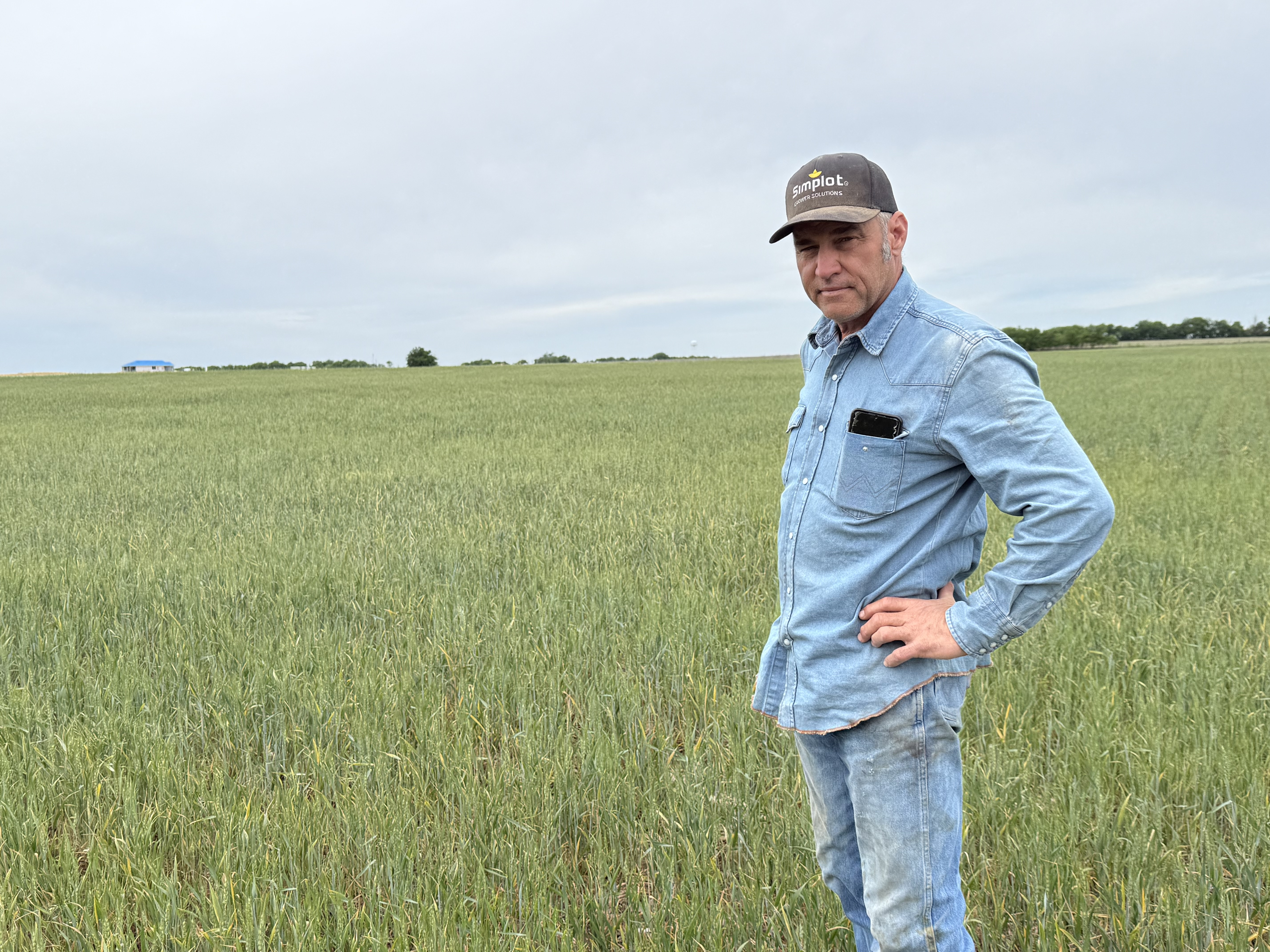
The thing Dwight Arldt loves most about farming is that he doesn’t have to deal with people.
A mile north of Weir, along County Road 194 — known locally as “Redneck Road”— Mr. Arldt grows wheat on 45 acres. He leases the land, along with a couple other properties, and owns some of his own. In total, he farms about 450 acres — growing wheat, corn, maize and grain sorghum.
Like many farmers, Mr. Arldt relies on leased land. He’d renewed his agreements year-to-year for 41 years.
However, the land may not be available much longer.
Once his County Road 194 lease ends, Mr. Arldt believes the land owner will decide to sell to a housing developer instead. There is a lot of housing development “going on” between Walburg and Weir, he said. He knows of three farmers who have already sold their land to a developer.
“From what I've been told, he's gonna develop all over County Road 149,” Mr. Ardt said. “And he's got all the [area from] frontage road on 1105 from [County Road] 149 to 194, bought. So there it's three farms bought.”
Mr. Arldt worries the same will happen to another plot he leases. Luckily, he still has his own farm, where he raises cows and goats to sell.
Still, he said it’s sad to see suburban housing “take away a piece of history” across the rural landscape.
Williamson County developed a significant agriculture industry in the 1870s and 1880s, when the Czechs and German immigrants settled. Mr. Ardt explained that Granger, Taylor, Bartlett have the best land for farming. Meanwhile, Weir and Walburg have more rocky land.
“I was told the Czechs took all the good farmland in Granger and Taylor,” Mr. Arldt said. “The Germans came here, to Walburg. They settled for the farm land [because] they wanted all the woodland. Back then, they had to have wood to have heat.”
Now, much of that land is being redeveloped.
“It’s happening to everyone around here,” he said. “That farmer right there, he’s been working that for many years. He took over from when his dad had it. I took over my grandfather’s farm when I was a senior in high school.”
Mr. Ardt’s grandfather’s wisdom influences the way he goes about tending to the land. Crops that grow underground—like carrots and potatoes—should be planted when the moon is in Pisces, while above-ground crops should be planted when the moon is in Aries, he believes.
Mr. Ardt said that last year was a good harvest for him because it rained throughout July. However, this year, his wheat is suffering because it didn’t rain enough in December and January.
The Farmer’s Almanac — a long-range weather forecast that has been published annually since 1818 — predicted the recent rainfall pattern accurately. The almanac said there would be a wetter than average summer in 2025, followed by a drier January. However, the company has announced that its 2026 edition will be its last, citing declining book sales.
Mr. Ardt said he doesn’t plan to leave the farming industry.
“You know, you’re on the tractor, you're to yourself. You can do lots of thinking and meditating and whatever — and just turning the soil, you know, getting that smell, watching your plants grow, harvesting it, reaping what you sow,” he said, “It’s just a great feeling.”
He is nearing retirement, and will shrink his operations if he is unable to find land to lease. Mr. Ardt’s son, who works at John Deere Dealership in Taylor, has shown interest in taking over the family farm one day.
“Once farming is in your blood, it’s hard to get out of it,” Mr. Ardt said.