
Community supports a friend
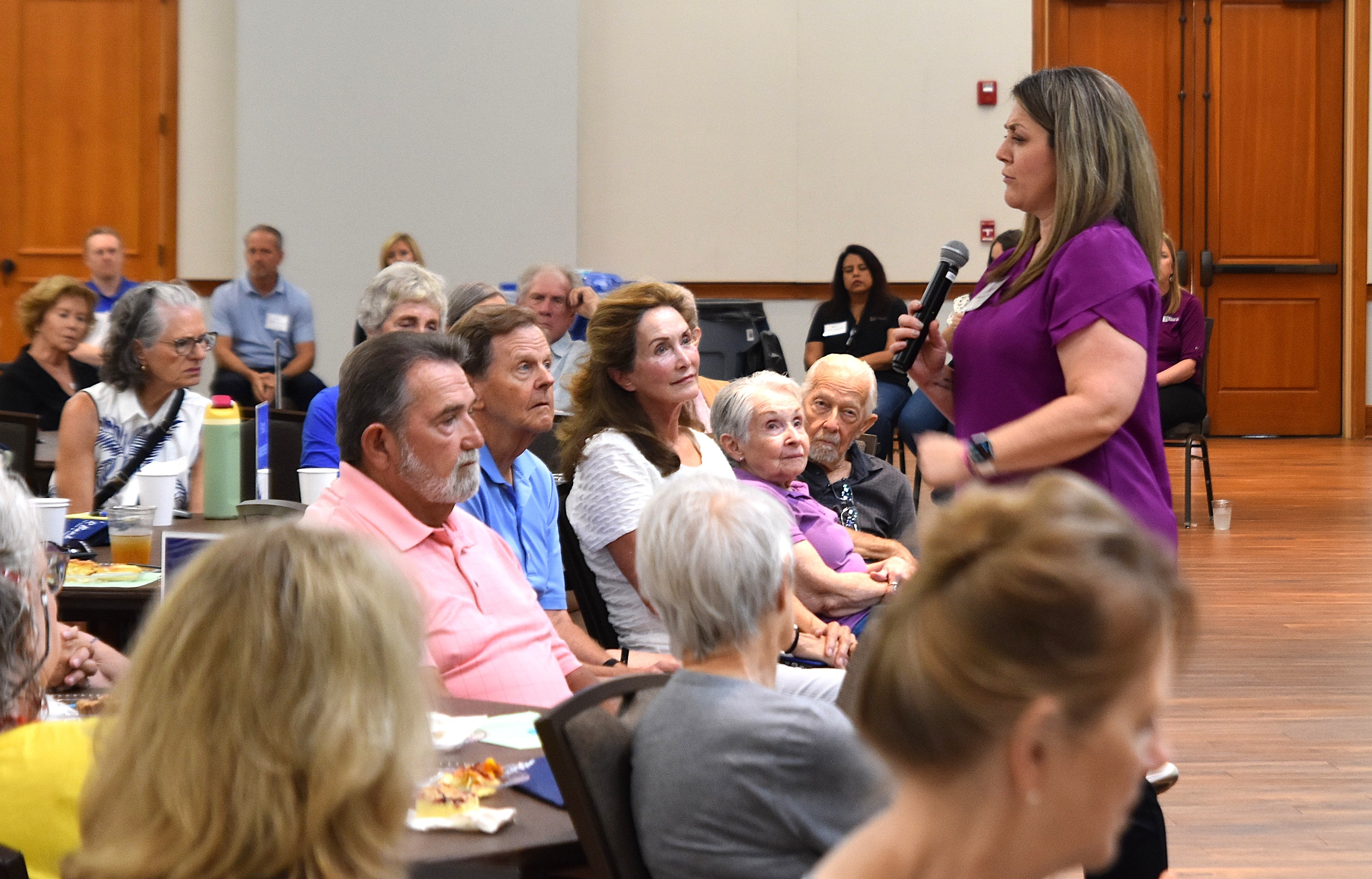

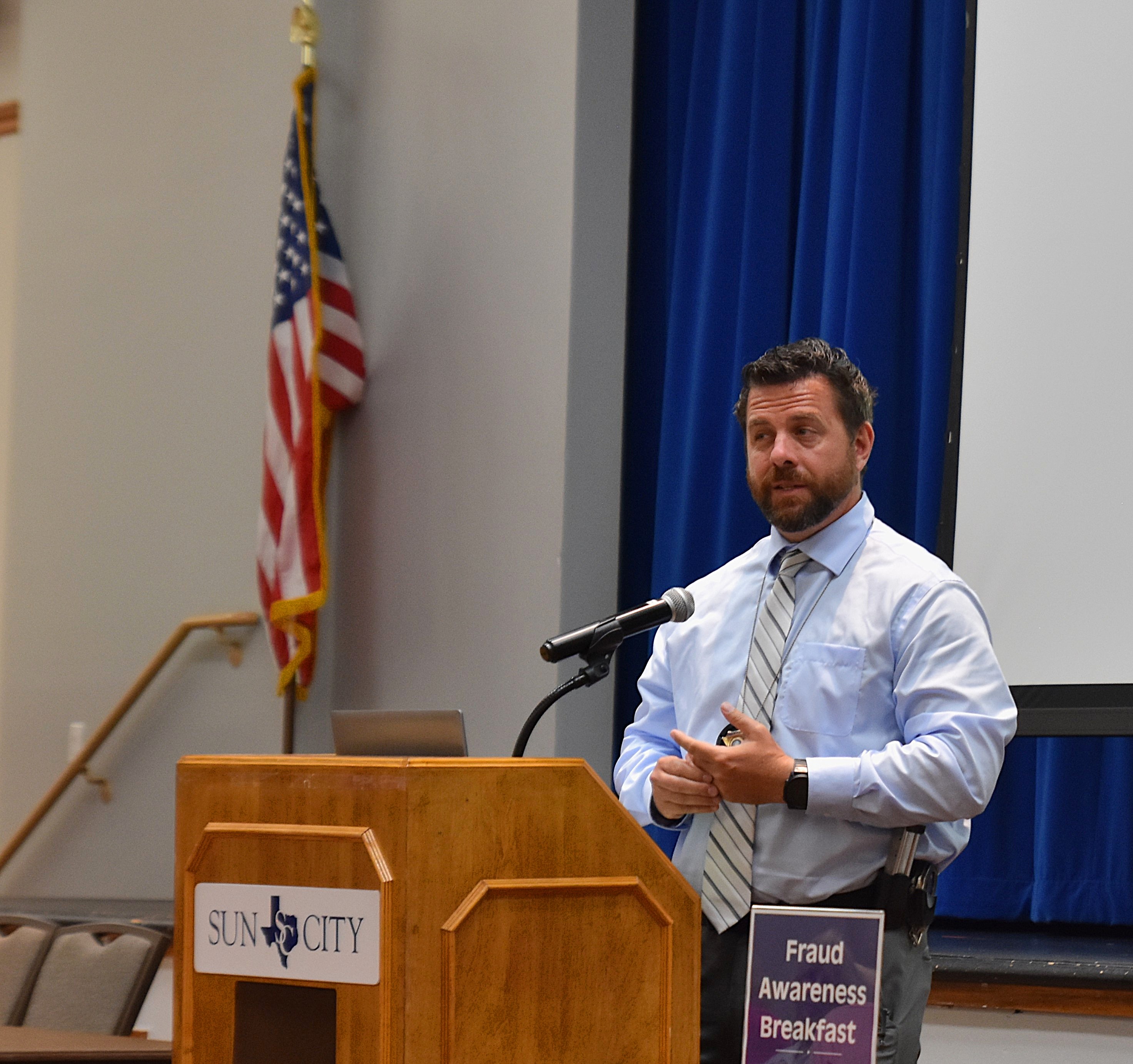
When you offer free food at the Sun City ballroom, you’re bound to fill seats. But the crowd that packed the room for the Fraud Awareness Breakfast Monday, June 8, came for something more: to learn how to protect themselves — and to stand behind a neighbor who lost everything to a scammer.
The breakfast served to inform residents about the latest scams and warning signs, and as a fundraiser for Anne Marshall, an active Sun City resident who, in February, lost all her savings to a cyber scam.
“It’s the scariest thing I’ve ever experienced,” Ms. Marshall said.
Ms. Marshall is one of about 50,000 people in the U.S. who will lose money in a tech support scam this year.
In 2025, about $20.9 billion in losses to scams were reported in the United States, according to the FBI. Victims over the age of 50 account for more than 50 percent of cases and funds lost.
“These scammers are very smart,” said Detective Steve Rogers, with the Williamson County Sheriff’s Department financial crime division. “They’re trying to find you at the worst time in your life, when you’re busy or you’re tired, or anything. They’re trying to hammer you and try to get you [distracted].
“Every victim I talked to on the phone says, ‘I’m stupid. I now know that it was a scam.’ You’re not stupid. It can happen to me. It happens to everybody. You just have to be aware.”
A cautionary tale
It started with a computer pop-up.
Anne Marshall was using her computer in February like normal when a pop-up appeared, saying her Geek Squad support had expired and she would be charged $499 through auto-renew. She hadn’t remembered ever signing up for the service, but called the number provided to learn more and to make sure she wouldn’t be charged.
During the phone conversation, the scammer asked for remote access to Ms. Marshall’s computer so he could process her refund request. Once they got access, things quickly escalated, including urgent and aggressive requests for money.
“Sometimes they’d be very nice, then they’d yell at you, then be nice again,” Ms. Marshall said. “It can scare you so much that you don't think, and then they call you, tell you where to get the money, tell you where to take it, and you just listen.
“The fear was that they knew everything about me. I was scared that if I left my house, they might do something to my dog, so I took her with me everywhere.”
Ms. Marshall went to her bank to withdraw cash. When questioned by the teller, she told the bank that the first transaction was for home renovations, a suggestion from the fraudsters.
The scammers called back and convinced Ms. Marshall to transfer $50,000 out of her retirement fund. A follow-up transaction at a different bank — $25,000 cash — she said was for her grandchildren, and she later withdrew the final $25,000. It all went into Bitcoin machines, at the request of the scammer.
Anne finally called her daughter, Valerie Schultz, who lives in California.
“My mom called me and said, ‘Val, I think I have a problem. I think I made a big mistake. They got into my computer,’ ” Ms. Schultz recalled. “I told her to unplug her computer, but I had no idea how bad it was. I just knew that she was scared, so I got on a plane.”
When Ms. Schultz looked at Anne’s bank account “it had been stripped of everything.”
“The balance in her checking account was negative $4.09, and her savings had 91 cents in it,” she said.
When she asked the bank staff why they allowed Anne to take out so much money, they said even though there may be warning signs and a conversation, they can’t stop people from accessing their own money.
“She was ashamed, she was embarrassed,” Ms. Schultz said. “I’m proud of her. It took a lot for her to come forward and tell people about this. I hope that no one has to experience this, and I hope that through all the knowledge that you gain today that it will protect all of you.”
Know what to look for
In 2025, there were about 560,000 total scams reported in the U.S., with individuals falling victim to phishing and spoofing attempts, investment fraud, romance scams, personal data breaches, government impersonations and more.
“All these scams, they are very smart and educated. They take classes, they know how to make people feel guilty or scared,” Detective Rogers explained during the Sun City breakfast Monday morning.
“They say, ‘If you don't do this, we're gonna take your house, your savings, your kids or grandkids away from you.’ They're trying to scare you to have that emotional response to make you not think rationally. They say, ‘If you don't do this right now, it’s going to be worse for you. Don't hang up the phone.’ They're trying to scare you and not hang up to maintain control. That's the biggest thing they're trying to do.”
Urgency is always a red flag. Legitimate businesses and government agencies will never rush you and demand payment now. Hang up, and call a verified number to ask follow-up questions and check for yourself.
“The bad guys create panic and high-stress situations, so that you can't think straight,” said Jennifer Pascar with R Bank in Georgetown.
Another red flag is if the individual is demanding unusual payment methods or asking you to keep the transaction secret. Scams commonly ask for payment through the purchase of gift cards, wire transfers or cryptocurrency/Bitcoin ATM transactions.
“No government agency will ever ask you to pay with cryptocurrency, gift cards or wires. We’re old school, you have to come in to give us a check,” Mr. Rogers said.
Common scams
“In order to identify the scam, we need to be ready,” Ms. Pascar said. She walked Sun City residents through common scams and warning signs.
Phishing, smishing and vishing: Scammers use emails, text messages, pop-ups or voice calls to impersonate well-known companies to trick the victim into giving them personal or financial data. Emails and texts trick the victim into clicking a fraudulent link, where they input their information, or into downloading a fake file that installs programs to the phone or computer that can steal your information or track your keystrokes.
“Never click on a link that's sent to you in your text messages or email,” Ms. Pascar said. “Once you click the link or respond to the text message, they’ve got you. Don't answer or respond to unknown numbers.”
Common scenarios include messages that claim the victim missed paying a traffic ticket or tolls, that a package was unsuccessfully delivered to your home, or that a warrant is out for you or your loved one’s arrest. They can sometimes include official logos, images of fake law enforcement badges or fake billing statements.
Callers may also impersonate your bank, claiming that there’s been suspicious activity or that the FBI is investigating an account. They’ll offer to protect a victim’s accounts, and try to convince the victim to give their account information to transfer the money into a “more secure account.”
Pop-up scams: These scams are similar to phishing, but require you to click a pop-up or to call a number on the screen "immediately" to resolve a problem on your computer. These oftentimes impersonate tech support or computer companies.
“If you get a pop-up on your laptop or your phone, don’t click on it, because if you do, the scammers can get into your computer,” Ms. Pascar said.
Romance scams: Scammers use a fake online profile, then spend weeks or months building emotional connections through messages or phone calls. They may even send photos to the victim to build trust. Eventually, they invent a crisis that requires money to help.
“Bankers get a lot of romance scams walking in our door, and it's a delicate situation,” she said. “As people age, life happens, they get lonely, they feel like they need a companion, they want to talk to somebody who cares about them.
“Then you get a phone call, a text message or an email from somebody who just thinks you are the sweetest thing since sliced bread. They say all the right things, and they promise you that they’re going to come visit you, but they can’t because they don’t have any money right now. That's a red flag.”
Investment scams: Victims send someone money to invest into something, like cryptocurrency. Over the course of months, the scammer sends statements showing that the investment has grown, so the victim invests more, and after a few transactions, eventually they learn that the statements were faked and the scammers took the money for themselves.
Prize and lottery scams: Lottery and prize scams promise winnings you never earned — but demand upfront "fees" to collect them. Victims send the fees, but never receive the promised money.
What to do when scammed
If you think you’re being scammed, Ms. Pascar said stop all communication and engagement with the scammer. Stop making any payments.
Then call your financial institution to freeze accounts and to reverse transactions, if possible. If you’re a scam victim, know that “money travels fast,” Mr. Rogers said.
“It's almost impossible for law enforcement to actually find a suspect or return your money,” he said. Time is of the essence.
He said to call your bank before calling the police. If money has been sent, the bank has a better chance of stopping a transaction if they’re notified as quickly as possible.
After that, call law enforcement and get a case number for possible insurance claims. Mr. Rogers said that law enforcement’s primary goal is to catch a suspect and prevent future damage, not recover funds.
Finally, report scams to the FTC at reportfraud.ftc.gov to help others learn about scams.
Sun City steps up to help
When word got out that Ms. Marshall was a scam victim in February, her Sun City friends like Nina Stancil stepped in to help, not only financially but to make sure others in Sun City are protected.
Ms. Stancil helped organize the Fraud Awareness Breakfast and fundraiser, and gained support from the Sun City Neighborhood Association, Mulligan’s Restaurant, Opportunities for Williamson and Burnet Counties and R Bank. Door prizes were donated, breakfast was provided to guests for free, and a full ballroom raised more than $13,000 for Ms. Marshall.
“I’m really surprised at how many people came. It’s overwhelming,” Ms. Marshall said.
“Anne is special, kind, very smart, generous, patient, talented, and so very loved by so many people, and she is also brave because the courage to come forward and share this story is something that very few people are willing to do,” said Laurie McAndrews, who’s worked with Ms. Marshall in the past. “I think everybody here probably learned something today, I definitely learned quite a bit.”
Ms. Marshall said that, since the scam, things are slowly returning to normal. She still has a hard time sleeping some nights, and last week received a call with a similar country code to the one that called her back in February. She answered, and said she heard the same man from before, but she knew what to do this time.
“I said ‘Hello? Hello? I can’t hear you, goodbye,’ ” Ms. Marshall said. “They called back 30 minutes later, and I blocked the number.”