
Christmas is only two weeks away, and many Georgetown residents have already picked out their trees for this year.
The Sun spoke to three local groups that have provided trees to families for years, who spoke about holiday traditions and shared their experiences, as well as insights into proper Christmas tree care and how the industry has changed in recent years.
Troop 155 sells trees to fund scouting experiences
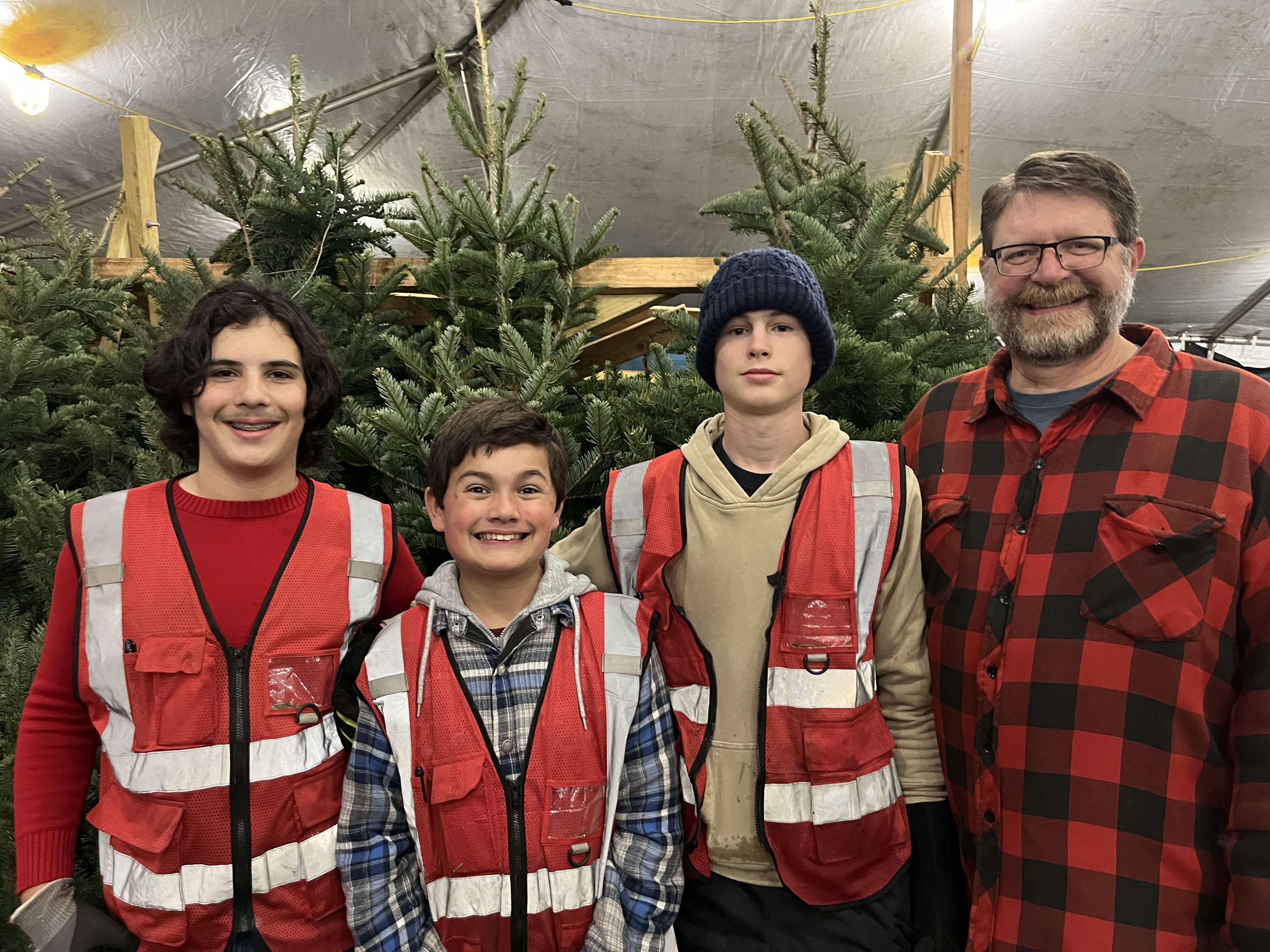
Instead of selling popcorn or a typical chocolate bar fundraiser, Georgetown Boy Scout Troop 155 has opted to sell Christmas trees for the past 14 years. The scouts set up shop at 2425 Williams Drive starting on Black Friday, and the lot usually sells out by mid-December.
Former scoutmaster Glenn Beck started the program in 2010 to fund the troup’s year-round endeavors. He led the troop for 11 years before Nathan Fontenot, the current scoutmaster, took over.
“The [Georgetown Boy Scout] program has sustained itself,” Mr. Beck said. “[Tree selling] is something that they do every year and they know that it’s going to be successful and we know that we got the support of the community— which is very important.”
Mr. Fontenot said that this summer, the troop will camp at Kerr in Oklahoma. Some scouts will also go to a sailing camp in the Florida Keys.
“They'll live on a sailboat for a week down in Florida — all the sailing, the cooking, the fishing, snorkeling, everything,” he said.
The scouts expect to sell 850 total trees this year, with varieties including Nordmans, Nobles, Fraser Firs, Nobles and wreaths, Mr. Fontenot said.
“We have people that come every year,” he said. “People know we're here. They know we have good trees that we take care of. We’ve been able to build a reputation.
“I think it's just kind of become a tradition for a lot of families to go to the Boy Scout lot and buy their tree.”
The Christmas tree lot is “scout lead,” which means scouts are in charge of selling the trees, netting the tree, carrying them to the car and keeping the lot stocked, Mr. Fontenot explained. Meanwhile, adults are in charge of the cash register and the chainsaw, he said.
When scouts work at the lot, they accumulate hours, and those hours turn into scout dollars that go on to their accounts and fund their trips.
“[The scouts] are out socializing with adults and trying to tell them the best tree to get — hauling trees around. They get a big kick out of selling trees.” Mr. Beck said. “Their enthusiasm is really shown as they try to convince the customer to buy a tree.”
The troop’s Tree Patrol is dedicated to making the event happen. These scouts are responsible for the equipment upkeep and training their fellow scouts on how to help at the site.
This year’s patrol leader — 12-year-old Adam Jalbert — has been a part of Troop 155 for two years. He helps run the tree lot for three to four shifts a week.
“I felt like I wasn't getting involved in the troop enough, and I just wanted to get into a leadership position,” Adam said.
So far, things have gone well.
“I haven’t seen any difficult customers,” Adam said. “Most of them are really, really nice, and they like being helped out.”
Christie Dance, the troop’s adult activities chair, has two sons who are active in Troop 155. Her eldest is a graduated Eagle Scout, while her daughter is part of Sea Scouts. She said the tree sales help scouts learn about money while they earn merit badges in the process.
“It's really enjoyable to watch these kids,” Ms. Dance said. “They learn. They get online and they see their money, and what's going to happen with that money. They get to advance to different stages of Boy Scouts based on the merit badges that they earn.”
The Troop 155 Tree Lot is located on 2425 Williams Drive next to The Pit BBQ. It is open from 4:30-8 p.m. Wednesday through Friday. On Saturday and Sunday, it is open from 8 a.m. to 8 p.m.
Garden center offers expert advice, snowy delights
Since it first opened in Georgetown in 1976, McIntire’s Garden Center on Leander Road has sold Christmas trees as part of its winter offerings. Katie Ney is the current owner, and the store has been in her family since her grandmother opened its doors.
“When I was a small child, we would sell 700 or 800 Christmas trees a year,” she said.
“Now, we typically only order maybe 100.”
Ms. Ney said this has to do with the decline in demand due to what she called the “evolution of the plastic Christmas tree.” Still, the business continues to serve families that appreciate a real tree each year.
The garden center’s fresh-cut tree offerings this year include Noble Firs and Fraser Firs. The business also offers “living Christmas trees,” which are potted trees — like pines, Cypress, small spruce and cedars — that can be decorated indoors and then replanted outside after the holidays.
When it comes to figuring out what type of tree to get, Ms. Ney said it really depends on the customer’s preferences.
“Christmas comes with a lot of nostalgia,” she said. “Some people are used to [having] cut Christmas trees, and they've always picked a certain variety out with their family.
“With the living Christmas trees, people get them to watch them [grow overtime]. A lot of people will use them as even Memorial trees.”
With the Noble Fir and the Fraser Fir, Ms. Ney said the branches lay differently. For people with larger ornaments, Fraser Firs are preferred because the branches grow upward. Noble Fir have less space between the branches and look fuller.
“You could put something a little heavier on [a Fraser Fir],” she said. “The Noble Firs naturally have more of a drape to them.”
Some customers also prefer a tree with a wintery look.
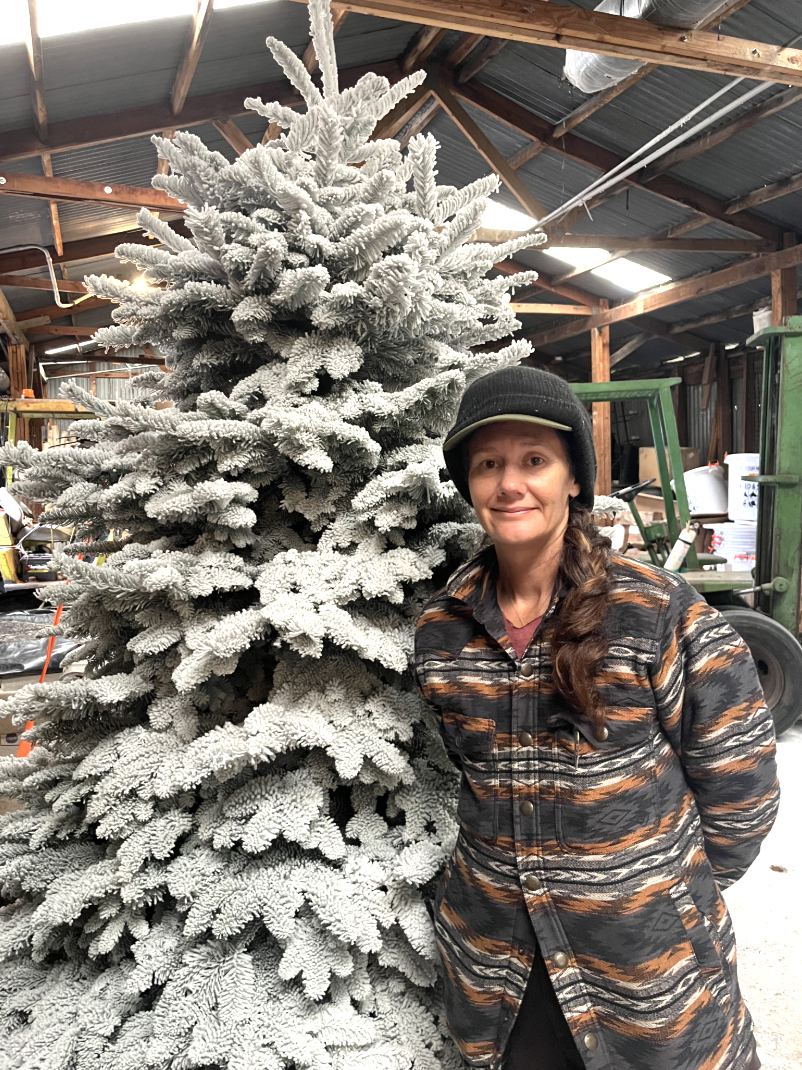
McIntire’s Garden Center offers “flocking,” a process that involves spraying a white corn starch product onto a tree’s branches to make it appear snowy. The process can also reduce allergies caused by the tree, and the materials serve as a flame retardant mist,” Ms. Ney said.
“It can help prevent home fires,” she said. “We threw a Christmas tree that had the flocking on it into a fire pit, and it took like three hours for it to catch on fire.”
Customers can request different amounts and kinds for flocking — emulating light to heavy snowfalls and even wind from a certain direction. Theoretically, a customer could ask for their tree to appear as though it received a gust of snow from the North Pole, Ms. Ney said.
When it comes to taking care of a Christmas tree, Ms. Ney said to think of it like a picked flower. After the Christmas trees arrive at the garden center, the employees give the bottom a fresh cut, place it into clean water and mist the branches on a regular basis.
Once purchased, she said it is important for the tree to be put directly into water. The vascular system, which is what allows the tree to drink water, may “shrivel up” if it is not watered, so continuing to water the tree while it’s in the home is necessary.
Also, a home’s heating system could dry out a tree. If the heat is on, mist the branches occasionally while lights are off to keep the tree hydrated.
Brungot Farms delivers tree to Governor's Mansion
A Williamson County business had the honor of providing Christmas trees to the Governor’s Mansion and to Camp Mabry in Austin this holiday season.
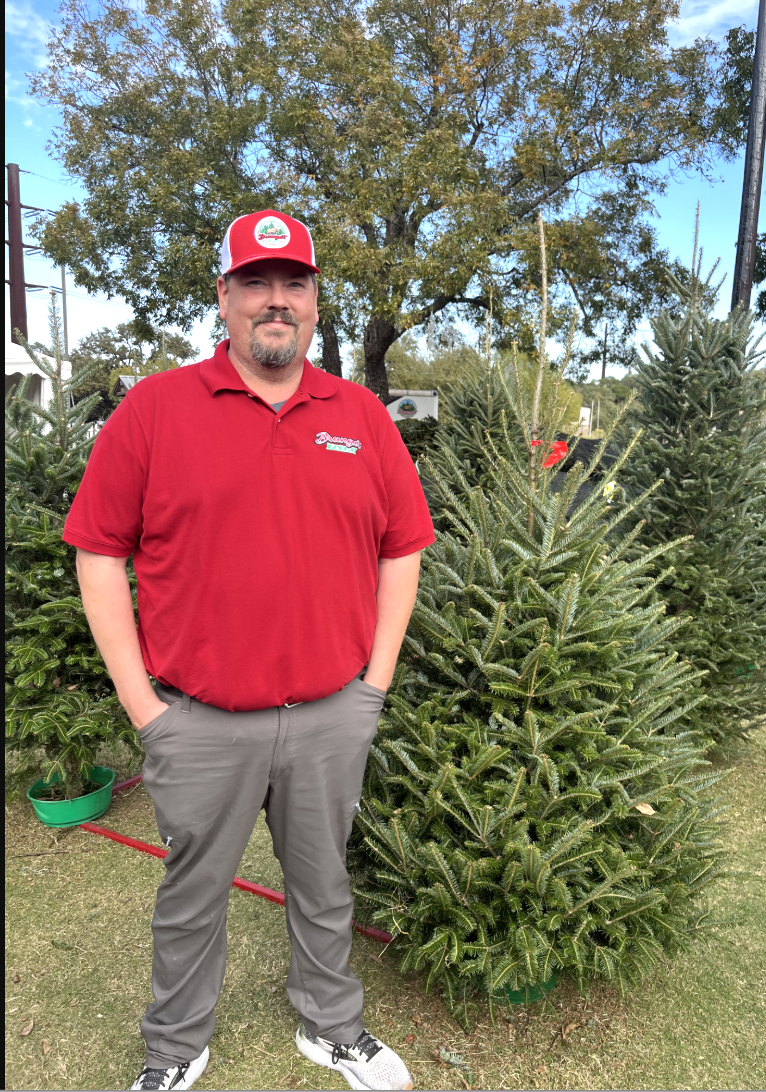
“We got chosen as part of the usual ceremony for the Texas Christmas Tree Growers Association,” said Aaron Brungot, the owner of Cedar Park-based Brungot Farms.
Brungot Farms supplied a 24-foot tree to Camp Mabry, and used a semi truck to transport it about 10 miles south to the historic military base.
Governor Greg Abbott requested a Fraser Fir tree for the mansion, which is the variety Brungot sells. On the Monday after Thanksgiving, Brungot Farms loaded carriages and met Texas First Lady Cecilia Abbott for the delivery. The business was presented with ornaments to mark the occasion, and went on a “behind the scenes” tour of the house, Mr. Brungot said.
Each year, Brungot Farms sets up shop at the Twin Lakes YMCA field to sell trees, and helps raise money for the YMCA scholarship program. Mr. Brungot expects to sell 4,000 trees this year. Brungot Farms sources trees from West Jefferson, North Carolina.
The business also offers tree deliveries and custom orders to those across the region. His team of 40 employees make many deliveries to Georgetown, specifically Sun City, where residents may have difficulties transporting and putting up a tree on their own. Other trips go out to the Westlake area of Austin and as far southwest as Dripping Springs.
“The first thing you do [during] the delivery is go see where your obstacles are,” Mr. Brungot said. “You only have so much space to put that tree — dodging chandeliers and all of that.”
Some of the largest buildings and skyscrapers in Austin present their own challenges.
“You’ve got to think about it,” he said. “If I’m going to the 50th floor, the only way you’re going up is the elevator. How big is that tree, and how will it fit in the elevator? You need to put it in at the perfect angle to bring it up.”
Mr. Brungot said most customers order eight-foot trees. However, trees up to 11 feet have grown in popularity recently, as new homes have taller ceilings.
“It’s a side effect of the way modern houses are built,” he said. “Now people want tall, but they also want slender [to fit next to a stairwell].”