
Advocates for legislation regarding fish transparency
“There’s a feeling of nostalgia when you come in here. Like you’re back home eating comfort food.”
That’s how Georgetown Catfish Parlour owner Chris Kerbow described his restaurant at 4159 Williams Drive. His father, David Kerbow, opened the first Catfish Parlour “on the outskirts of Austin” in 1973 as an East Texas-style seafood restaurant with Cajun influences.
Chris opened the Georgetown spot in 2008.
“The restaurant started off as a fried catfish and fried chicken all-you-can-eat,” Mr. Kerbow said. “We’ve expanded to a complete menu that has something for everybody.”
He said the restaurant is a favorite during the Lent season, when Christians eat more fish. The modern menu has both fried and grilled fish, as well as staples like chicken fried steak and hamburgers.
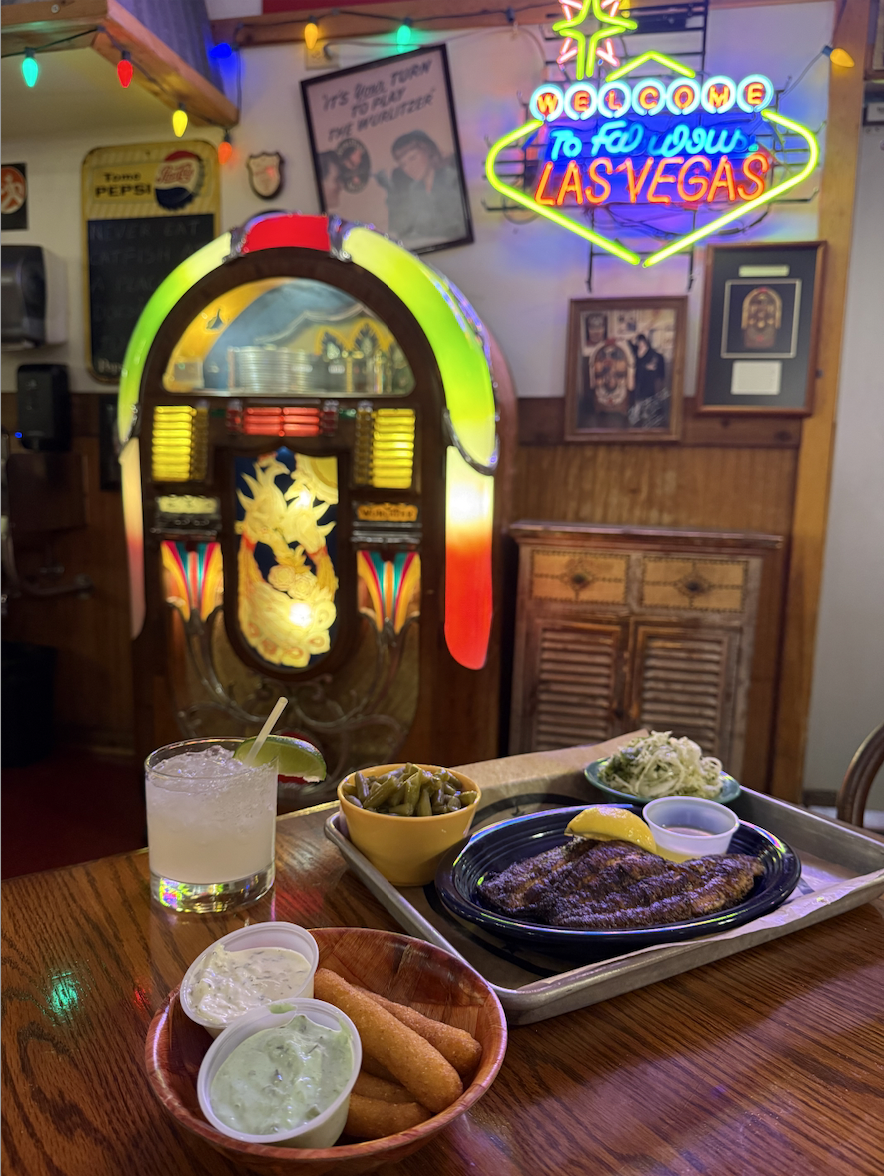
The original Catfish Parlour in Austin is now closed. However, some of the eclectic, vintage décor from the original is still used in Georgetown. This includes an art deco jukebox from the 1940s, old photos, vintage advertisements and signs.
Chalkboards at the restaurant also show handwritten, pithy sayings:
“Said Juliet... to Romeo... if you won’t shave... go homeo...”
“There’s something fishy going on in there.”
“Oh what foods these morsels be!”
“Most people think us fried fish folks aren’t educated enough to know English literature,” Mr. Kerbow joked.
The restaurant also has a location on Ben White Boulevard in Austin.
Proud of what he serves
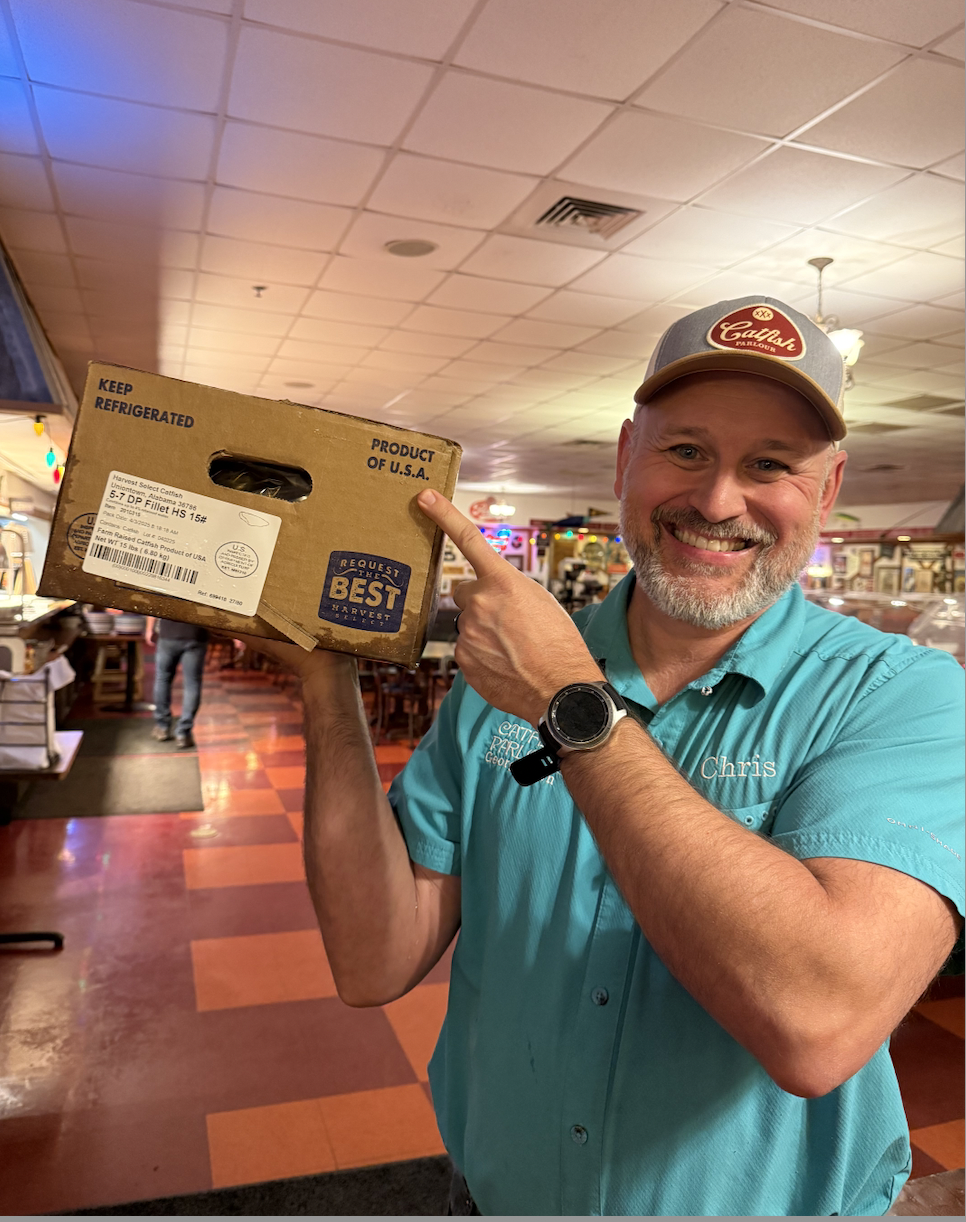
Mr. Kerbow takes great pride in serving American farm-raised catfish that are free of antibiotics, hormones and are vegetarian fed.
“A lot of restaurants are cutting corners and substituting catfish with cheap imported fish [like swai or basa from Asia],” Mr. Kerbow said. “They’re misleading customers, saying it’s Southern-style catfish.
He recently testified before the Texas Senate advocating for Senate Bill 1484, which, if passed, would require restaurants to accurately list the type of fish and its country of origin on menus. Similar laws are in place in Georgia, Mississippi and Louisiana, he said.
The bill was unanimously passed by the Senate on April 10 and is now headed to the House of Representatives for review.
Mr. Kerbow said he believes many people say they don’t like catfish because they haven’t had “the good stuff.”
“Swai is very watery because it’s been frozen and it doesn’t have a flaky texture,” he said. “It’s more mushy. There’s no way for us to guarantee it’s safe because there’s no regulations on how they raise it [overseas].”
Glen Kokel worked as a catfish manufacturer representative — or “catfish broker” — for 40 years. Catfish Parlour was one of his clients.
“I grew up in Walburg,” he said. “We used to fish on the San Gabriel River and Colorado River — catch the catfish and eat it. I’ve been dealing with catfish all my life.”
He said Mr. Kerbow’s legislative advocacy is warranted. He’s seen what he called an unethical practice of serving “fake catfish” throughout his career.
“The Kerbows have been really loyal to American catfish. They’re a very well-known name in the catfish industry,” Mr. Kokel said.