
Project would bring power lines across Central Texas by 2030
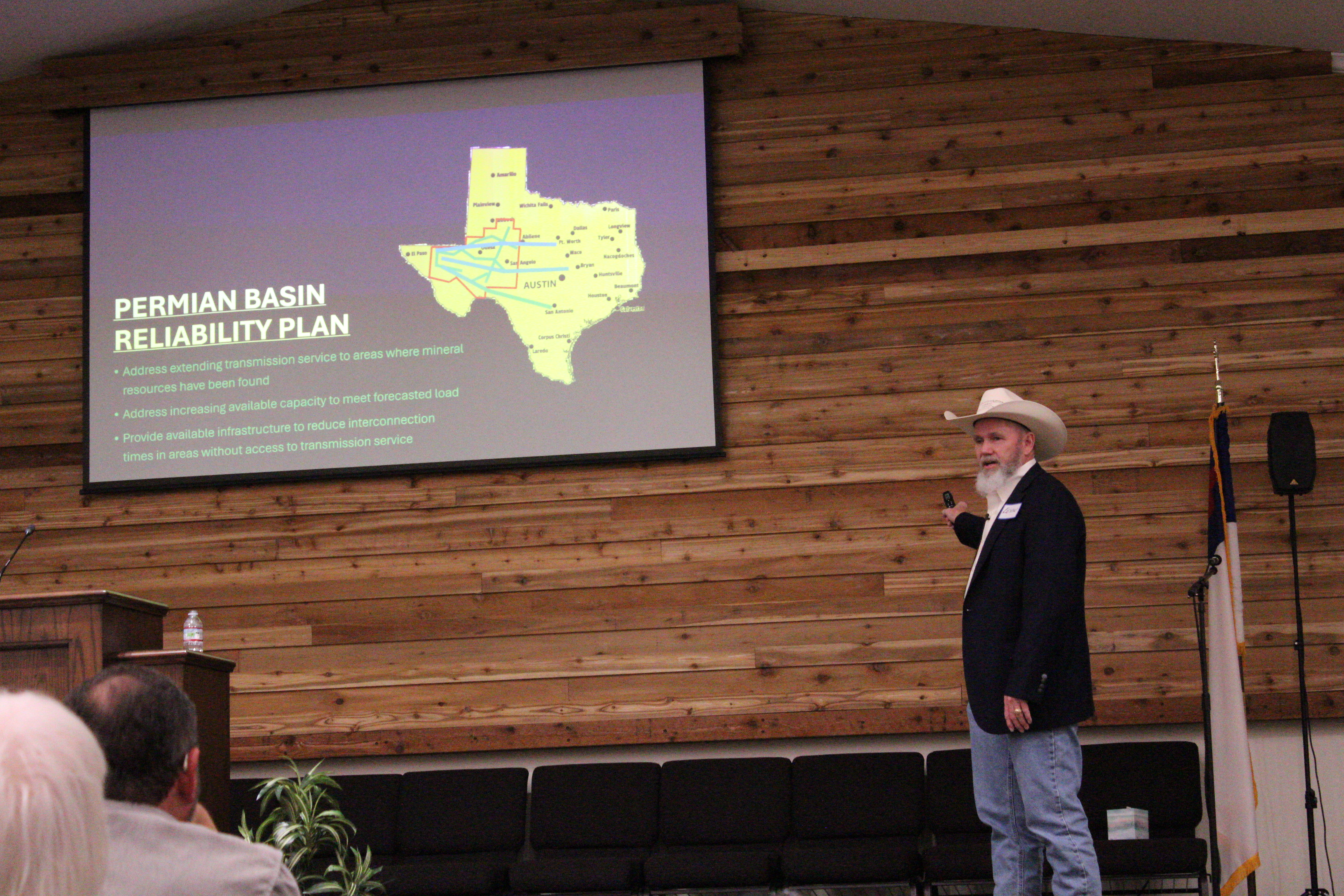
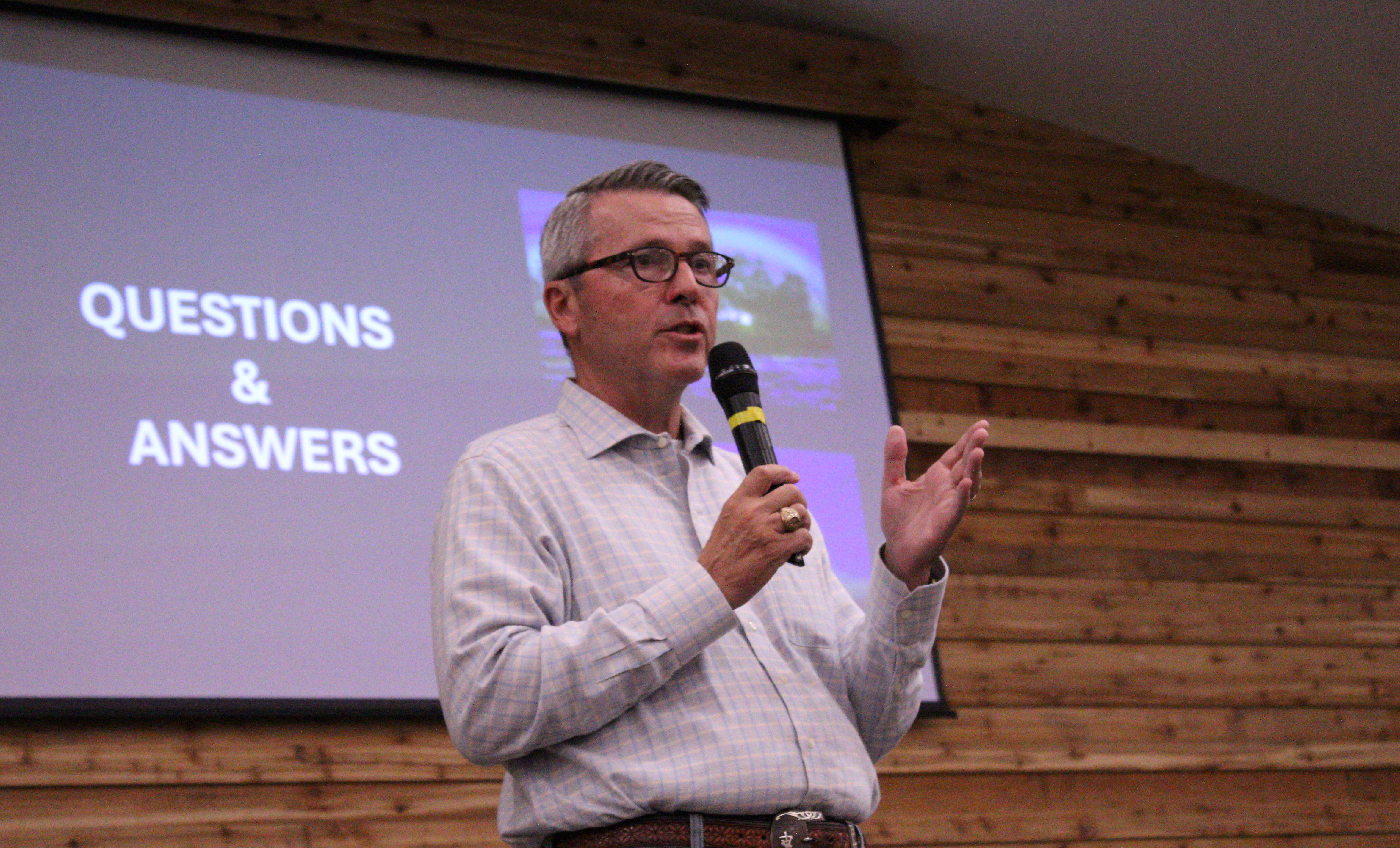
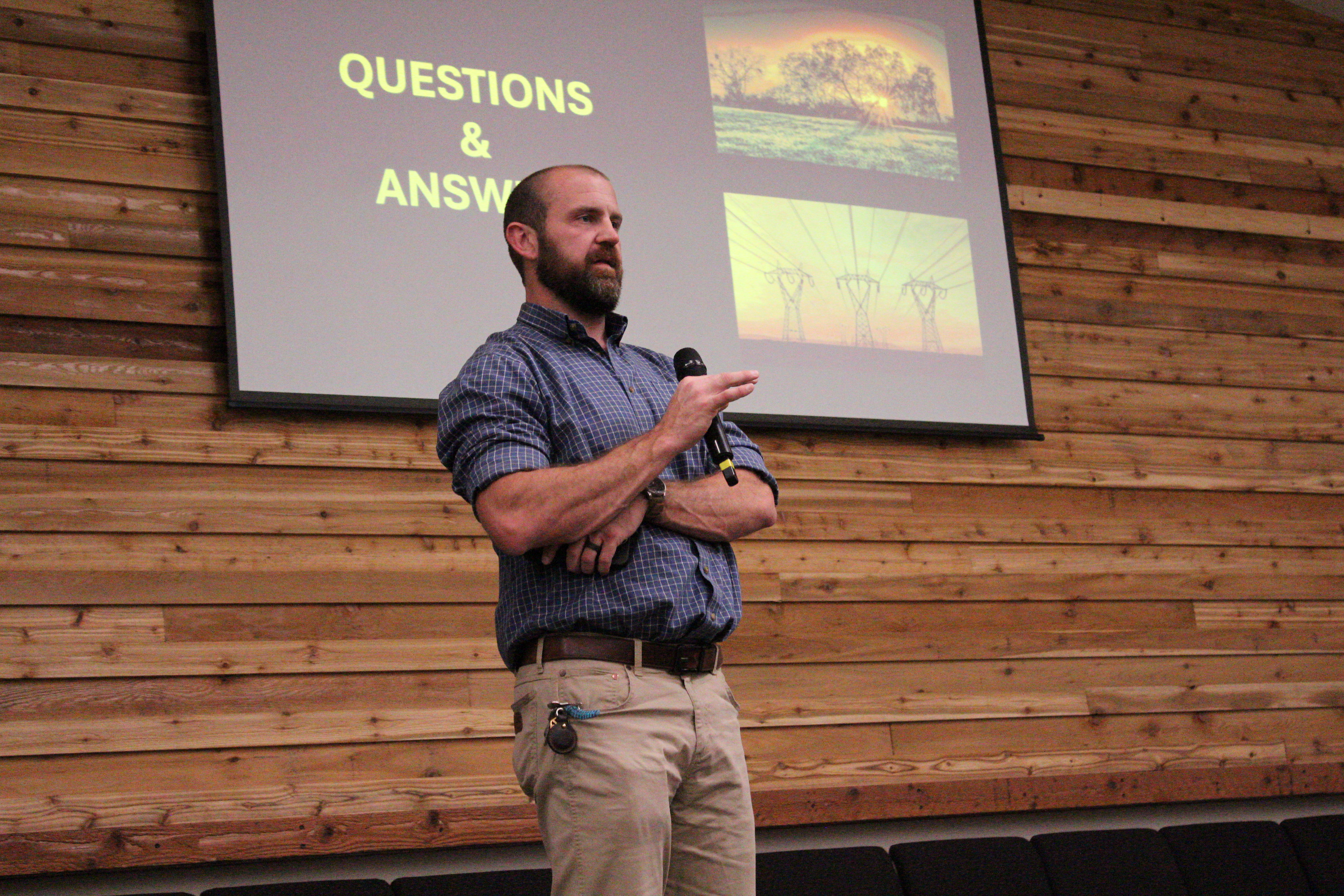
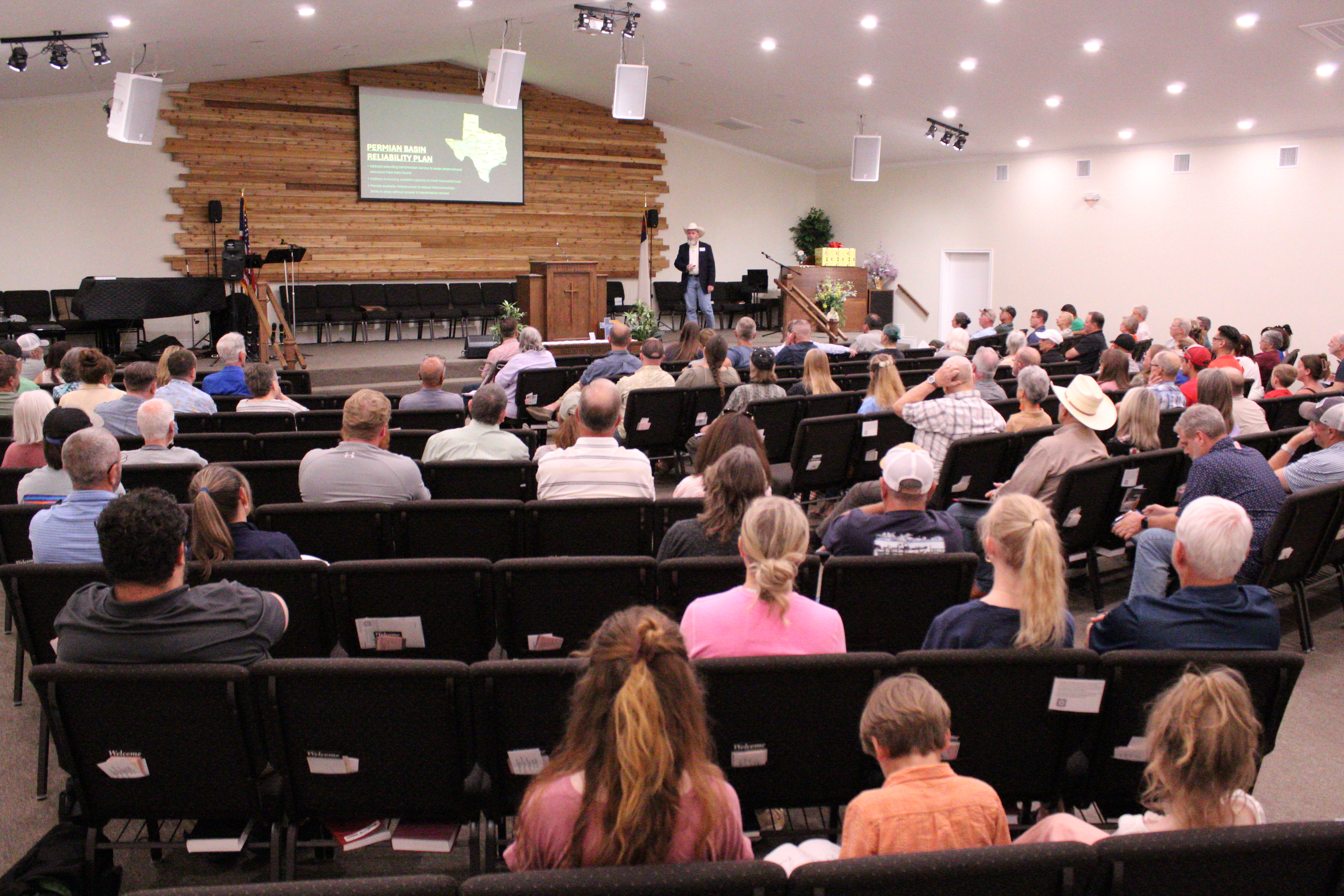
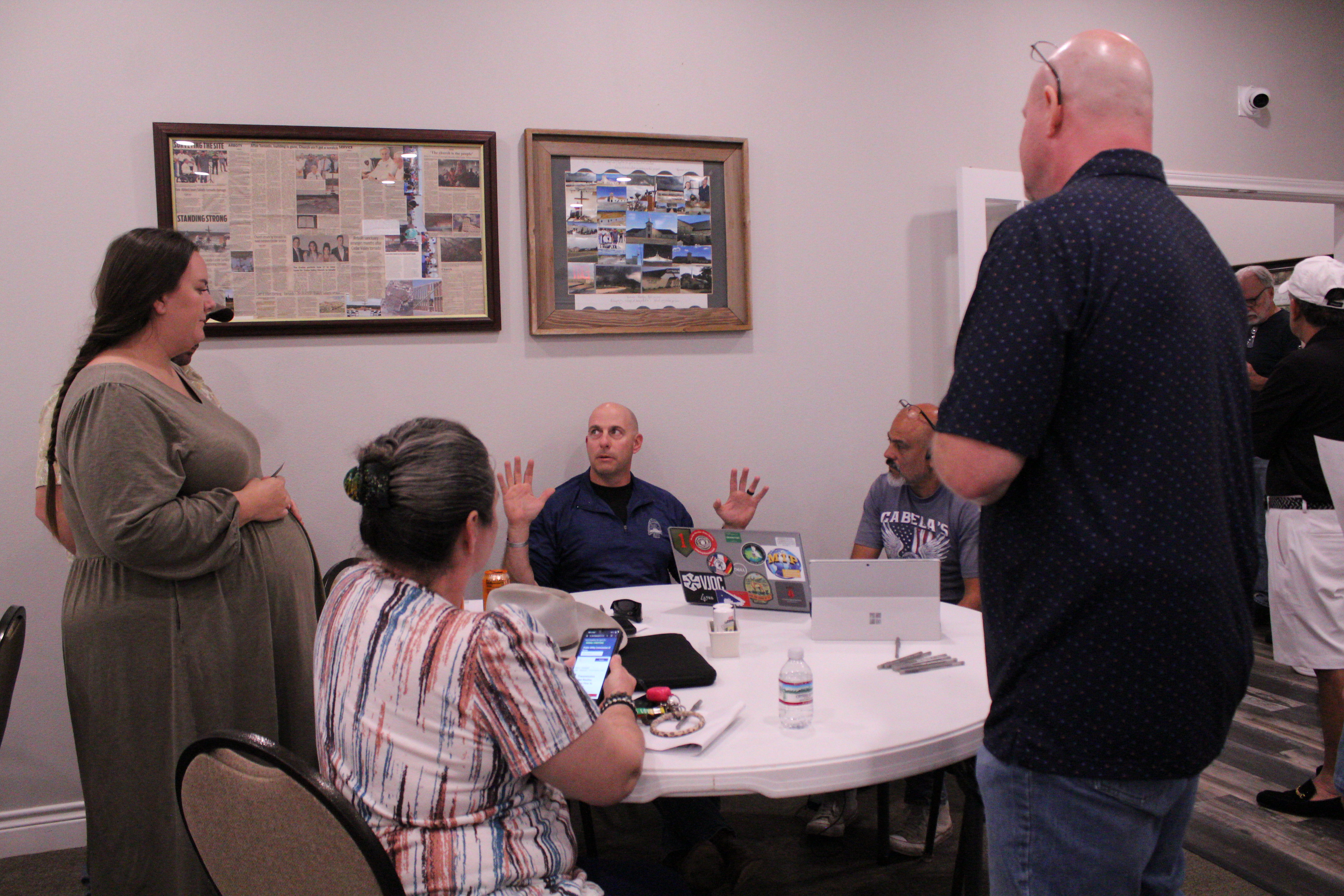
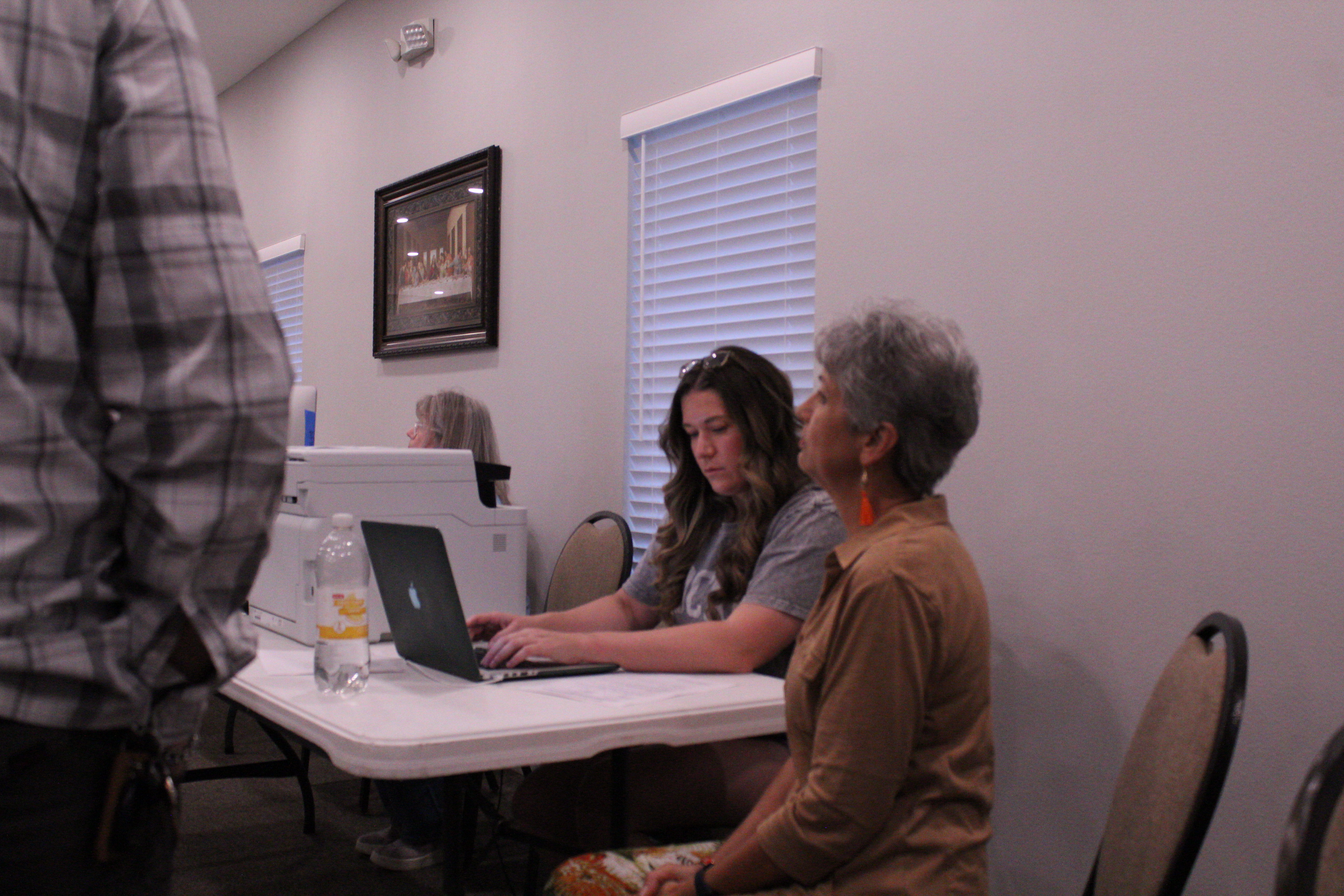
In a church down the winding roads of southwest Salado, a group of North Williamson County and Bell County landowners gathered on April 23 to learn about a proposed extra-high-voltage electricity transmission line that will cut through their properties as it makes its way across the state.
Residents mingled with one another while trying to find their properties on a map of the area where Oncor Electric — in partnership with the Lower Colorado River Authority — plans to install the towering 765 kV transmission lines by 2030.
Overseen by the Electric Reliability Council of Texas and the Public Utility Commission, the transmission lines will bring power from the eastern part of the state to the Permian Basin in West Texas.
Florence resident Erik Gulbranson — a business owner who helped coordinate the resident-driven town hall — took the stage, providing basic information about the project as he understood it.
“We don’t know anything about transmission lines, we don’t know anything about eminent domain,” he told the audience. “When we got a packet in the mail, and we thought, ‘How could this be?’ ”
Mr. Gulbranson and his wife, Ashley, said they liked raising their kids in a small-town setting, surrounded by cattle and horses on open ranchland. When they received a package in the mail about the future transmission lines that could run through their property, they were worried their property could be in jeopardy.
“My wife and I, we moved to this land,” Mr. Gulbranson said. “God moved all these mountains out of the way so that we can get this land.”
It was a sentiment echoed by most residents in attendance.
Legislation paves way for project
The proposed line is part of a statewide push to build a power network that can move more electricity efficiently to keep up with the growth seen in Texas communities.
Oncor, EROCT and the PUC of Texas were instructed to launch the project under HB 5066, which passed during the state’s 2023 legislative session.
Noting that “existing transmission service is unreasonably remote,” the law requires the agencies to “develop a reliability plan to serve existing and forecasted electrical load in the identified region,” and “provide available infrastructure to reduce interconnection times in areas without access to transmission service.”
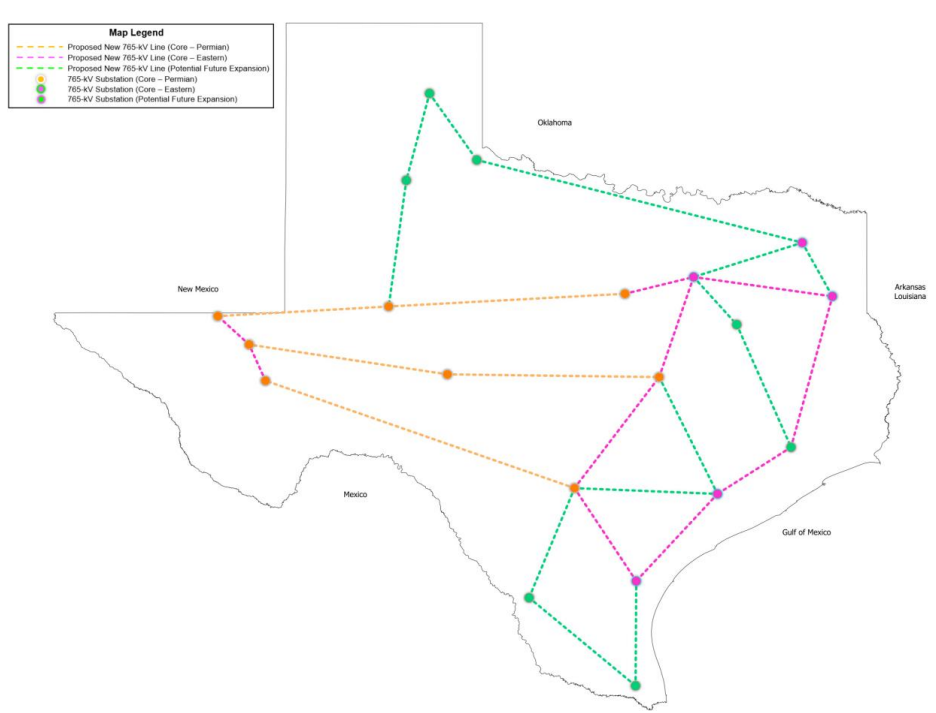
The proposed 765 kV transmission systems are higher-voltage lines that can move more electricity, farther, more efficiently and with reduced land requirements, according to Oncor.
Transmission lines would be hung across towers, about 130 to 180 feet tall, and separated by a few thousand feet each along the path. The structures themselves could be 100-200 feet in width.
While these lines are new in Texas, more than 2,400 miles of 765 kV lines are in use across the U.S. and Canada.
“Securing electric reliability is vital for meeting the needs of all Texans,” said Ellen Buck, Oncor’s senior VP and chief operating officer. “The 765kV transmission network will help support that need, providing for the safe and reliable flow of electricity throughout Texas at a time when we’re seeing unprecedented, dynamic growth.”
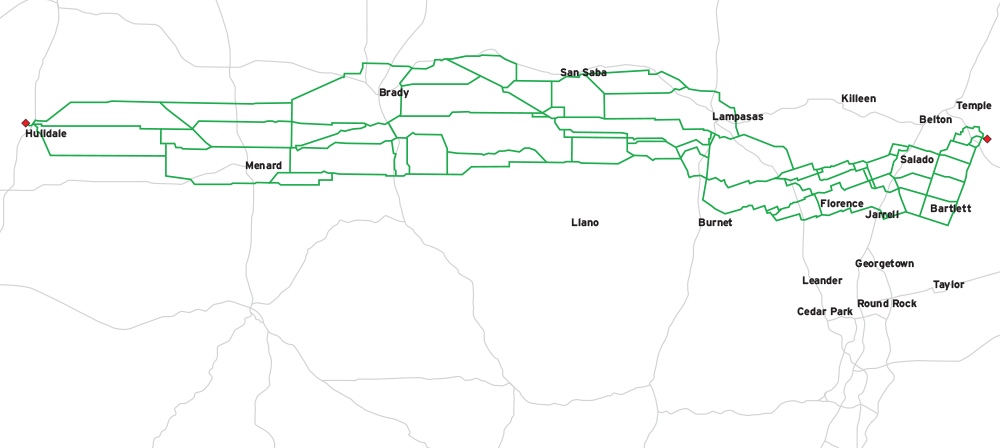
The new lines will crisscross the state. The local segment will run through Salado and Williamson County and is known as “Bell County East–Big Hill.” The segment is roughly 200 miles long, comprising 15 counties from Bell County to Schleicher County in West Texas. This portion of the project will cost about $2 billion.
Preliminary maps show the transmission lines running through Bartlett, Jarrell, Florence and Andice before continuing west to Burnet County.
Residents raise their voices
Kevin Kennedy — from Mahomet in Burnet County — said he received a packet notifying him that the power line could go through his property. He recalled feeling overwhelmed after attending an earlier information session, but said that his wife, Lisa, encouraged him.
“She said, ‘Kennedy, this is your job. I don’t need excuses. I need you to do your job. Protect this family. Keep that line off of us and keep it off of our neighbors.’ ” he recalled. “That’s why I am here tonight. I’m doing my job.”
Dr. Matthew Altman, a family physician in Salado who specializes in how the environment affects human health, said the proposed lines are set to run a mile from his residence, which is too close for his liking.
Citing a 2008 study from the British Columbia Medical Journal in the UK, he said 3,000 matched pairs showed a 70 percent increase in leukemia in children if they lived 650 feet from a 765 kV transmission line.
“The reality is, we don’t know if it’s safe,” he said during the town hall. “This is a flip-flop on the burden of proof. They are the ones who are demanding this to happen, and they should be the ones who are showing that this is safe.”
In a follow-up statement to the Sun, Oncor spokesperson Andrew Clark disagrees.
“Decades of scientific research have shown that exposure to transmission lines does not cause adverse health effects," he said. "While transmission lines generate magnetic fields, they are extremely small, matching that of household appliances at the edge of the ROW, and pose no health risk.”
The Sun reached out to ERCOT and the PUC for comment about line safety, but did not receive one as of press time.
Also in attendance was District 54 State Representative Brad Buckley, R-Salado, who voted in favor of the bill in 2023, partly as a response to state-wide blackouts during Winter Storm Uri in 2021 and some aspects of the bill that addressed weatherization. He said he didn’t think this is how the bill would play out.
“We need natural gas plants making electricity for Texas,” he said. “We need to make certain that during these freakish periods [of extreme weather], the power plants that do exist were winterized so that they can handle the gas. This is beyond that scope.”
Rep. Buckley said residents can write to Governor Greg Abbott to direct the Public Utility Commission to slow the project and re-evaluate. He also said he plans to introduce legislation in 2027 to put a “pause” on how the power lines will be implemented.
“I want you to know that we can defeat these power lines, and we can also make certain that the lights will come on,” Mr. Buckley said. “With respectful comments to Gov. Abbott, rural Texas loves you. Love rural Texas back.”
Protest and feedback period closing fast
Currently, the window to provide the PUC with feedback is open. Residents can provide input about preferred transition line paths. Information on how to protest a line can be found here: https://tinyurl.com/ycxm2n9h.
The deadline to submit testimony is May 13, and testimony review is set for July 8-12.
“It’s a tough deal. You want to protect your property and your family,” Mr. Kennedy said. “What you have to remember is – I think – even if your neighbor is doing it and they are trying real hard to protect their property, that doesn’t mean they are somehow against you. They’re against this transmission line. All our energy needs to be focused on this transmission line.”
Another public meeting will take place on Thursday, May 7, at 6 p.m. at Andice Baptist Church — located at 6570 Farm to Market 970 in Florence. Organizers will help residents file testimony and protests regarding the project.
How to Protest
The following information is from the Public Utility Commission of Texas about protest and intervention methods against proposed utility work.
Once a utility files an application with the Public Utility Commission of Texas, landowners who could be affected by one or more of the proposed routes must be notified, and members of the public can either protest or intervene.
Protest: If a resident has concerns about the proposed route for a transmission line, they can send the commission a written comment. Use the five-digit docket number listed on the notice. These comments are available for anyone who is interested in the application to view. Comments help inform the PUCT Commissioners and staff of the public's concerns.
Intervene: Intervening makes a resident an official participant or party in legal proceedings regarding transmission line routing, argued before the State Office of Administrative Hearings and PUCT Commissioners. To gain intervenor status, a resident must file a request to intervene within 30 days of an application having been filed with the PUCT. If approved as an intervenor, a resident can:
- Make legal arguments
- Conduct discovery
- File testimony
- Testify
- Cross-examine witnesses
- Be subject to cross-examination
Intervenors must participate in the case, including responding to requests from the Administrative Law Judge and other parties.
Forms for intervenors can be found at https://tinyurl.com/2tn5kvpw and should be filed through the Interchange Filer using the five-digit docket number listed in the notice.
For more information, visit www.puc.texas.gov/consumer-help/electricity/transmission-line.