
From depression-era film house to community theatre, the arts are still lauded
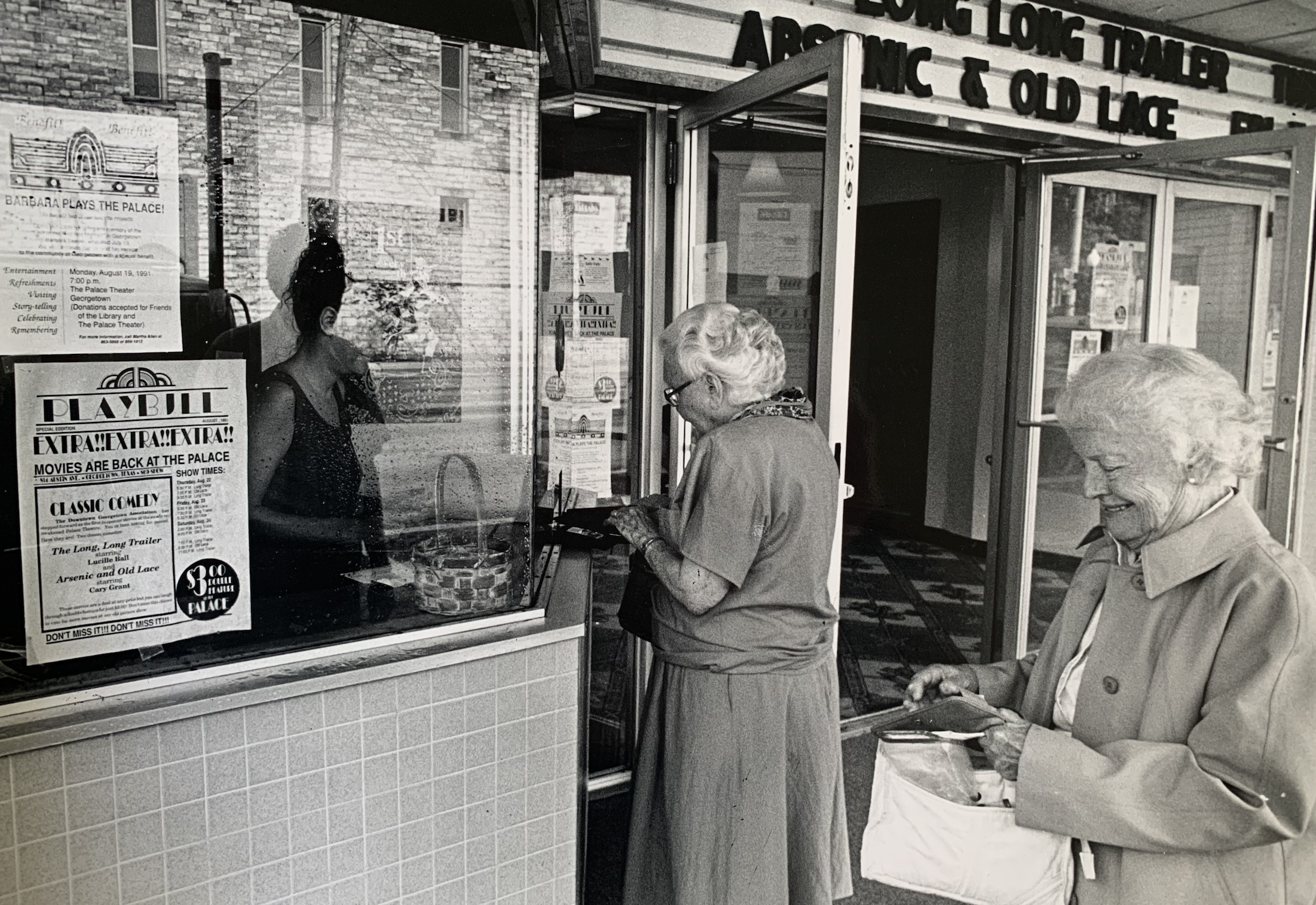

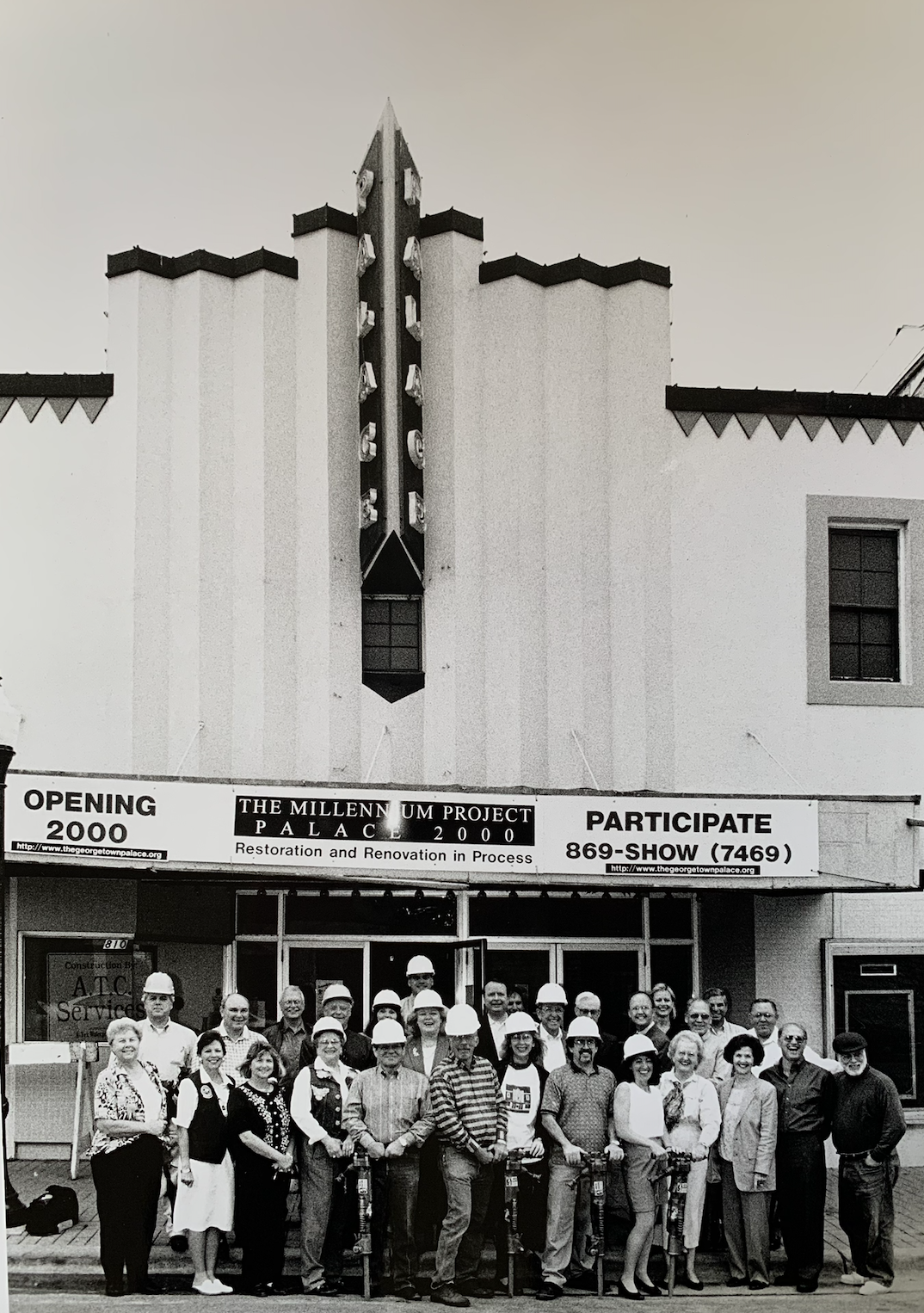
In 1926, silent films were loaded up into movie projectors and cast onto the screen at the Palace Theatre at 810 South Austin Avenue. The silver screen dazzled patrons with the stars of the day, telling stories that brought far away worlds to Georgetown’s population.
“The Palace was the longest running single-screen theater in Texas,” Palace Executive Artistic Director Ron Watson told the Sun last week. “It survived long past most of the single screens did.”
In the 1980s, however, multi-screen theaters became too hard to compete with.
“The Palace just couldn’t survive that way, so that’s when they closed,” he said.
Various groups “tried everything” to make the Georgetown theatre building live on. Finally, in the 1990s, “the right group of people got involved,” Mr. Watson said.
The effort led to a major renovation and to what The Palace is known for today — a live-entertainment venue that has continuously given audiences a taste of both classic and the latest musicals and plays, complete with moving sets and rotating casts.
He said the group invested their own money into the building — despite The Palace’s previous financial struggles — because they saw the vision of what a live stage could do for Georgetown, and the importance of keeping old memories alive.
The Palace Theatre turns 100-years-old this year. Its walls and features still pay homage to the art deco-esque design that is familiar to those who came as movie patrons. The stage — which was rebuilt during the Palace’s renovation project in the late 1990s and early 2000s — also honors prominent Georgetown theatre teachers Frances and Angus Springer.
Finances have been up and down over time, but community members have loaned or donated to the Palace to keep it going in times of hardship. It’s in better financial standing in recent years, and in 2023, the theatre started paying its casts and crews.
Bringing in new generations
Mr. Watson emphasized the Palace’s status as a community theatre status doesn’t mean the shows are only meant for the friends and family of the production.
“There’s a lot of little theaters [where] that is their goal, and that’s great, I don’t diminish that at all,” he said. “That’s just not what The Palace is, and it’s not what The Palace has always aspired to be. And we want to continue just being there for all of the families and all of the community, and just making that opportunity available.”
Part of making opportunities available includes having open auditions for anyone interested in performing despite skill level, and developing an education program for younger actors to learn and expand their abilities.
Education Director Stephanie Smith has been at The Palace for six months, but she said part of what drew her to the organization was how rooted in the community it was and how important The Palace is to Georgetown.
“[Former board president] Doug Smith gave up a ton of money and said we want this [education program] to grow and thrive, and we want to provide space and resources,” Ms. Smith said. “We now have the resources to be able to provide this same quality theater to children of our area.”
Development Director Debra Heater said the closeness of The Palace and its education center means people can start at The Palace from a young age and get professional performance experience.
“One of the pitches [Doug Smith] always gave, and I steal this all the time, because it’s not about training the next Broadway star,” Mr. Watson said. “If we do awesome, that’s amazing, cool, but Broadway stars are like NFL players, .005 percent of the population, — There is no job, not your job, not my job, not anybody’s job, where you don’t have to advocate for yourself and be able to communicate. Theatre teaches you all of that.”
He added even if someone does one class at The Palace or doesn’t do theatre past high school, the skills acquired can help people in their chosen fields.
“Sports teach kids teamwork, being part of something, knowing that you can be more than yourself because you’re part of a team,” Mr. Watson said. “Theater also teaches you that, but it [can give you] communication and confidence.”
Choosing the shows
Over the past few years, Ms. Heater said the promotions for the shows have stepped up, not only promoting the season, but the cast and crew who work on it.
“I think that the cast and the crew are seeing a value in that, not every theater does that,” she said.
For Mr. Watson, who chooses which shows The Palace does each year, he has to find a balance between finding shows actors want to do and what people want to see.
“I don’t need approval from anybody else, and I have the final say, but I get input from everybody. I ask our patrons, I ask the actors, I ask our staff, and then they disagree with the ones I pick,” he joked.
Having been with The Palace for several years, Mr. Watson said when picking shows it helps that he knows The Palace’s audience and what they like and what shows actors want to be in.
However, his years of theatre expertise and input from others can’t always predict whether a show will go over well. Some shows, like Little Shop of Horrors, Chess or Spelling Bee were a bust.
“Sometimes I’m wrong [in how many tickets will sell], sometimes I’m right, sometimes it’s close to what I thought it was, nothing’s an exact science by any stretch,” Mr. Watson said.
Other aspects of the delicate science of picking a season of shows include trying to reach new and younger audiences, and picking shows for certain parts of the year that will appeal to large crowds.
“I’ve always got to balance it right, because at the end of the day, we’re a nonprofit, but we absolutely have to make a profit,” Mr. Watson joked.
Through all the experiments of trying new shows and appealing to new audiences, there are some shows that will remain in the rotation because of their status as classics.
“Oklahoma! and Music Man, it’s not like they’re not classics because they’re just old and boring,” Mr. Watson said. “They’re classics, and [people are] going to pay to see them, and that’s going to help us do [other] shows.”
The next 100 years
In November, The Palace announced that in the 2026 season, it would stop doing shows in the Playhouse located on Rock Street. The space will be rented out to another tenant and The Palace will find a new place to host Playhouse shows. Until that new home is found, shows will be held at the Doug Smith Performance Center.
Ms. Smith, the education director, said being part of a sustainable community theatre means being flexible and being able to roll with the punches.
“I can say for sure, since my six months being here, things have changed and evolved,” she said. “But I think our ability as a team and as a community to just be like, cool, we’re evolving to the next thing is part of what makes it sustainable.”
The goal is to find a new, bigger space in the downtown area that can host Playhouse performances so they can be on par with what’s on the Springer Stage at The Palace.
“We ended on a bang, because the last two shows we did in there, Baskerville and Dashing Through the Snow, every single performance sold out. In fact, both of those runs were sold out before the show even opened,” Mr. Watson said.
In the 2026 season, The Palace will do the first regional production of Pretty Woman, as well as productions of The Mountaintop, Jesus Christ Superstar, And Then There Were None and more.
Looking further into the future, Mr. Watson said he wants to be able to give the cast, crew and staff of The Palace higher wages.
“I want to be able to pay our staff more and not have to worry about making payroll,” he said. “So I want to be able to be sustainable. By supporting The Palace, you can make sure that we’re here for another 100 [years].”
Ms. Smith said she would love to be able to tour their education program and bring it to kids in the area who don’t currently have access to any theatre. Right now, they are a part of a Theatre for Young Audiences program that buses kids in, but Ms. Smith wants to do more than that.
“If we could tour to those places [that don’t have theatre], we can bring the theatre to them. So that’s definitely a goal, but that just requires money,” she said.
Mr. Watson said the vision statement for The Palace is to be a cultural destination for everyone. He said for anyone who wants to get involved, he cares about the people, not their beliefs or long resume, and wants them to have a professional and courteous experience.
“The stage isn’t the only way [to get involved],” he said. “You can be on crew, you can usher, you can do – there’s a billion things you can do. And I have a feeling that once you step in those doors, you’re going to feel that energy, you’re going to feel that culture, that welcoming attitude.”
Tickets to shows, Palace Education, auditions, volunteering, employment, areas to donate and more can be found at www.georgetownpalace.org.