
Rise of fentanyl poisoning in Williamson County and what we are doing to stop it
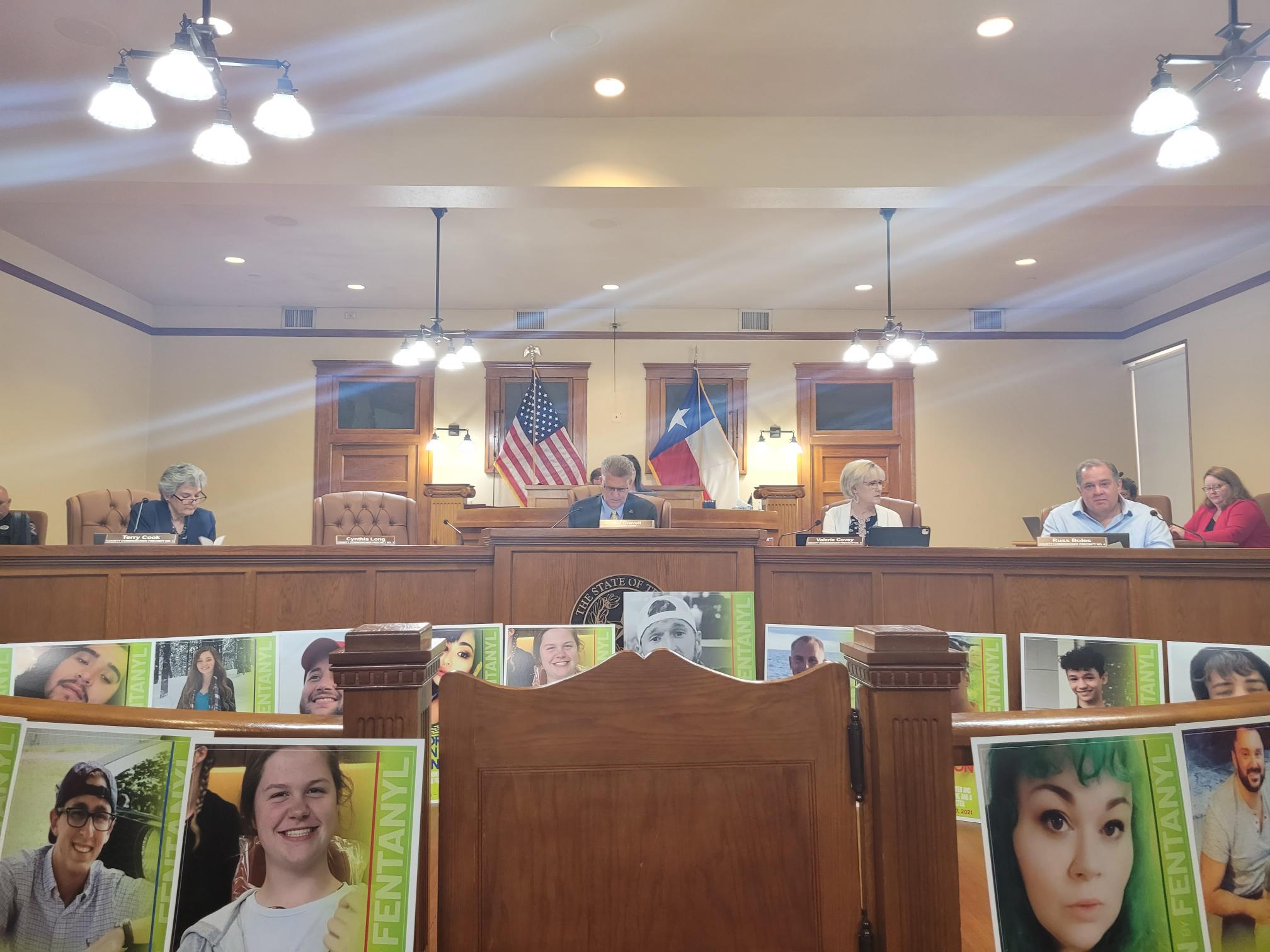
Two weeks ago, a group of families took their seats in the pews of Williamson County’s commissioners courtroom in downtown Georgetown.
After the call to begin the August 15 meeting, commissioners left the courtroom to retrieve stacks of posters displaying people’s photos, their ages and short bios about each individual’s life.
One common factor tied all the posters together: each person shown died of fentanyl poisoning.
In 2023 so far, Williamson County has seen 29 fentanyl poisoning deaths, with 32 more possible cases pending autopsy and toxicology reports, according to the county.
Since January 2022, there have been nearly 90 deaths within the county due to fentanyl poisoning.
In Texas, fentanyl deaths rose 399 percent from 2019 to 2021. According to data collected by the Texas Department of State Health Services, 2022 saw the highest number of cases in the state’s history, with nearly 45 percent of all drug-related deaths involving fentanyl. Most deaths took white males between the ages of 25 and 34.
A movement grows
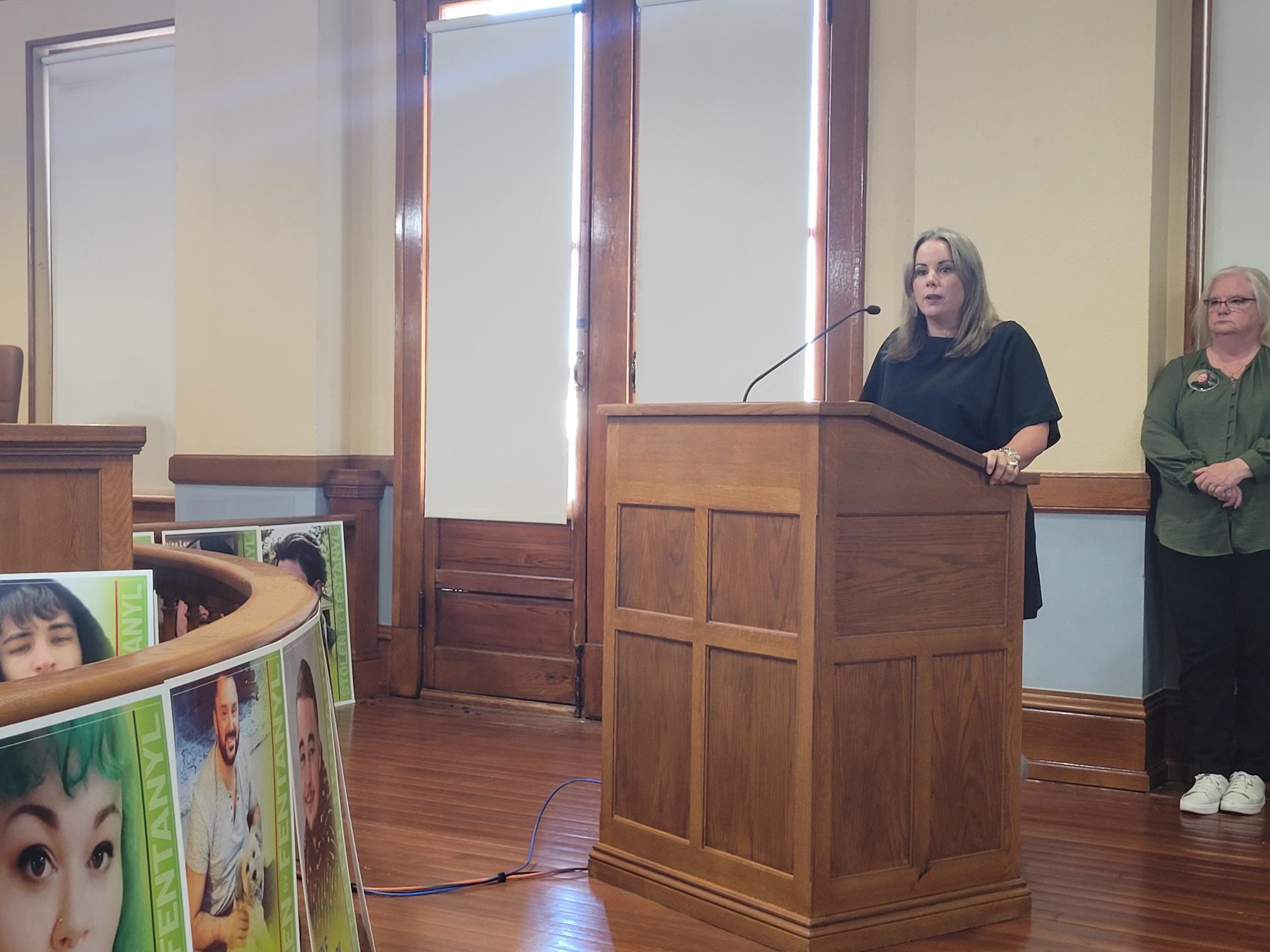
Tucker Roe was one. The 19-year-old Leander resident purchased an illicit Percocet — a pill commonly used as a pain killer — off of social media. His mother, Stefanie Turner, was the first mother to speak to the court this month about how fentanyl changed her life.
“We are tired and we are grieving,” she said. “And we are being judged because we lost our child to drugs.”
Ms. Turner founded Texas Against Fentanyl, a non-profit that aims to raise public awareness about fentanyl, while providing resources and support for families who are grieving.
She said she began the organization in the fall of 2022 to bring awareness of the issue to the Leander ISD board of trustees.
“I couldn’t sleep knowing I had information,” she told the Sun over the phone. “I am not okay with the numbers.”
TXAF, in partnership with the Williamson County Sheriff’s Department, recently lobbied for passage of House Bill 3908 in Texas’s 2023 Legislative session. Known as “Tucker’s Law,” the law will require annual teaching of fentanyl and drug addiction curriculum in Texas schools.
Effective Friday, the new law also requires schools to hold a Fentanyl Poisoning Awareness Week and to offer local resources to help fight substance abuse.
Way worse than heroin
The synthetic drug is an opioid, which allows the brain to release the “feel-good” neurotransmitter dopamine. The drug can be prescribed by doctors to help patients relieve their pain in the form of Actiq, Duragesic and Sublimaze, according to the National Institute on Drug Use.
The drug is considered 100 times more potent than morphine and 50 times stronger than heroin. Two milligrams of the drug is lethal to a person.
According to a fact sheet from the U.S. Drug Enforcement Administration, symptoms of an overdose can include changes in a victim’s pupil size, clammy skin, cyanosis (bluish skin), coma and respiratory failure leading to death.
Heather Vargas, sergeant of organized crime with the Williamson County Sheriff’s Office, said fentanyl has been found in pill form, and also mixed with marijuana, heroin, cocaine and even vape pens.
She said the Drug Enforcement Agency says that 99 percent of pills bought illicitly in the U.S. now contain fentanyl. Six out of 10 contain a lethal dose.
“It's more than 50/50,” Ms. Vargas said. “You’re playing Russian roulette.”
Failing our young people
Carilu Bell, a mother who lost her son to fentanyl, said people don’t take the drug seriously until it happens to them during the commissioners court meeting.
After Ms. Bell shared her testimony, Commissioner Terry Cook of Round Rock read a proclamation to make August 21 National Fentanyl Prevention Day in Williamson County.
“Not only have we failed at the border, but we failed in our local community,” County Judge Bill Gravel said. “It’s really not important until the death affects us.”
In May, the county joined a newly formed Overdose Task Force to address the issue in help with national resources, such as the Drug Enforcement Administration. Williamson County Sheriff Mike Gleason said the county is a “magnet” for the drug due to Interstate 35’s pathway to and from the Texas-Mexico border.
Stamp out fentanyl deaths
The task force is set up in a three-pronged system: law enforcement, education and rehabilitation.
The sheriff’s office as well as the Federal Bureau of Investigation will provide law enforcement, TXAF and other organizations will provide education and groups like Bluebonnet Trails and Rise Recovery will do rehabilitation.
The task force is still in its beginning phases and is awaiting grants to fund the project.
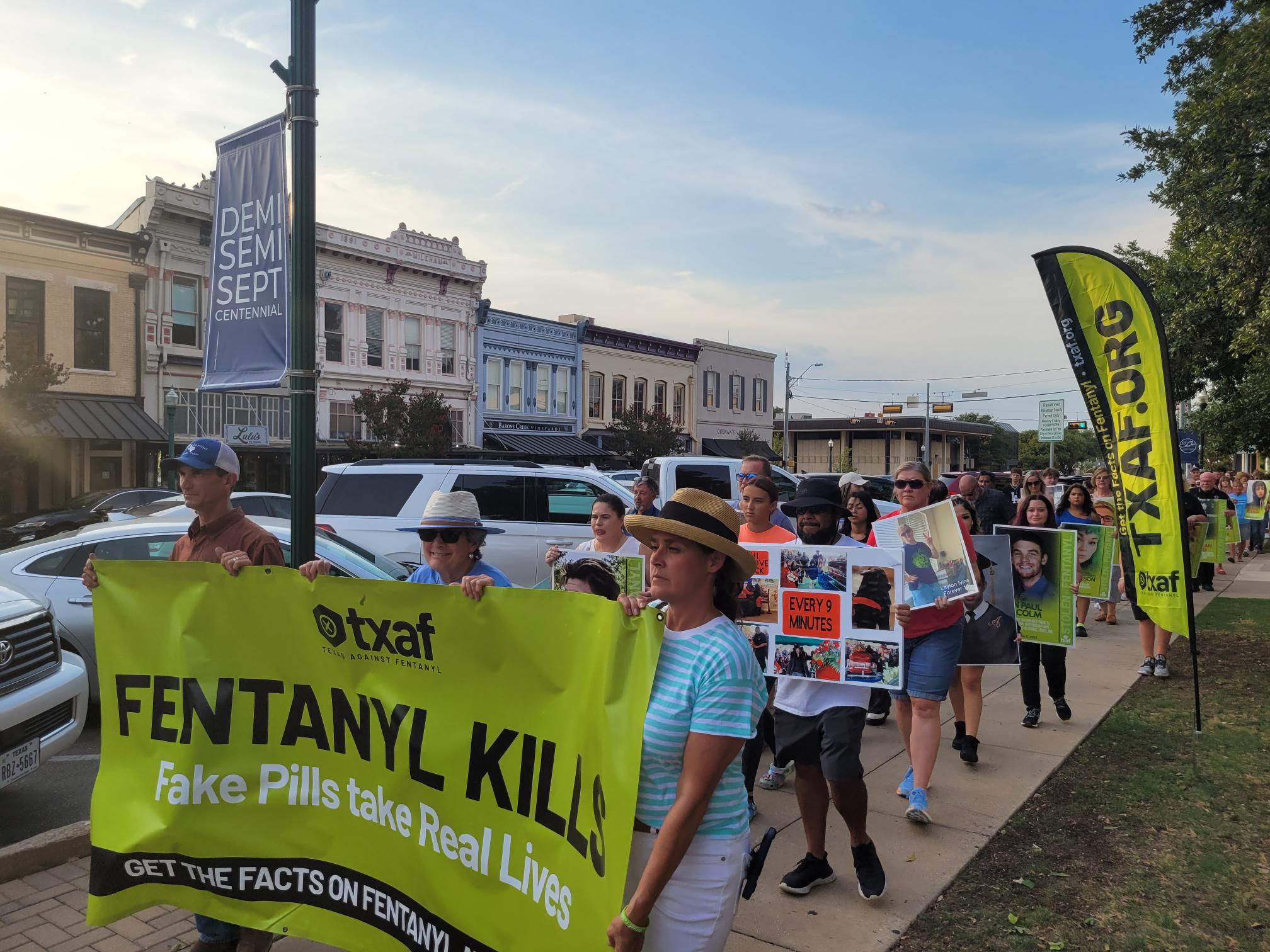
For now, parents and teens are spreading awareness. On August 21, TXAF and the non-profit A Change for Cam organized a walk to help raise awareness of the dangers of fentanyl. The walk started at the courthouse and continued around Georgetown’s Square.
Becky Stewart said the walk always has brought mixed emotions. Turnout was good, but sad because of the issue. The event lasted for an hour with multiple families walking around the Square holding a picture of their “angel.”
Ms. Stewart is the executive director for A Change for Cam. The Leander-based organization also works to educate and bring awareness to students and parents. Ms. Stewart is scheduled to make presentations in Houston and San Antonio.
Likewise, Ms. Turner is working to take Tucker’s Law to the national level. TXAF will host a volleyball fundraiser in late October in Hutto.
For more information visit www.txaf.org or www.achangeforcam.org. For anyone needing help with substance abuse call Rise Recovery at 210-227-2634. For immediate overdose emergencies call 9-1-1.
“My beautiful boy is making a difference,” Ms. Stewart said. “You don’t want to be in my shoes.”