
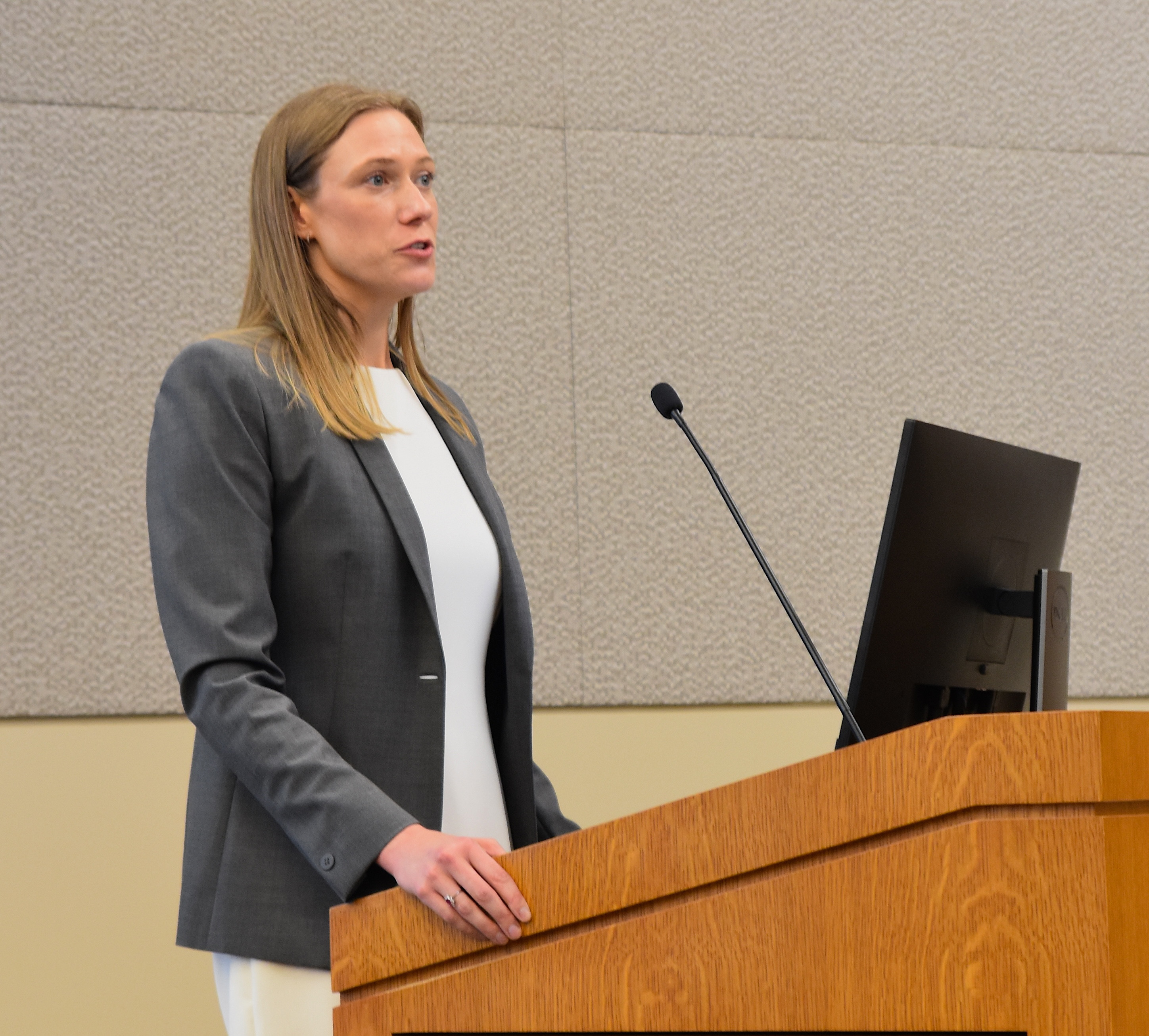

Georgetown City Council approved the terms of a Water Supply Agreement with Recharge Water LP for 34,800 acre-feet of water per year for up to 30 years, with two additional 30-year extension options, to supply the city’s long-term water needs.
Once the agreement is finalized — which Georgetown Strategic Projects Manager Caroline Stewart said she hopes is by year’s end — Recharge Water will start delivering water in 2030, with the full amount phasing in through 2038.
According to the Brazos River Authority, one acrefoot of water is 325,851 gallons, or enough water to cover an entire football field with one foot of water.
The city has been pursuing long-term water contracts for the past few years, and looked at partnerships with companies like EPCOR and GateHouse Water LLC before settling on a final agreement with Recharge Water LP.
“As everyone knows, water is one of the major issues in Central Texas, and the City of Georgetown has been working to make sure that we have enough water for our future for many years,” Mayor Josh Schroeder said during a press conference on Wednesday, May 13. “We are now on the verge of being able to sign a water supply agreement that will ensure that we have enough water for the full build-out of the City of Georgetown.”
During a city council workshop May 12, Ms. Stewart said the water will come from the Simsboro portion of the Carrizo-Wilcox Aquifer in Lee and Bastrop Counties. This will require a 35-mile pipeline to Circleville, where it will be then piped to the city.
In the Water Supply Agreement, Recharge Water will maintain all groundwater rights and permits, and design, build, finance, operate and maintain the project up to the delivery point in Circleville.
The city will then build the water pipe interconnection from Circleville to the northwestern side of the Georgetown’s water service territory, as long as the recent voter-approved sale of the territory goes through the Public Utility Commission, Ms. Stewart said. It is about 30 miles from Circleville to the city’s endpoint.
“Everything kind of comes to a head in Circleville,” she said. “Everything to the west of that is the city’s project, everything to the east of that is Recharge’s project. They will operate and maintain everything to the east of the Circleville delivery point, including all permits and lease rights.”
Additionally, Recharge Water will maintain and repair lines as needed for its portion of the project.
“Water is a finite resource, and we’ve been looking for water resources for years now, and there are a limited number of projects out there, limited number of groundwater projects that have export permits that allow us to move groundwater into this district,” Mr. Schroeder said. “We’ve identified those and explored every option, and this is by far the best option.”
Agreement specifics
With the approval of the sale of a large part of the city’s water service territory by voters, Georgetown will need about 60 percent less water for its long-term needs, Ms. Stewart said. According to the city’s Integrated Water Resource Plan, before the sale, the city needed about 100,000 acre-feet of water by 2070.
Until the agreement is finalized, the city is keeping the cost of the water reservation fees confidential, according to Ms. Stewart.
“The price is a groundwater price that is paid on a take-or-pay basis,” Ms. Stewart said. “The capital cost will be determined once the contractor provides the guaranteed maximum price. This is very traditional in how these agreements work. If that price comes in way too high, we have what are known as offramp options. We have ways to address that if the price comes back too high.”
Take-or-pay contracts ensure risk-sharing between suppliers and buyers by requiring buyers to either accept goods, like water, or pay a penalty.
In terms of water quality, Recharge Water must meet primary and secondary drinking water standards, except for iron content, which the city will negotiate to either handle themselves or have Recharge handle.
If there is water that is off-specification from standard, the city can decide not to take it and not pay for it, or the city can take it, treat it and pay a reduced rate for the water. In the event of delivery shortfalls, Ms. Stewart said the city will not have to pay for water that is not delivered.
If the delivery shortfall is not Recharge’s fault, the city will not pay for water that is not delivered. However, Recharge will have the opportunity to deliver the water later, and the city will pay for it when they get it. If the shortfall is Recharge’s fault, the city will not pay for that water.
“These contracts that we’re going to enter into, we have mitigated our risk significantly different than we did on our electric contracts,” Mr. Schroeder said.
Once the 30 years of the initial contract is up, if the city decides to renew for the additional terms, the price for the water would be reduced, Ms. Stewart said, to “reflect paid off debt and equity.”
The entire term sheet can be found at https://tinyurl.com/3y8zctut.
Impact to residents
Although this agreement will not decrease water rates, it will help stabilize rate increases, according to the city.
The goal is to create a smoother transition in water rate changes, compared with sudden rate hikes, Chief Financial Officer Leigh Wallace said during a March 10 workshop.
“This will allow us to have a known quantity of rate increases,” Mr. Schroeder said at the press conference. “We know how much this water is going to cost. We know what the next 30 years is going to look like. Anyone that tells you that water rates are not going to go up in Central Texas is lying to you, but we at least have a handle on what they’re going to be.”
From 2027 to 2030, the water minimum charges would go up about 4 percent a year instead of 9 percent, and water volumetric charges would go up 14 percent a year versus 9 percent.
This change would reduce the total increases required to the average residential bill and will provide the city with more rate-setting flexibility in the future, Ms. Wallace said.
Because water availability will become more predictable, Mr. Schroeder said the city can better inform residents of the increases ahead of time so they can plan accordingly.
Even though water rates are still expected to go up, Ms. Stewart said the contract with Recharge will have less impact on residents than a contract with water utility services company EPCOR, who the city also looked at for a longterm water plan.
The primary reasons, she said, are the shorter pipeline from Lee and Bastrop counties with Recharge versus the pipeline from the Bryan-College Station area with EPCOR, and how the city pays for reserving the water.
“Under the term sheet that we’ve negotiated with Recharge, the structure for reservation fees is to pay reservation fees only on the water that is being reserved, and not on the full amount of the water,” Ms. Stewart said. “Whereas under the EPCOR reservation agreement, we would have been paying reservation fees on the entire amount of water permitted for the agreement.”
Next Steps
Even though council approved the term sheet, Ms. Stewart said until the agreement is signed, the city is “not taking anything off the table” and will continue to explore all water options.
Even after the contract is signed, City Manager David Morgan said the city will continue to build its “resiliency” with a variety of water sources. This work includes continued work with the Brazos River Authority, reserving water via aquifer storage and recovery and encouraging conservation for customers.
“We’ll continue to be proactive to make sure that we’re doing everything we can to have a diverse set of resources, reliable water for our community moving forward, not only for today, but for decades in the future,” he said.